The story so far
On 19 August, the Railway Ministry approved raising the maximum permissible speed on the 111-km Shri Mata Vaishno Devi Katra-Banihal section, under Northern Railway's Jammu Division, to 100 kmph. Reports on 20 August said the earlier limits were 85 kmph between Katra and Sangaldan and 75 kmph between Sangaldan and Banihal, and that Northern Railway said the increase was cleared after all prescribed safety requirements and conditions were met. We covered that clearance, and what it could mean for the Jammu-Srinagar Vande Bharat run, in our report on the third Vande Bharat. For fares and how to book, our student's guide to the Vande Bharat remains the reference.
What's new
According to The Northlines, Railway Minister Ashwini Vaishnaw announced that the Vande Bharat Express has now been run at 100 kmph across the Chenab Rail Bridge and the Anji Rail Bridge, with the test held on Thursday (1 October). The report quotes the minister as saying the enhanced speed limit was successfully tested on Thursday, "marking an important step towards improving train operations" on the Udhampur-Srinagar-Baramulla Rail Link (USBRL). The Northlines describes the limit on the 111-km section as having been raised from 75 kmph to 100 kmph.
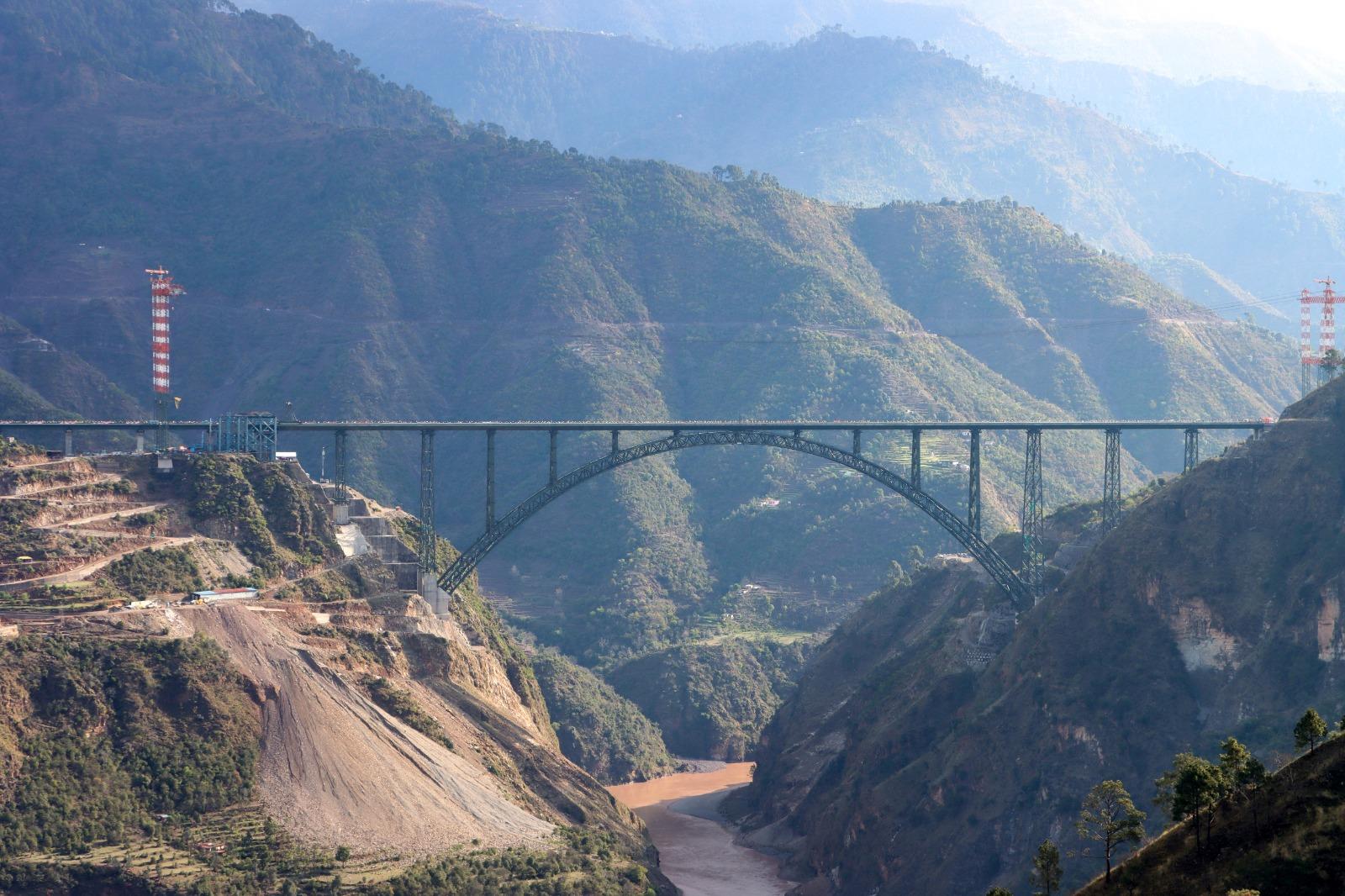
- Chenab Rail Bridge: described in the reports as the world's highest railway arch bridge, 359 metres above the riverbed.
- Anji Rail Bridge: India's first cable-stayed railway bridge.
- Section: 111 km, Katra to Banihal, part of the USBRL.
What is confirmed, and what is not
Be clear on the difference between two things. The approval of a 100 kmph limit on the section is on record from the August reports, which cite Northern Railway. The 1 October test across both bridges rests, as far as we could find, on the Northlines report alone; we could not locate a Railway Ministry or PIB release or a second outlet carrying it at the time of writing. We are attributing it accordingly.
There is also a small discrepancy on the earlier limit. The Northlines says 75 kmph; the August reports say 75 kmph applied only on the Sangaldan-Banihal stretch, with 85 kmph from Katra to Sangaldan. We have used the August breakdown for the background.
Separately, Greater Kashmir reported on 2 October that Minister of State for Railways V Somanna inspected the Chenab and Anji bridges on the Katra-Banihal track, a window trailing inspection that reviewed construction quality and safety standards. That report does not mention speed or Vande Bharat trains, so it should not be read as confirming the test.
What it means for you
Nobody has announced a new timetable or a revised journey time, so do not plan around a shorter trip yet. The reports say only that the higher limit is expected to help reduce travel time between Katra and Banihal; no figure has been given. Fares and timings you see today are those already published.
- Book against the timetable on the IRCTC app or the railway enquiry system, not against speed headlines.
- Check again before travel dates close to any announced schedule change.
- If you commute between Jammu, Katra and the Valley for exams or interviews, keep a buffer; a higher permissible speed is not a guarantee of arrival time.
We will update this report when the Railway Ministry or Northern Railway publishes a revised timetable or journey time.
Image: file photo of the Chenab Rail Bridge, Reasi district.
Sources
- The Northlines: Vande Bharat sets new milestone
- Greater Kashmir: Union minister inspects Chenab, Anji railway bridges on Katra-Banihal track
- GKToday: Trains to run at 100 kmph on Katra-Banihal section
- Morung Express: In a first, Vande Bharat train operates at 100 kmph on world's highest railway bridge
- Kashmir Despatch: Vande Bharat gets faster on Katra-Banihal route
- Image: Chenab Rail Bridge, Konkan Railway Corporation Limited / Wikimedia Commons (GODL-India)