Sachin Dhar. Bhoomika Devi. Suhani Devi. Abhi Mehra. Amit Kumar. Sonia Sharma. Khushi Thapa. Smriti Bhardwaj. Ritesh Mehra. Shruti Thakur. Saniya Shaukat. Priyanshu Chib. Vishnupriya. Muskan Dogra. Puran Kumar.
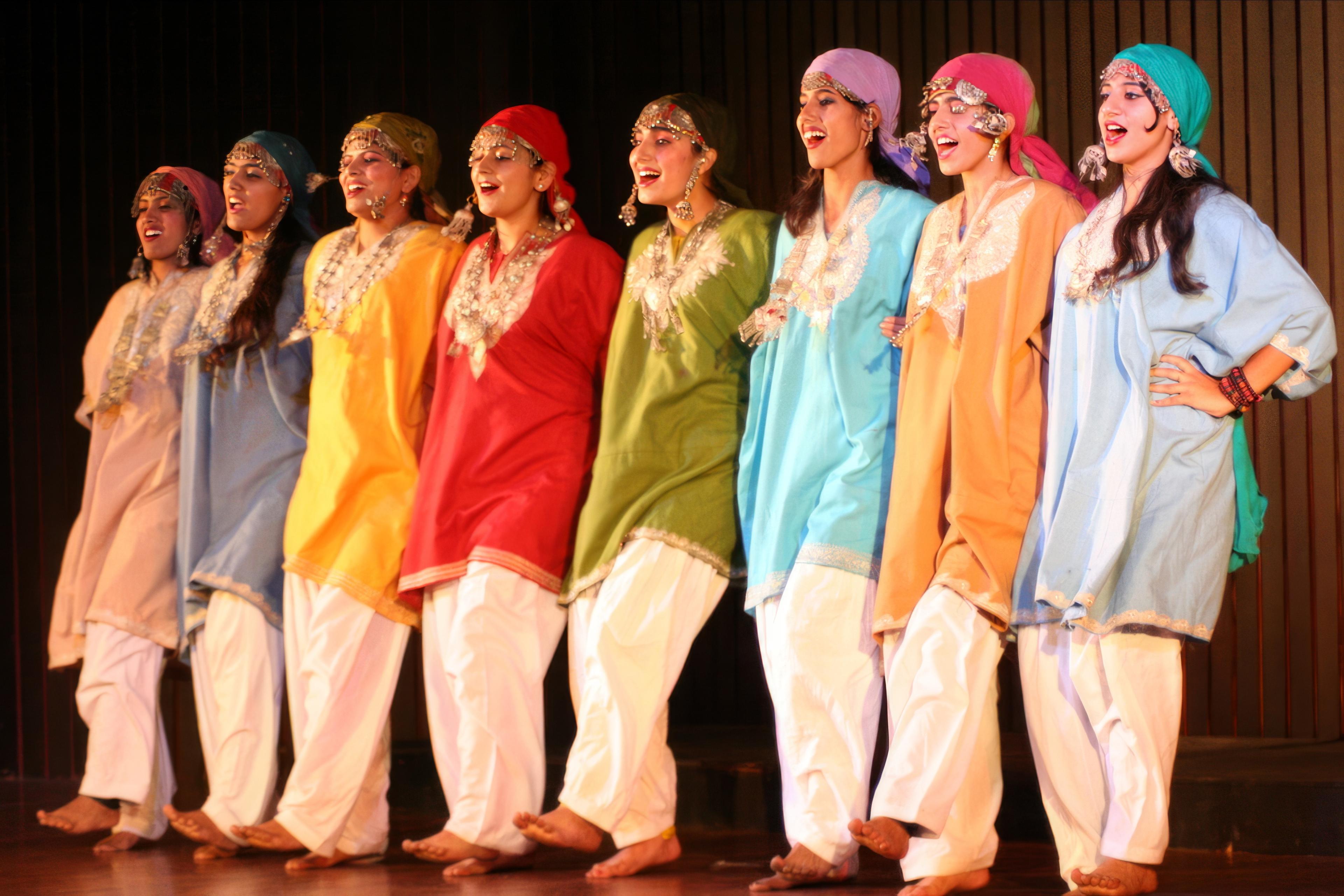
Fifteen names, most of them young, all of them on a stage at the Secretariat Ground in Lucknow on 15 August 2026, representing Jammu and Kashmir at the national 80th Independence Day cultural programme.
They were part of a field of around 300 artists drawn from across the country. Alongside J&K, the participating states were Maharashtra, Gujarat, Arunachal Pradesh, Tripura, Bihar, Madhya Pradesh, Chhattisgarh and Uttar Pradesh.
The troupe was led by Anil Tickoo, Assistant Cultural Officer at the Jammu and Kashmir Academy of Art, Culture and Languages, with the academy's participation coordinated by its Secretary, Harvinder Kour.
Rising Kashmir's account describes the group as showcasing "folk and cultural traditions of Jammu and Kashmir" without naming the individual forms. A second report, in Only Kashmir, identifies them as Rouf and Dogri folk dances — the Kashmiri and the Jammu traditions performed side by side, which is a fair enough summary of what a J&K contingent at a national event is asked to do.
Why this is worth naming
There is a question that comes up whenever anyone tries to persuade a young person in Jammu to keep up folk dance, Dogri song or any of the region's performance traditions: does it go anywhere?
It is a fair question and it usually gets a vague answer. This is a specific one. It goes to a national stage, in front of a crowd, alongside eight other states' traditions — and the route there ran through JKAACL, a body most students in Jammu know only as a name on a building.
The academy is the institutional path. It employs cultural officers, it assembles contingents, and it is the mechanism by which a dancer from a Jammu district ends up on a programme in Uttar Pradesh. That is worth knowing if you are a student who dances and has never thought of it as something with a ladder attached.
We have written before about whether Dogri survives if young Dogras stop speaking it, and about Kud, Geetru and Dogra folk returning to the stage. This is the other half of that story: not the language or the form in the abstract, but fifteen people who actually performed it, out of state, this month.
The J&K artists were felicitated by the Chief Minister of Uttar Pradesh, Yogi Adityanath, who was the chief guest at the programme.
%2Fgreater-kashmir%2Fmedia%2Fmedia_files%2F2026%2F06%2F27%2Fgmc-jammu-2026-06-27-05-46-24.jpg&w=3840&q=75)