1,362. That is how many live marine ornamental fish are being procured to fill the Oceanarium at Bagh-e-Bahu — across 14 species, arriving in planned batches, mostly from South India.
It is a mundane-sounding number, and it is the most meaningful thing anyone has said about this project in a year. You do not order the fish until the tanks hold water. Civil works are finished, the project has moved into its stocking phase, and Jammu Smart City Limited is now targeting the end of October or early November 2026 for opening.
To understand why that matters, you have to know where this was in December.
The story so far
Late 2025 — stalled. The Oceanarium was publicly described as facing uncertainty. Jammu Smart City Limited's board had not approved variations to the Detailed Project Report that had emerged during construction, which meant the Roads and Buildings Department could not proceed with essential components. Worse, no firm decision had been taken on who would actually procure the marine species — including the sharks, which are the entire point of a tunnel aquarium. A finished building with no fish and no department willing to own the fish is not an attraction; it is a very expensive room.
August 2026 — moving. Construction complete, procurement under way, a species list and a count on the record, and a target month. The bottleneck that defined the project for most of a year appears to have been cleared.
What is actually being built
The centrepiece is a 20-metre glass tunnel you walk through, holding roughly four lakh litres of salt water, with around 40 varieties reported and sharks among them. Cost figures reported for the project differ between outlets — about ₹18.57 crore to ₹19 crore — so treat the total as a range rather than a settled number.
It is being billed as North India's first oceanarium, and India's third, after Chennai's VGP Marine Kingdom and Bengaluru's Aquarium Paradise. That claim is worth exactly as much as it sounds: it means that until now, seeing a marine tunnel meant buying a flight.
What it's attached to
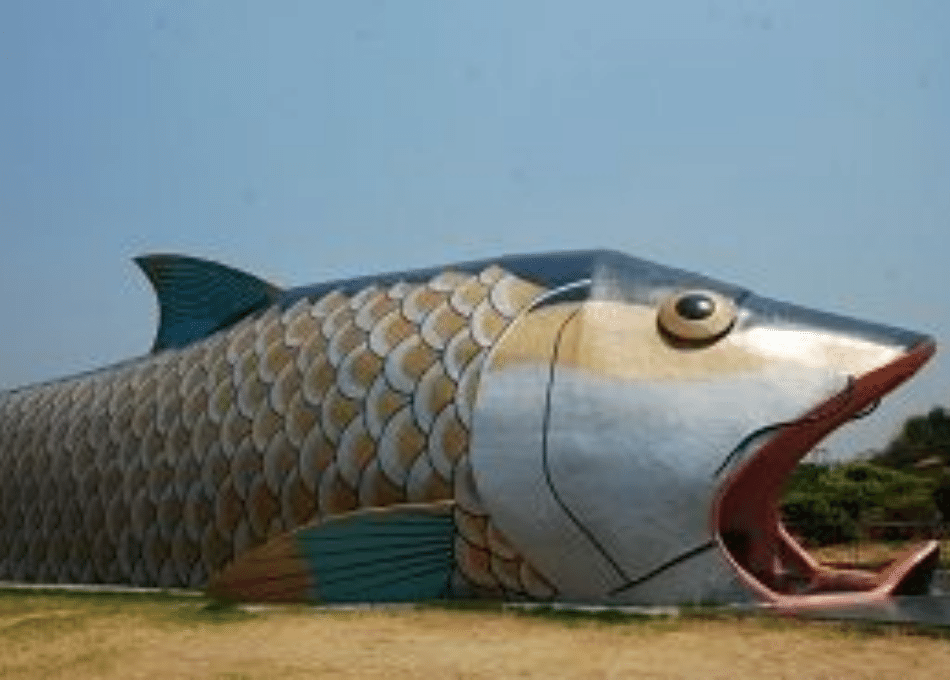
This is Phase II of the existing Aquarium-cum-Awareness Centre at Bagh-e-Bahu — the fish-shaped building most Jammu residents have walked through at some point, where the entrance is the fish's mouth and the exit its tail. Phase I opened in 2007, runs to more than 200 metres, and is billed as the largest underground aquarium in the country, with 24 aqua caves and hundreds of species. Phase II turns a well-liked local aquarium into something with genuine regional draw, about 5 km from the city centre.
Two things have not been announced: the entry fee and the opening hours. Nobody has published either, so anyone quoting you a ticket price for this is guessing.
So what's the difference from the aquarium that's already there?
Fair question, and the answer is the water. Phase I is overwhelmingly a freshwater and display-tank operation — you walk a corridor and look into caves set along the wall. An oceanarium is a saltwater system, which is a different order of engineering: you are maintaining salinity, temperature and filtration for marine species that will die if any of the three drifts, and you are doing it in Jammu, several hundred kilometres from the nearest sea.
That is also why the procurement question stalled things for so long. Four lakh litres of salt water and 14 marine species are not a one-off purchase; they are a permanent operating commitment, with a staff who know what they are doing and a supply chain that keeps running after the ribbon is cut. Somebody has to own that budget line every year, not just once. The tunnel is the part visitors will photograph; the life-support system behind the glass is the part that decides whether the place is still open in 2030.
Why the timing works for a Jammu weekend
An end-of-October opening — if it holds — lands right at the start of Jammu's good-weather outing season, on a site that already pulls crowds through the Bahu Mela and the Navratri weeks at the Bawe Wali Mata temple. The food street beside the fort was also modernised under the Smart City Mission at ₹1.65 crore this month, which means the eating end of that trip has been rebuilt just as the reason to make the trip gets bigger.
The honest caveat: this is a project that has slipped before, and "targeting end October" is a target, not a date. Treat the fish order as the best evidence yet that it is real, and check before you plan a day around it.
For a fuller picture of what Jammu Smart City has and has not delivered, our read of its project ledger puts this one in context.
Sources: Daily Excelsior on the stocking phase · Daily Excelsior on the earlier delays · Kashmir Life
%2Fgreater-kashmir%2Fmedia%2Fmedia_files%2F2026%2F06%2F27%2Fgmc-jammu-2026-06-27-05-46-24.jpg&w=3840&q=75)