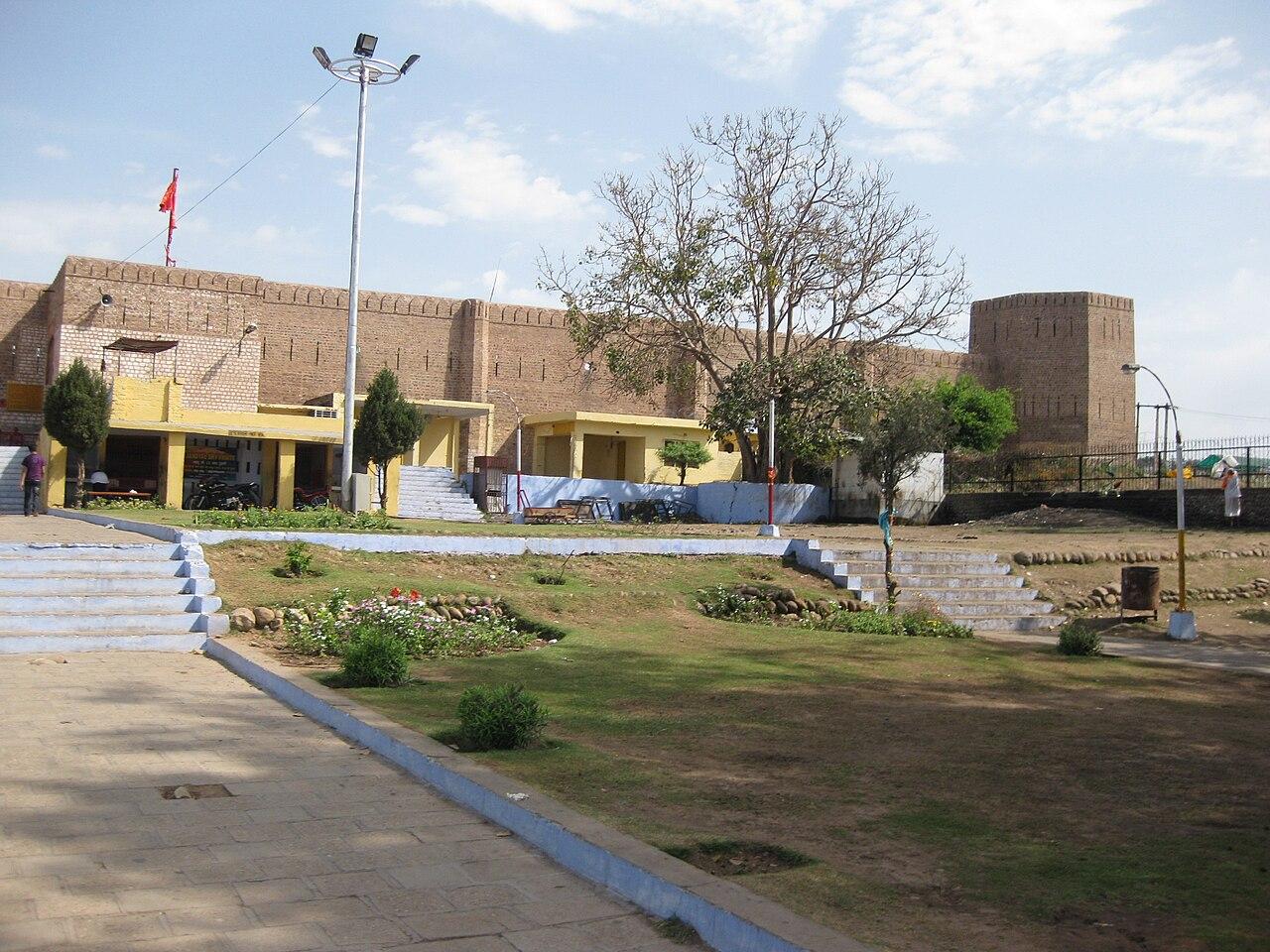
For two weeks every spring, the old ramparts above the Tawi stop being a quiet picnic spot and become the loudest, brightest, most crowded place in Jammu. The Bahu Mela, held through Chaitra Navratri at the Mahakali (Bawey Wali Mata) temple inside Bahu Fort, is one of the city’s largest fairs — part pilgrimage, part funfair, part family reunion. If you have only ever driven past the fort, this is the fortnight to actually climb it.
What the mela actually is
The fair is anchored to Chaitra Navratri, the spring nine-night festival that, in 2026, runs through the second half of March into April. Devotees come to the shrine of Mahakali, the presiding deity of the fort, to offer the first navratra prayers of the Hindu new year. Around that core of ritual, a whole temporary town springs up: garland sellers, prasad counters, toy stalls, balloon-wallahs and food carts that line the approach road and spill into the gardens below. Locals will tell you Bahu has two melas a year, but the Chaitra one — timed with the harvest and the warming weather — is the bigger draw.
The crowd is genuinely all-ages and all-Jammu. You will see grandmothers in their best suthan being helped up the steps, college groups treating it as a day out, and toddlers on shoulders clutching plastic windmills. That mix is the whole point. The Bahu Mela is where the city’s religious calendar and its social calendar briefly become the same thing.
It helps to know what you are walking into. Bahu Fort is one of the oldest fortifications in the region, and the Mahakali shrine inside it has drawn pilgrims for generations — long enough that the fair has become a living tradition rather than an event anyone organises from scratch each year. The deity is fiercely beloved locally; for many Jammu families, the first navratra darshan here is a fixed point in the year, the kind of ritual you grow up assuming everyone observes. That continuity is what gives the mela its particular warmth. You are not at a one-off festival; you are at something your grandparents climbed to as children, doing the same things, eating the same jalebis, in roughly the same chaos.
Getting there and doing the climb
Bahu Fort sits on the left bank of the Tawi, opposite the older part of the city, near the Bagh-e-Bahu gardens and the aquarium. During the mela, expect the approach to be choked with cars and autos, so the smart move is to park well below and walk the last stretch, or take an auto to the nearest drop point and join the human river heading up.
Go early. The shrine and the fort are coolest and least crushed before mid-morning. By noon, especially on weekends and the main ashtami day, the queues for darshan can stretch a long way back. If you are coming mainly for the atmosphere rather than a long wait in the sanctum line, an early start lets you do both — prayers, then a slow wander through the stalls before the afternoon heat and the biggest crowds arrive.
A few practical notes: wear shoes you can slip off easily, since you will leave them outside the temple. Carry a small bottle of water and a little cash in change for the stalls. Phones and wallets should go in a zipped pocket — in a crowd this thick, you want both hands free for the steps.
The food, the stalls and the views
Half the fun of any Jammu mela is eating your way down the hill afterwards. The carts around Bahu lean into fair-day classics: hot jalebis coiled to order, kaladi-kulcha if you are lucky, chaat, candy floss, sugarcane juice and the inevitable rainbow of fizzy drinks. None of it is fine dining and all of it tastes better because you climbed for it. Buy from the busy stalls — high turnover is your friend.
Between bites, the fort itself rewards a slow look. The thick sandstone walls are among the oldest structures in the region, and from the ramparts you get one of the best wide views of the Tawi and the city sprawling on the far bank. The terraced Bagh-e-Bahu gardens just below are a good place to sit, catch your breath and let the kids burn off the sugar before the walk back.
Going with intention
One gentle ask, and it is the same one the city’s river volunteers make every spring: carry your litter back down with you. Mela days generate mountains of plastic cups, wrappers and offering bags, and a lot of it ends up sliding toward the Tawi below. Bins fill fast; a small bag in your pocket for your own waste is the easiest civic gesture you will make all month.
If you do only one Jammu fair this season, make it this one. The Bahu Mela is not a curated event with a hashtag and a stage — it is the real, slightly chaotic, deeply local thing, and it has been happening on that hill for longer than anyone can quite agree on. Climb up, say a prayer if you wish, eat too much, and come down a little more part of the city than you went up.
