Accidents fell. Deaths rose. That is the pattern in the road-safety figures the Union Road Transport Minister, Nitin Gadkari, gave the Lok Sabha on 30 July 2026, and it is the pattern a young Jammu rider should sit with before the next ride.
What the numbers say
According to the Road Transport Ministry data reported by Kashmir Life, J&K recorded 5,808 road accidents in 2024 and 5,318 in 2025, a fall. Over the same two years deaths went from 893 to 984. Injuries fell from 7,820 to 7,594. For 2026 up to 27 July, the figures were 3,269 accidents, 603 deaths and 4,775 injuries; the year is partial and the data provisional.
The sharpest line concerns people on foot. Pedestrian deaths rose from 144 in 2024 to 477 in 2025, which the report describes as more than tripled, and 226 pedestrians had died by 27 July 2026. The report gives no pedestrian split before 2024, and no explanation for the jump, so we do not offer one.
A closer look at two-wheelers in Jammu's belt
Traffic Police Rural Jammu released an analysis of four districts, Kathua, Samba, Rajouri and Poonch, covering 1 January to 31 July, as ThePrint reported on 15 September. It counted 699 accidents with 88 deaths and more than 1,000 injured. Two-wheelers were involved in 309 accidents, 44 per cent of the total, 39 of them fatal. About 27 per cent of victims were under 26. Almost two thirds of all accidents, 445, involved a single vehicle.
A two-week drive from 1 to 14 September then produced 8,675 challans: 5,767 riders without helmets, 1,152 pillion riders without helmets, 1,106 for triple riding, 260 for dangerous driving, 188 for using a mobile phone while driving and 146 for driving without a valid licence. Police said they used a "no-challan, only counselling" approach in the counselling sessions, and that similar drives for light motor vehicles would follow.
What we think these figures argue for
This is an opinion piece, so here is the view, with the limits stated.
Enforcement counts show the problem, not the cure. A drive that catches thousands of riders without helmets in two weeks tells us the habit is widespread. It does not tell us whether the habit changes once the drive ends. The reports do not say what happened to the numbers after September, and we would want to see them before calling it a success.
Pedestrians need as much attention as riders. It is natural to talk to young people about helmets, and the data support that. But the rise in pedestrian deaths means that students walking to a bus stop or crossing outside a college gate are in the same statistics. The sources do not break pedestrian deaths down by place, so we cannot say where crossings should be fixed. The question to ask city and district authorities is whether they publish that breakdown.
A single-vehicle crash is a hint about behaviour. When most recorded accidents involve one vehicle, the cause sits more in speed, attention and equipment than in other drivers. That is a reason to take the personal checklist seriously, not a reason to blame victims.
What you can do this week
- Wear a helmet every ride, and make your pillion wear one: the police counted 1,152 pillion riders without one in two weeks.
- Do not put three on a two-wheeler; 1,106 were booked for it.
- Keep the phone away while riding; 188 were booked for using one.
- If you are under 18, the police have urged young people not to ride without a valid licence.
- Ask your college or employer whether it will host a road-safety session; the September drive paired enforcement with school and college programmes.
The numbers are official, but they are a count of what was recorded, and recording is itself uneven. What can be said with confidence is narrow: fewer accidents, more deaths, far more pedestrian deaths, and a large number of riders not yet doing the basics.
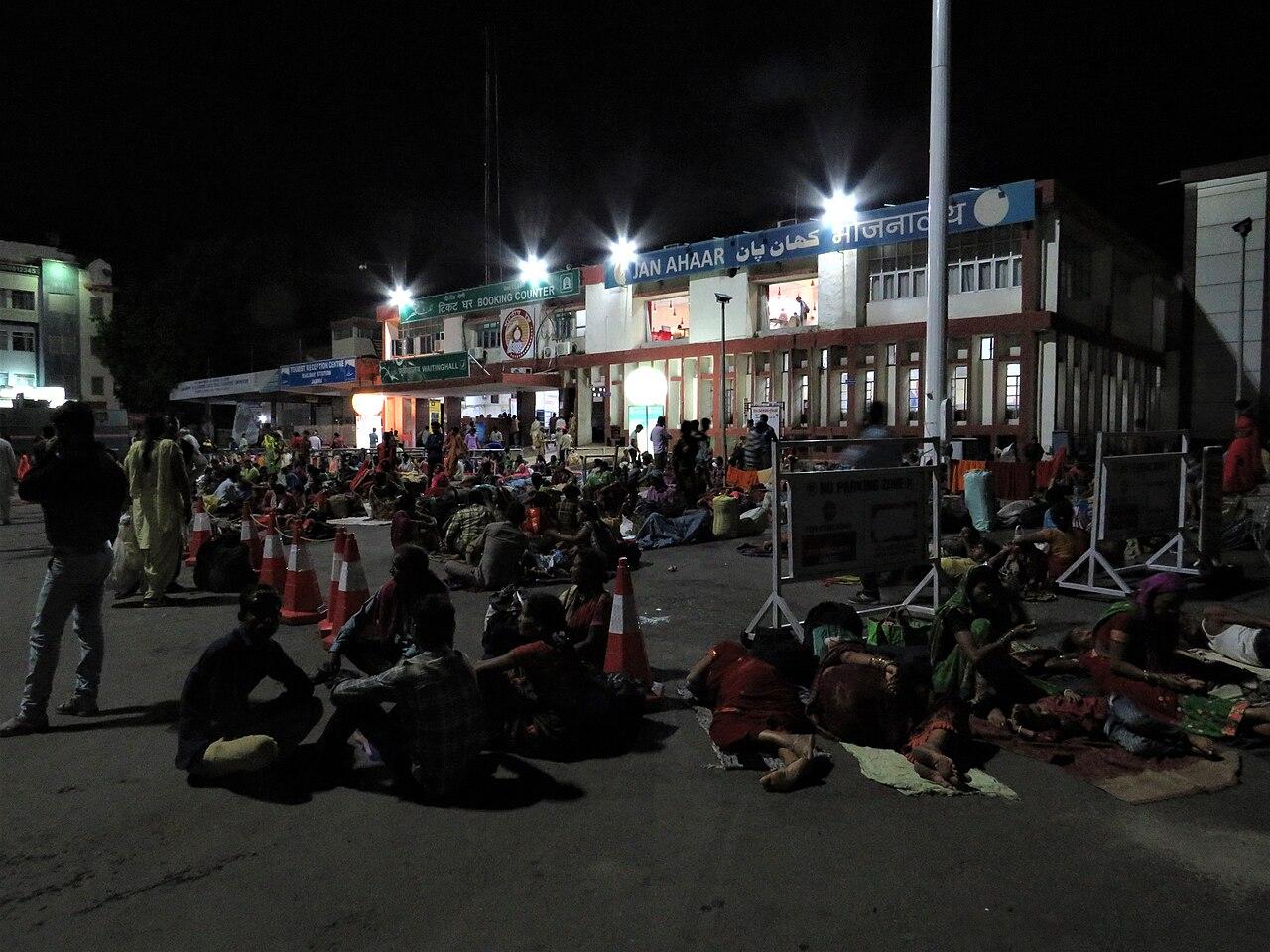
Photo: file photo of Jammu Tawi railway station at night (Sanu N, Wikimedia Commons, CC BY-SA 4.0); it does not show any accident.
Sources: Kashmir Life, 30 July 2026; ThePrint / PTI, 15 September 2026.