On 6 October 2026, Chief Secretary Atal Dulloo chaired a meeting in Srinagar to assess the revised J&K State Action Plan on Climate Change, or SAPCC 2.0, prepared by the Department of Forest, Ecology and Environment (Greater Kashmir, 7 October). A state climate plan is the document that decides which departments do what about heat, floods, water and emissions over the next several years.
What the plan says about the climate ahead
Presenting the projections, Commissioner Secretary (Forests) Sheetal Nanda cited two IPCC pathways, SSP2-4.5 and SSP5-8.5. Under the moderate-emission case, temperatures are projected to rise about 1.5°C over 2021-2050. Annual precipitation is projected to rise about 5% under moderate emissions and up to 15% under high emissions, with shorter cold seasons and more variable, intense rainfall. The vulnerability assessment uses 42 indicators across agriculture, water, health and forests, with district-specific risks.
What it proposes
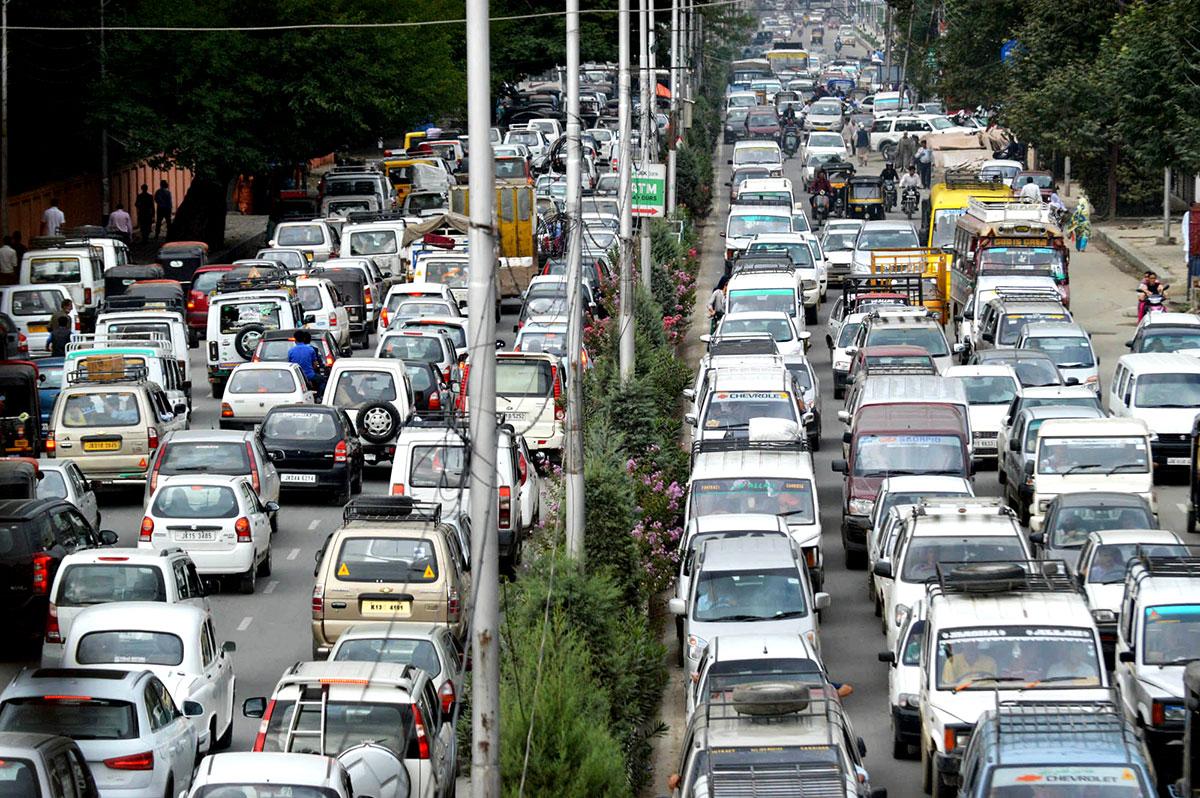
- 55 mitigation strategies with an estimated potential of 2.6 million tonnes of CO2-equivalent by 2030, including solar (floating solar among them), small hydropower, wind, grid strengthening, cutting transmission and distribution losses, electric mobility and intelligent traffic management systems.
- 100 adaptation and disaster-risk actions across five sectors, including micro-irrigation, tap-water coverage for every household, rainwater harvesting, health facilities in underserved areas, restoring degraded catchment forests with native species, and retaining walls and slope protection at vulnerable sites.
The Chief Secretary's directions
Dulloo asked that each department's actions, expected outcomes and milestones be spelled out through 2030, saying a climate plan should "translate into clear, actionable and time-bound interventions". He asked for priorities that reflect the UT's strengths, constraints and vulnerabilities, convergence with ongoing schemes to avoid duplication, and measurable indicators for departments.
How it will be run and tracked
- A Governing Council headed by the Chief Minister meets annually.
- An Executive Council chaired by the Chief Secretary meets twice a year for oversight and coordination.
- Progress is monitored quarterly on a digital dashboard, with departmental nodal officers updating key performance indicators.
What happens next
The plan goes to the State Level Steering Committee for formal approval and then to the National Level Steering Committee under the Ministry of Environment, Forest and Climate Change. It is not yet in force. The report does not give budgets, dates for those approvals, or which Jammu-division districts rank as most vulnerable; those figures have not been published in the coverage we found, and we have not seen the plan document itself.
Why it matters to young Jammu
Hailstorms, sudden rain and shifting seasons are already part of the weather here, and this week's forecast pieces on JammuBeat show how quickly they affect travel and campus life. The plan is where decisions on solar, e-mobility, water supply and slope protection are meant to be set out with deadlines. The useful questions for readers: which departments get which milestones, and whether the dashboard is made public.
Source: Greater Kashmir, "CS assesses revised SAPCC 2.0", 7 October 2026.