If you are doing a master's or a PhD at any institution in Jammu and you have a piece of research sitting in a drawer, you have eleven days to put it in front of the Union Territory's flagship science gathering.
Abstract submissions for the J&K Science Congress 2026 opened on 1 August and close on 30 August 2026. The congress itself runs from 29 September to 1 October 2026, jointly organised by the Islamic University of Science and Technology and the Jammu and Kashmir Science, Technology and Innovation Council — the science council under the UT's Department of Science and Technology.
The theme is "Science, Innovations and Emerging Technologies for Sustainable and Viksit J&K."
Who can submit, and is this really for students?
Yes — and unusually, the fee structure says so explicitly rather than burying students in a general category.
The registration table has a dedicated tier for PG students and PhD scholars. That is a wider door than most academic conferences open: you do not need to be a doctoral candidate to qualify for the cheapest rate. A second-year M.Sc. student at the University of Jammu, Central University of Jammu, SMVDU, Cluster University or SKUAST-Jammu falls squarely inside it.
What does it cost?
From the congress's own registration page:
PG students and PhD scholars — ₹750
Postdocs and other fellows — ₹1,500
Academia, industry, research professionals and government officials — ₹2,000
Working professionals and industry participants — ₹2,500
Foreign delegates — USD 100
₹750 is, for context, less than a return taxi within Jammu city. It is not the barrier here; the deadline is.
What can you actually submit on?
The congress spans fourteen major themes, and the spread is wide enough that most science and engineering departments in the Jammu region will find a home. Among them:
Advanced Materials and Nanoscience
Drug Discovery, Pharmaceutical Sciences and Healthcare Innovations
Artificial Intelligence, Data Science and Emerging Digital Technologies
Biotechnology, Life Sciences and Bioeconomy
Sustainable Energy, Climate Action and Himalayan Ecosystem Resilience
Innovation, Entrepreneurship and the Future Economy
Sustainable Food Processing
Smart Engineering Systems, Sustainable Infrastructure and Industry 5.0
Two of those are worth flagging for Jammu readers in particular. Himalayan Ecosystem Resilience is the natural fit for anyone working on glaciers, slope stability or hill climate — a live research area at the University of Jammu's Remote Sensing and GIS department. And Innovation, Entrepreneurship and the Future Economy is not a lab-science track at all, which opens the congress to management and economics researchers who would normally assume a science congress is not theirs.
What are the dates you cannot miss?
1 August 2026 — abstract submission opened
30 August 2026 — abstract submission closes
5 September 2026 — acceptance notifications go out
29 September to 1 October 2026 — the congress
Note how tight the middle of that is. You find out on 5 September whether you are presenting at an event starting on 29 September. If you are travelling from Jammu, that is three and a half weeks to arrange leave, travel and accommodation — so it is worth thinking through the logistics before you submit, not after.
How do you register?
Registration runs through a Google Form linked from the "Register Now" button on the congress website. The abstract template is available on the site's downloads section, alongside the event brochure.
For queries: jksciencecongress2026@iust.ac.in, or +91 (01933) 247954 / 247955.
Where is it, and how far is that from Jammu?
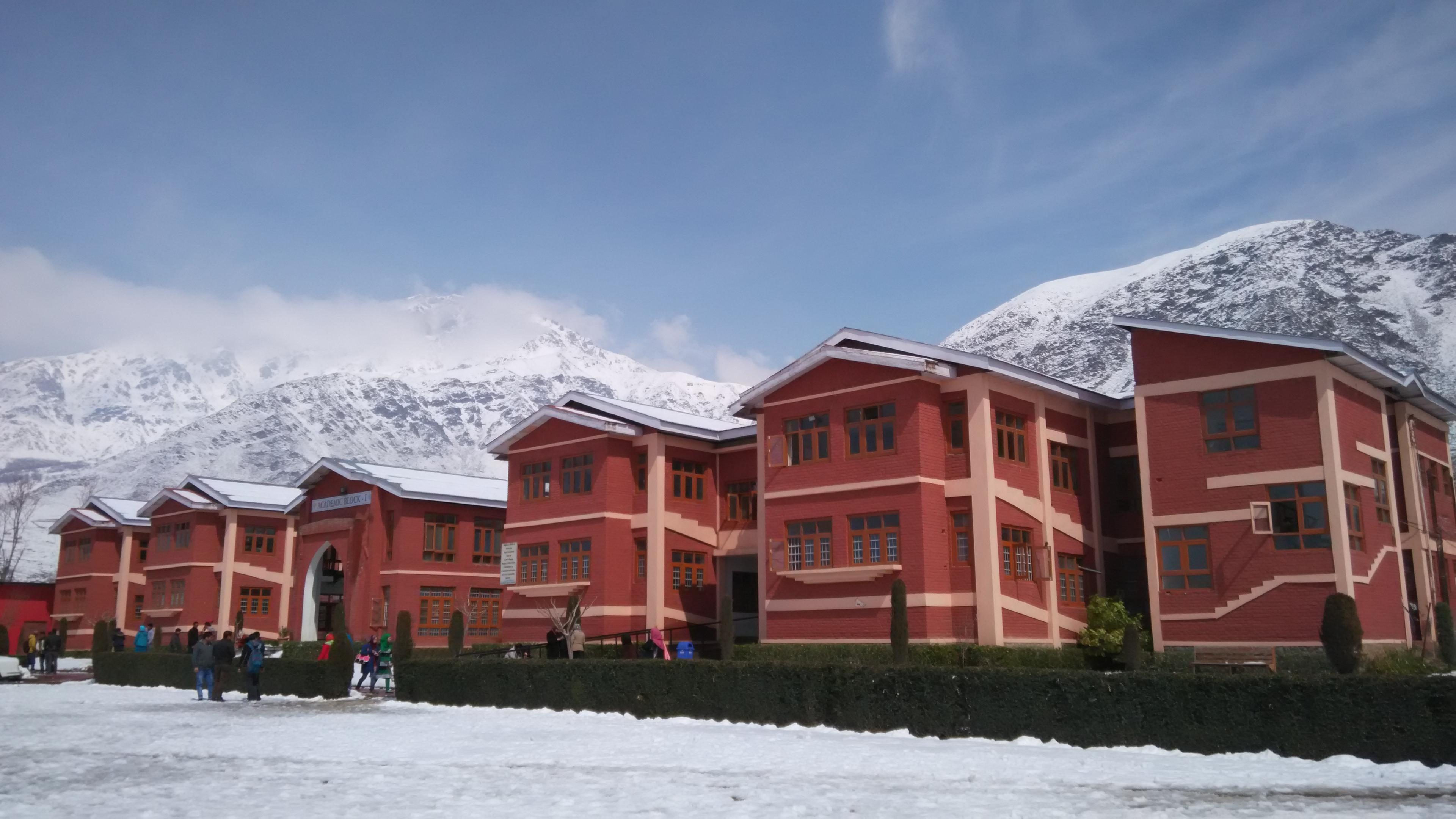
This is the part to be straight about. The venue is the Islamic University of Science and Technology at 1-University Avenue, Awantipora, Pulwama — in the Kashmir valley, not the Jammu division.
That is a real journey and a real cost, and it is the honest reason this congress gets less traction among Jammu students than it should. It is also more reachable than it used to be: the rail link now runs through to the valley, and Awantipora sits on the Srinagar side of Banihal.
The congress site has dedicated "How to Reach" and accommodation pages — read both before you decide, and factor the trip into whether ₹750 is really your total outlay.
Why bother?
Because a presented abstract is a line on a CV that a coursework grade is not.
For anyone applying for a PhD position, a JRF advertisement or a research assistantship — and Jammu's institutions advertise those constantly, from CSIR-IIIM to IIT Jammu to the University of Jammu — "presented at the J&K Science Congress" is a concrete, checkable credential. It signals you have taken a piece of work to the point where it can be defended in front of strangers.
It is also the one forum in the year where researchers from both divisions of this UT are in the same room. If your field in Jammu is three people and a supervisor, that is worth ₹750 and a train.
One small caution: the countdown widget on the congress homepage is visibly misconfigured and shows a nonsense figure. Ignore it. The printed dates are consistent across the website and the brochure, and 30 August is the date that matters.
%2Fgreater-kashmir%2Fmedia%2Fmedia_files%2F2026%2F06%2F27%2Fgmc-jammu-2026-06-27-05-46-24.jpg&w=3840&q=75)