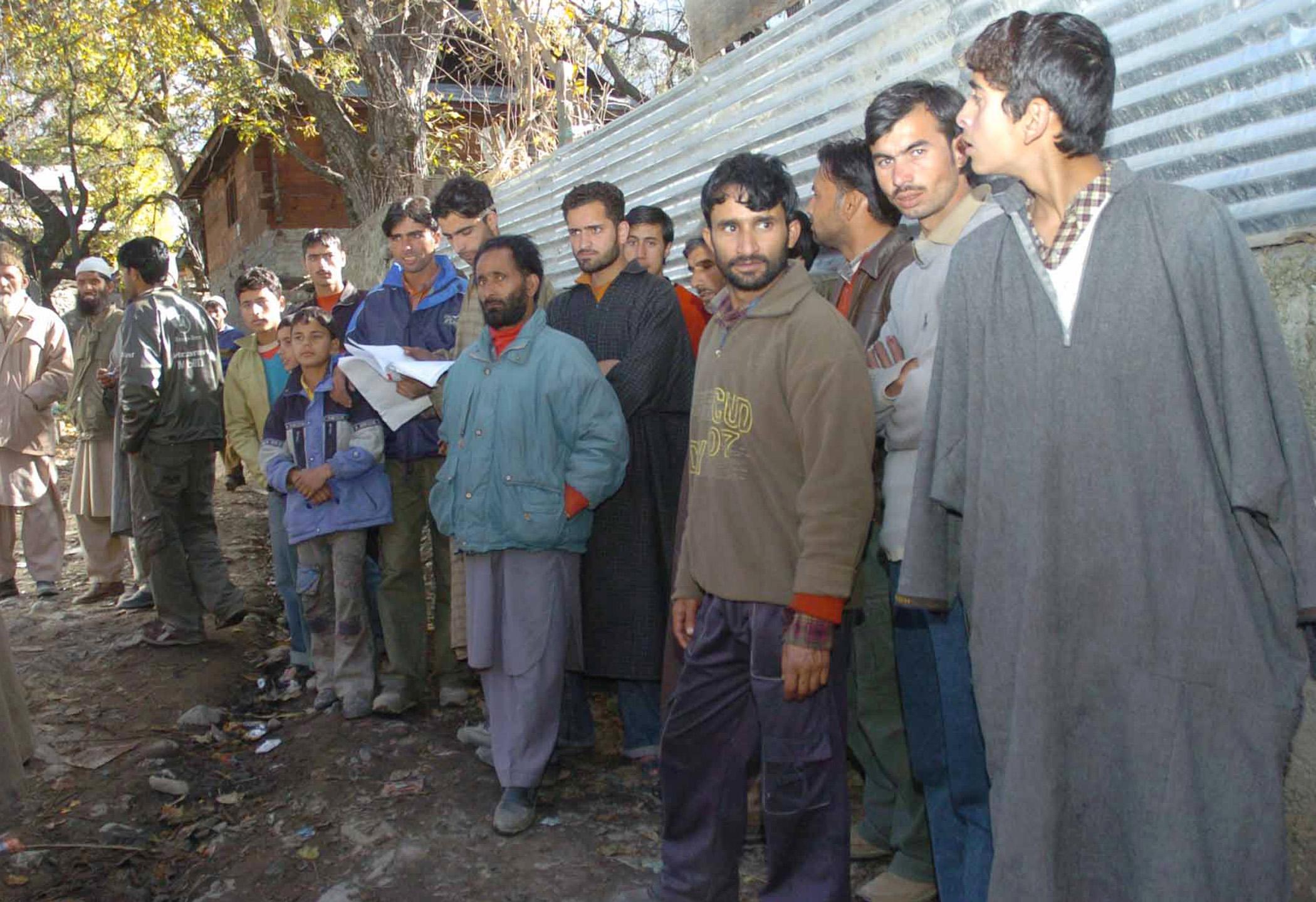
Seventy lakh. That is the number of land parcels the Revenue Department says it has now digitised and verified across Jammu & Kashmir — and it is the kind of figure that sounds like administrative housekeeping until you need a Record of Rights and discover your family's is wrong.
The work has been done with BISAG-N — the Bhaskaracharya National Institute for Space Applications and Geo-informatics — under the centre's Digital India Land Records Modernisation Programme (DILRMP), the national scheme for dragging state land records out of ledgers and into databases. The department is at pains to say this was not a scanning exercise. In its own words: "The exercise goes beyond scanning or digitising old records and involves updation, verification, public scrutiny and authentication of land records."
That distinction is the whole story. Photographing a wrong record produces a wrong record you can now email.
The numbers behind the number
70 lakh land parcels digitised and updated
13 lakh+ discrepancies rectified
6,800+ village-level camps held for public scrutiny
2,500+ revenue field functionaries given role-based access
31.26 lakh khasra records converted to owner-extent format
~7 lakh backlog mutations folded into the digitised Record of Rights
That backlog figure is the one that deserves a second look. A mutation is the entry that records a change of ownership — an inheritance, a sale, a partition. Seven lakh of them were sitting unincorporated. Every one represents a family whose paper record no longer matched who actually owned the land.
A short glossary, because the words matter
Revenue paperwork in this part of the country runs on three terms that almost nobody explains:
A khasra number identifies a specific plot in the revenue records — the plot's name, effectively.
The jamabandi, or Record of Rights, is the register recording who holds what, and on what terms.
A mutation is the entry that updates that register when the holding changes hands.
The 31.26 lakh khasra records converted to owner-extent format in the figures above is the least glamorous item on the list and arguably the most consequential. Converting to an owner-and-extent format means the record now states, in a machine-readable way, who holds the plot and how much of it — rather than leaving that to be reconstructed from older notation by someone who knows how to read it.
Who checks the work
Data entry alone would have been fast and useless. The department has run it through a three-tier chain instead, on a maker-checker-approver model:
The Patwari enters the data
The Girdawar or Naib-Tehsildar verifies it against the source records
The Tehsildar gives final approval
The 6,800 village camps sit alongside that as the public half of it — the stage at which a resident could look at what had been recorded and object. Thirteen lakh rectifications is what came out of that combination of internal checking and public complaint.
Why a 22-year-old should care
The honest answer is that most young people in Jammu will not think about land records until a form demands one, and then it will be urgent. A Record of Rights is what gets asked for when you apply for an education loan against family property, when you claim an agricultural scheme, when a Farmer ID is being issued, and whenever inheritance or partition comes up in a family.
Until now, checking or correcting one meant repeat trips to a tehsil office, usually with a parent who understood the paperwork better than you did. A verified digital record shifts that: what the state holds about your family's land is meant to be something you can look at rather than something you have to request.
The department's public-facing portal for this is JK Zameen Sudhaar. One honest caveat — we were not able to reach the portal ourselves to confirm exactly what it exposes and to whom, so treat the lookup process as the thing to verify locally rather than something this piece can walk you through step by step.
What it feeds into next
The digitised base is being pointed at AgriStack, the centre's farm-data architecture — specifically the Farmers Registry, geo-referenced village maps and a Crop Sown Registry. In practice that means the land record becomes the thing a Farmer ID is issued against, and the Farmer ID becomes the thing agricultural benefits are routed through.
For a young person in the Jammu belt whose family farms, that chain is worth understanding early: an error in the land record does not stay in the land record. It propagates into the registry, and from there into whether a scheme recognises you at all.
The part that isn't finished
Digitisation is not the same as accuracy, and 13 lakh corrections is evidence of how much was wrong rather than proof that nothing still is. The camps have been held; whether every objection raised at them was resolved is not something the published figures answer. If your family's holding has changed hands, been divided, or been inherited in the last few years, the useful move is to check what the record now says while the correction machinery is still actively running.
The three situations most worth checking, in rough order of how often they go wrong: an inheritance that was never formally mutated, because the family carried on as before and nobody filed; a partition among siblings that exists as an understanding rather than an entry; and a sale of part of a plot, where the extent recorded against each holder can drift from what was actually transacted. None of these announce themselves. They surface at the moment you need the record, which is invariably a moment with a deadline attached.
This also sits alongside the other big change to how land works in J&K this year — the new land pooling policy, which we broke down in numbers earlier this month.
Sources: Greater Kashmir (PTI), Greater Kashmir and The Tribune.
%2Fgreater-kashmir%2Fmedia%2Fmedia_files%2F2026%2F06%2F27%2Fgmc-jammu-2026-06-27-05-46-24.jpg&w=3840&q=75)