The story so far
JammuBeat has followed this reform through three stages.
August: an Ease of Doing Business ordinance, built around cutting the stack of No Objection Certificates a new business collects before it can open. Our explainer.
10 September: the J&K Cabinet cleared it as a Bill for the Assembly's autumn session. Our update. We said then that we would come back once the Bill's text was on the record.
21 September: separately, a seven-day clock was put on eight permissions a new business needs. Our report.
What's new: 28 September
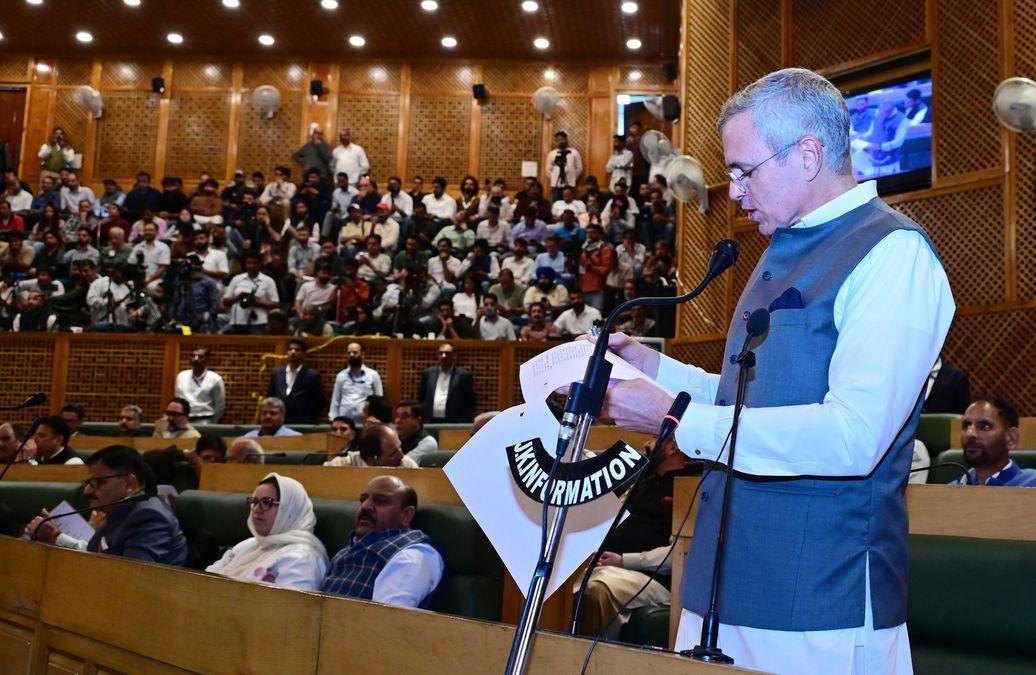
On Monday, Chief Minister Omar Abdullah, who also holds the Law, Justice and Parliamentary Affairs portfolio, introduced the Jammu and Kashmir Ease of Doing Business Bill, 2026 (L.A. Bill No. 11 of 2026) in the Legislative Assembly. It had already been published in an extraordinary issue of the Official Gazette. Its stated aim is to replace "permission-based control" with "rule-based governance".
Two related Bills were introduced alongside it:
a GST Amendment Bill (No. 12);
the J&K Jan Vishwas (Third Amendment of Provisions) Bill (No. 16). It amends 21 J&K Acts and repeals two that no longer apply. It decriminalises minor offences and moves penalties to adjudicating officers, with appellate authorities above them, in line with the central Jan Vishwas law.
According to Daily Excelsior, these Bills were listed for passage on 29 September. We wrote this before that day's outcome was known. Until the Assembly passes it and it is notified, this is a Bill, not a law.
What is in the Bill: the parts that touch a young founder
The provisions below are as reported by Greater Kashmir and Daily Excelsior. Daily Excelsior says it holds a copy of the Bill.
Permitted unless prohibited. An enterprise may do anything the law does not expressly forbid. Prior permission is to be required only where the law justifies it.
One State principle. No authority may ask for a document or information you have already given to another government authority.
Deadlines with teeth. A District Empowered Committee (DEC), chaired by the Deputy Commissioner, issues "in-principle approval":
within 3 working days for a new unit in an approved industrial park;
within 30 working days for a new unit outside one;
within 45 working days for an existing enterprise.
If the deadline lapses, the approval is deemed issued and can be downloaded from the portal. It works as approval under J&K laws for three years while you secure the regular clearances.
An inspection holiday. For three years from registration, no inspection or coercive action connected with approvals is allowed without the Deputy Commissioner's permission. Serious complaints are an exception, with written approval and recorded reasons. Inspection reports must go online within 48 hours.
Fewer duplicate food licences. A business registered under the Food Safety and Standards Act would not need separate municipal trade, health-trade, eating-house or restaurant licences under the specified provisions. That matters for anyone opening a café.
Appeals on a clock. DEC decisions can be appealed to an Executive Committee chaired by the Chief Secretary within 30 days, and the appeal must be decided within another 30.
The clause that concerns jobseekers
Both papers report an enabling provision on local hiring. The Executive Committee, with the approval of the Council's chairman, "may by order direct" that every enterprise employing more than 10 people reserve a percentage of vacancies for J&K domicile candidates. The percentage would be uniform across similar trades, and violations would attract a penalty. An enterprise could seek exemption if enough suitably skilled domicile candidates are not available.
Two things are worth being precise about. First, this is a power to issue an order, not a quota. The Bill as reported sets no percentage. Second, it would only apply once the Bill is law and such an order is actually issued.
What it would change beyond business
Private schools and colleges: the Executive Committee could relax minimum land, playground, classroom, library and security-deposit norms for new private schools (KG to Class 12) and private higher-education institutions. It could also let them share facilities such as playgrounds and labs.
Health professionals: doctors and healthcare professionals registered in another State or UT would be deemed registered in J&K.
Industrial land: units operating for five years could seek freehold conversion, subject to the Industrial Policy.
The relaxations are not immunity, per Greater Kashmir's reading of the Bill. A DEC can revoke approval and order demolition for fraudulent information, building-rule violations or failure to meet minimum fire-safety standards. Major central environmental and forest laws are unaffected.
What people have said so far
The government's case is in the Bill's statement of objects: easing business and daily life in a way that generates employment and attracts investment. We have not found a public statement from an opposition party or an industry body responding to this Bill's text as introduced. If one is published, we will add it. Separately, the Association of Industries, Gangyal called the government's review of the draft Industrial Policy 2026–35 on 24 September "a step in right direction". That is a different document.
What it means for you right now
If you are about to register a business, don't wait for this Bill. Current rules apply until it is passed and notified. If you are planning a unit in an approved industrial park, the three-day in-principle approval is the provision to watch. If you are a jobseeker, the domicile clause is worth following, but nothing changes until an order names a percentage.
Sources
Greater Kashmir — Red-tape faces legislative cut (28 September 2026)
Daily Excelsior — CM to introduce EoDB bill in Assembly today, industrial units to get approval within 3 days (28 September 2026)
Daily Excelsior — EoDB, GST, Jan Vishwas bills introduced in Assembly (29 September 2026)
Kashmir Observer — CM Introduces 6 Bills In J&K Assembly (28 September 2026)
Greater Kashmir — Bill for decriminalising and rationalising offences introduced (28 September 2026)
Daily Excelsior — Review of draft J&K Industrial Policy step in right direction: AOI