India's first Black-necked Crane Festival opened in Ladakh on August 11 and runs through August 14, spread across Leh, Tso Kar and Hanle. It was inaugurated by Vinai Kumar Saxena, Lieutenant Governor of Ladakh — not, as an earlier version of this lead had it, LG Manoj Sinha, who governs the separate UT of Jammu & Kashmir.
The black-necked crane is the world's only alpine crane species, with roughly 16,000 left globally across India, Bhutan, China and Nepal. Ladakh's Changthang plateau is India's sole breeding ground for it, which is what makes the festival — organised by the Ladakh UT administration and drawing conservationists, researchers and experts from Bhutan and Nepal — a genuine first, not just a marketing label.
Does Jammu have anything close?
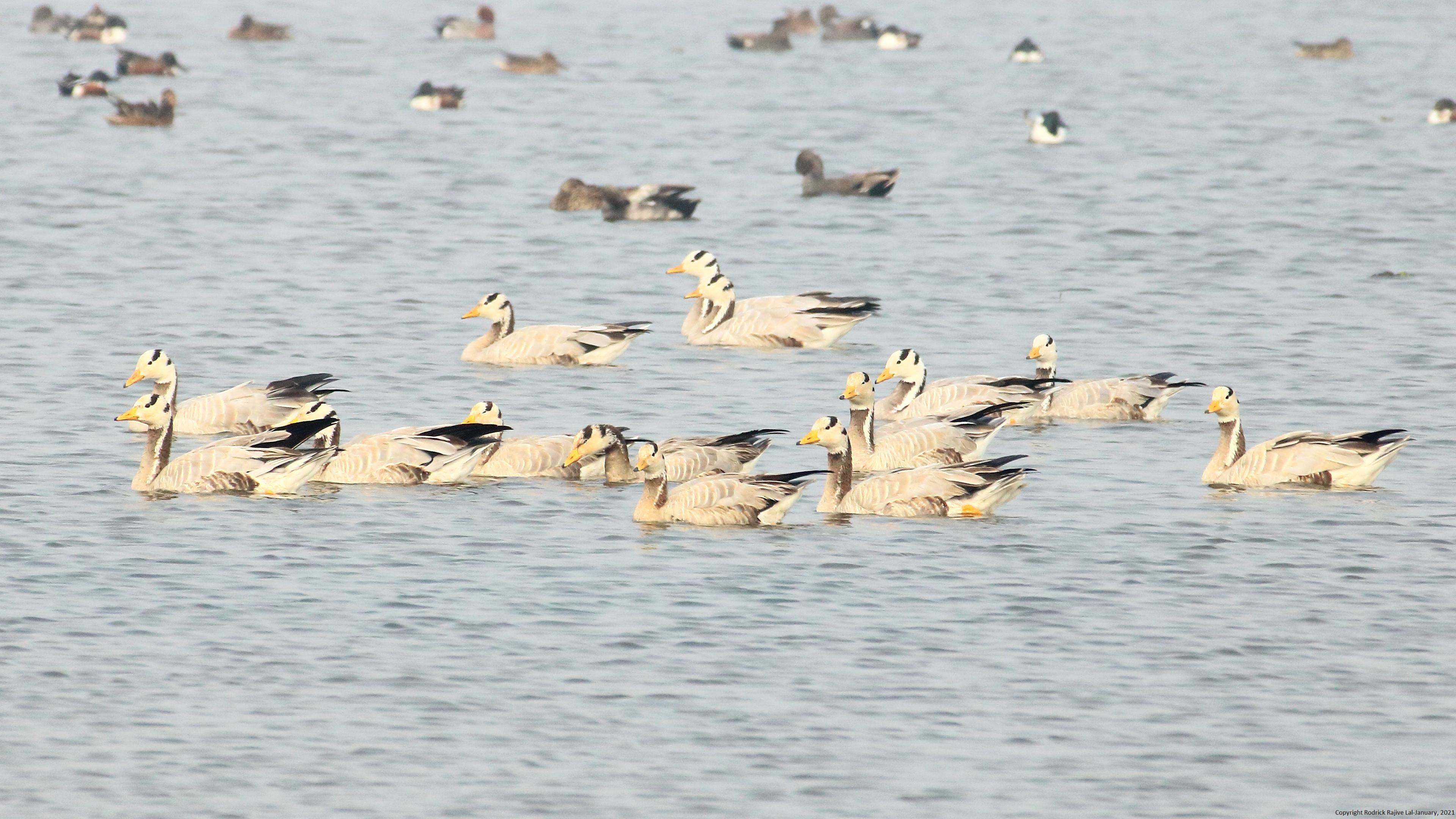
Closer to home than you might expect: the Gharana Wetland Conservation Reserve, near Suchetgarh in RS Pura, roughly 30–35 km from Jammu city, right on the Indo-Pak border. Notified since 1981, it hosts more than 170 bird species and 4,000 to 6,000-plus migratory birds each winter — bar-headed geese, gadwalls, common teals and purple swamphens among them — arriving from as far as Central Asia, Mongolia, Russia and China.
It's had its moment: a one-off "Bird Watching Festival" ran there on February 2, 2024, organised jointly by the Directorate of Tourism Jammu, the J&K Department of Wildlife Protection and Himalayan Avian, with guided bird-walks, a photography contest, painting sessions and expert talks — free entry. Nothing suggests it has been repeated since, in 2025 or 2026, despite Gharana's bird numbers not going anywhere.
The honest gap
This isn't a story about Jammu lacking the raw material — a notified reserve, hundreds of species, thousands of birds, and border-tourism potential all already exist at Gharana. It's that a proven, low-cost format (one festival, one winter, real turnout) hasn't been made an annual fixture the way Ladakh is now attempting with its crane festival. The J&K Wildlife Department has separately floated training local youth as bird guides for eco-tourism at Gharana — a skilling initiative, not a festival, and worth watching, but not a substitute for one.
If you're near RS Pura this winter, Gharana is worth the trip on its own bird numbers regardless of whether an official festival returns. Whether the district administration turns 2024's one-off into a yearly draw is the open question this piece can't answer for you — only report honestly that, so far, it hasn't.
Sources: Daily Excelsior, Rising Kashmir, The Tribune, utsav.gov.in (2024 Gharana festival listing), ThePrint.
%2Fgreater-kashmir%2Fmedia%2Fmedia_files%2F2026%2F06%2F27%2Fgmc-jammu-2026-06-27-05-46-24.jpg&w=3840&q=75)