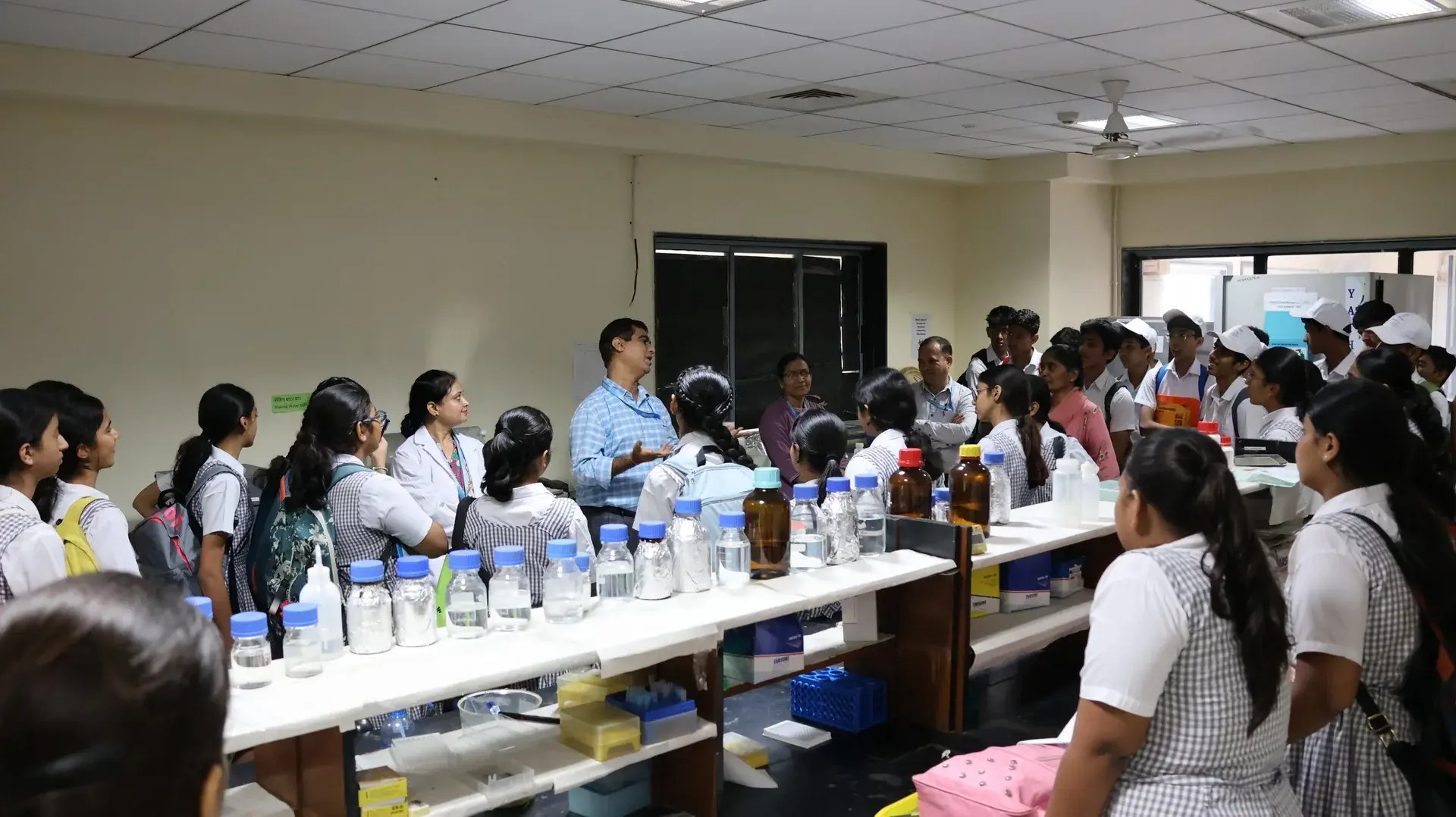
A health problem you notice at school, in your neighbourhood or at home could become a research idea in ICMR's national SHINE challenge. The free competition is open to students in Classes 9 to 12, and school nominations close on 11 September 2026.
Jammu students can write in English or any Scheduled Language, which includes Dogri, Kashmiri and Urdu. The entry is a two-page PDF that identifies a public-health challenge and explains practical ways to address it. A student does not need to arrive with a finished invention or laboratory prototype.
Who can take part
Students in Grades 9, 10, 11 and 12 can enter through a government, government-aided, semi-government or private school. There is no entry fee. The submission route runs through the school rather than through an individual student account.
That makes the first practical step simple: show the official guidelines to a science teacher, social-science teacher or principal and ask whether the school has designated a SHINE nodal officer. The school registers using its 11-digit UDISE code, and the nodal officer uploads the student entries.
The language option matters in Jammu. A student who can explain a community health problem more clearly in Dogri, Kashmiri or Urdu does not have to force the entire idea into English. The rules allow English or any language in the Eighth Schedule of the Constitution.
What the two pages need to do
The entry begins with the background to a public-health challenge. It then identifies the problem, states it clearly, proposes up to three possible solutions and ends with a plain-language pitch. With only two pages available, a narrow question is stronger than a sweeping promise to solve health care.
For example, “mosquitoes are a problem” is too broad. A sharper starting point might describe where water collects around a school, who is exposed and what low-cost action could reduce breeding. The same narrowing works for heat on a school commute, menstrual-health information, drinking-water safety, screen habits, air quality or another issue a student can observe.
Examples are starting points, not ready-made entries. Students should choose a problem they understand and should support factual claims with reliable health or government sources. A strong submission separates what has been observed from what still needs to be tested.
How to develop the idea without overcomplicating it
Observe: Write down exactly where, when and for whom the problem occurs.
Check: Read reliable sources to learn what is already known and avoid repeating a disproved claim.
State: Turn the issue into one clear sentence that can fit at the top of the submission.
Compare: List up to three realistic solutions and note the trade-offs of each.
Pitch: Explain the preferred idea in language a parent, teacher or local official could understand.
A solution can be educational, behavioural, digital, environmental or product-based, depending on the problem. What matters is that the link between the problem and the proposed response is understandable. Avoid claiming that an idea will cure, diagnose or prevent disease unless there is evidence to support that statement.
The school-side checklist
The nodal officer needs the school's UDISE code and must complete the school registration before uploading entries. Students should give the final PDF to that officer early enough for a file-name, page-count or upload error to be fixed before the deadline.
Ask for confirmation that the entry was actually uploaded. Sending a file to a teacher on 11 September is not the same as completing the SHINE submission. Keep a copy of the final PDF and any acknowledgement shared by the school.
What entrants receive
All successful entrants receive an ICMR participation certificate. The top 100 entries receive ₹1,000 and an ICMR certificate. Results are scheduled for 17 November 2026.
The cash award is modest, but the exercise itself can be useful for a school portfolio: it asks a student to move from observation to evidence, compare solutions and communicate a health idea within a tight format.
A calendar that leaves room for review
Use the first few days to choose and research the problem, then write the problem statement before drafting solutions. Leave the final days for a teacher to check clarity, factual support, language and the two-page limit. The school upload should happen before the final day wherever possible.
Sources: ICMR-SHINE official guidelines, school registration page, official SHINE portal and PIB announcement.
%2Fgreater-kashmir%2Fmedia%2Fmedia_files%2F2026%2F06%2F27%2Fgmc-jammu-2026-06-27-05-46-24.jpg&w=3840&q=75)