J&K's craft economy has spent the last five years collecting GI tags, QR-code labels, and registration drives. Its newest addition is JK Karigari (jkkarigari.jk.gov.in), a government-backed online marketplace that bills itself as "the official marketplace for authentic products from Jammu and Kashmir." It's a real, useful piece of infrastructure for the group of artisans it's built for — and reporting it out makes clear that group is narrower than the name suggests.
The background
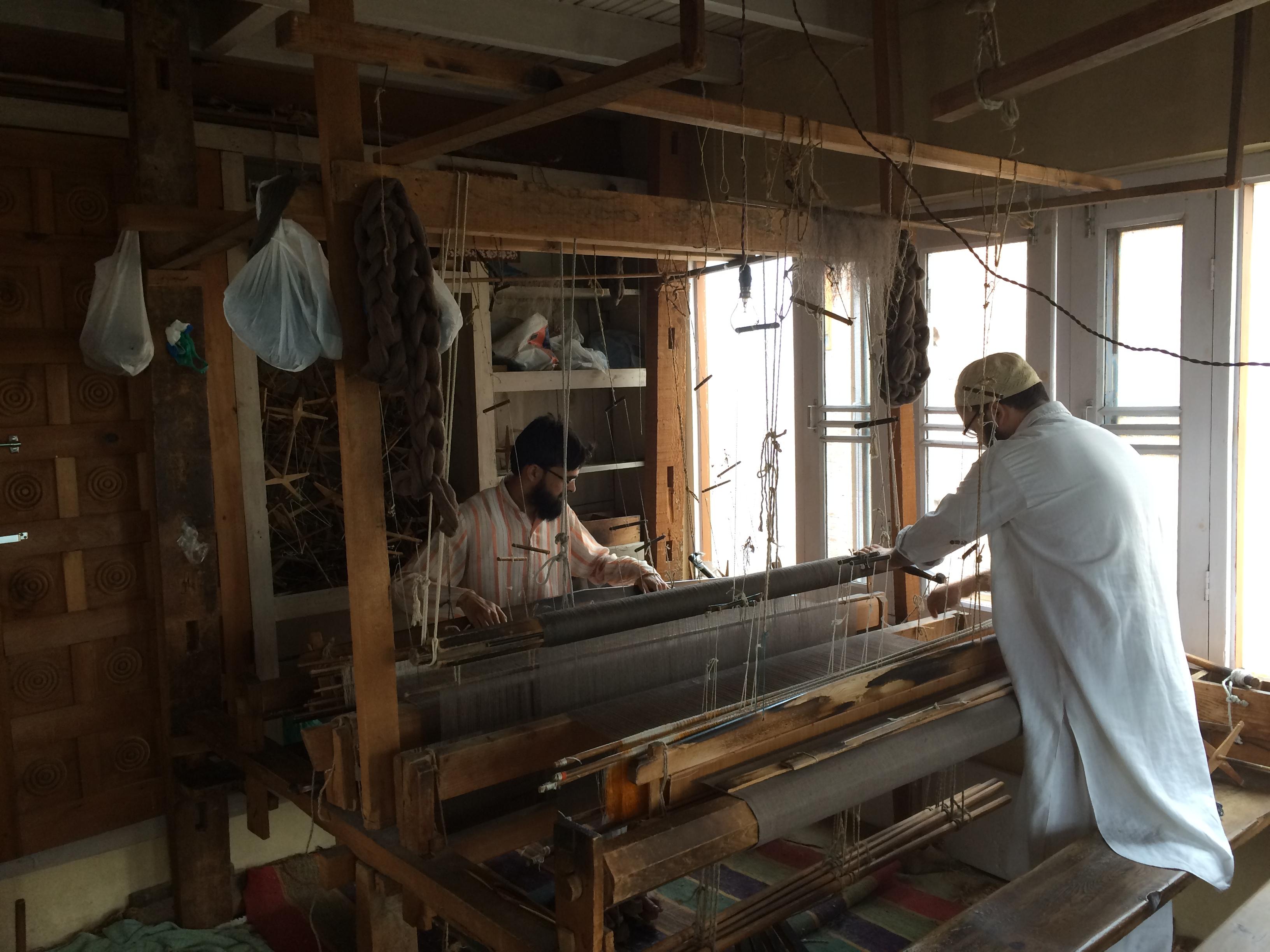
J&K has pushed hard on formalising its craft economy since 2020. Basohli painting — from Kathua, in the Jammu region — got its GI tag in 2023, the first independent GI product from Jammu division specifically; Basohli pashmina wool, Chikri wood craft (Rajouri), Kaladi (Udhampur) and several Chenab-belt foods have followed. As of an April 2026 review, J&K counts 4.52 lakh registered artisans and weavers, with roughly 80,500 QR-labelled products in circulation. Under the separate PM Vishwakarma scheme, J&K ranks first among all Union Territories for artisan registrations — but only 11th nationally for actually turning those registrations into disbursed loans, a gap officials attribute to rural artisans' hesitation over repayment and low financial literacy. A parallel, unrelated crackdown on counterfeit "handmade" goods sold under fake QR codes was ordered in April 2026 — a reminder that trust in these systems is still being built, not assumed.
What JK Karigari actually does
The portal itself, fetched directly, describes its scope plainly: it's a marketplace for Self Help Groups (SHGs), not a general artisan registry. "SHGs list and price their own products," and "every SHG is verified and approved by the local DAY-NULM City Mission before selling." Each product carries a QR sticker linking to the selling SHG, its district, and its GI tag where one applies.
That detail — DAY-NULM — matters more than it looks. The portal runs under the Deendayal Antyodaya Yojana–National Urban Livelihoods Mission, which in J&K sits with the Housing & Urban Development Department. That's a different department from the Handicrafts & Handloom Department and Industries & Commerce, which run GI tagging, the 4.52-lakh artisan registry, and PM Vishwakarma. NULM's mandate is urban poor SHGs — often women's collectives — not individually-registered rural or traditional artisans working outside a group structure.
Who it's built for — and who it might miss
That scope has a direct Jammu-region consequence: traditional individual karigars — a Basohli painter in Kathua, a Chikri wood-carver in Rajouri — working outside an SHG and outside NULM's urban-livelihoods bracket may not be eligible to sell on JK Karigari at all, however GI-tagged their craft is. Nothing in the portal's own material addresses this gap, and no news coverage of a launch event, minister, or press release for JK Karigari specifically turned up in reporting this piece — treat the portal as live and functioning, but its formal rollout as undocumented.
The artisan's side of it
No first-hand account from an artisan about JK Karigari itself exists yet in any published source — it's new enough that this gap is honest, not evasive. What does exist, from adjacent reporting, is a pattern worth knowing before assuming a portal alone fixes market access: Jammu Artisans and Weavers Association convener Balkrishan Koul has previously described departmental neglect of Jammu's own artisans — no dedicated shop space, funding approved for Kashmir's Urban Haat but never actioned for Jammu. Separately, a Kashmiri artisan who moved onto e-commerce platforms in 2022 said her income doubled — but that packaging, digital marketing, and reaching buyers abroad remained the hard part even after going online.
What's still missing
No announced rollout roadmap, onboarding target, or budget for JK Karigari specifically has been published — the only dated, concrete target found anywhere nearby is PM Vishwakarma's separate goal of 30,000 credit linkages by March 2026. For young Jammu residents with artisan family businesses, or anyone weighing whether to push a relative's craft online: check first whether your SHG is DAY-NULM-verified, since that's the actual gate to listing — and if you're an independent traditional artisan rather than part of an SHG, this particular portal isn't yet built with you in mind.
Sources: JK Karigari (official portal); Kashmir Observer; Rising Kashmir; Deccan Herald; The Tribune; Global Press Journal.
%2Fgreater-kashmir%2Fmedia%2Fmedia_files%2F2026%2F06%2F27%2Fgmc-jammu-2026-06-27-05-46-24.jpg&w=3840&q=75)