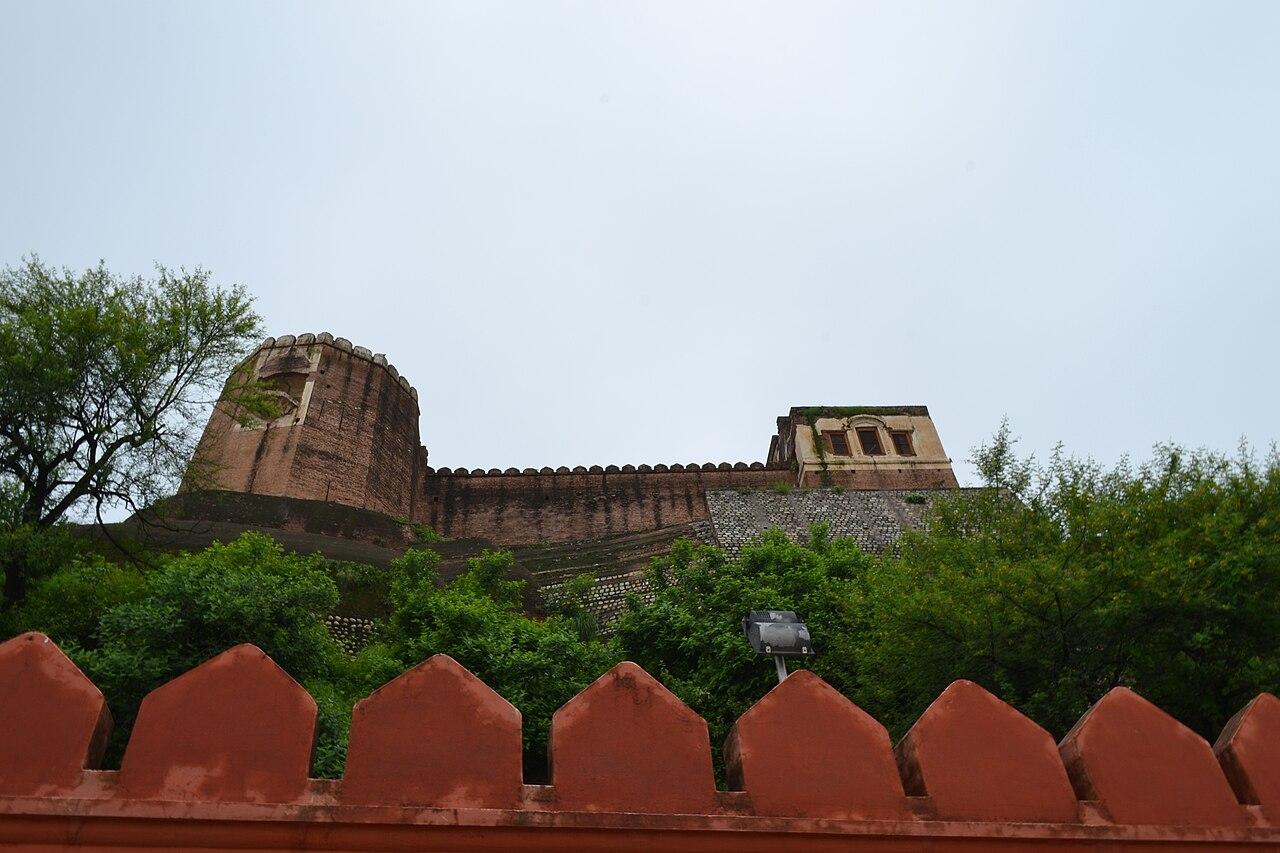
Everyone in Jammu knows the drill for a day out: Patnitop, Surinsar, maybe a run to Katra. Akhnoor rarely makes the list — which is exactly why it is worth your next free Sunday. Roughly 28 kilometres west of Jammu city, this small town on the banks of the Chenab hands you a cliff-top fort, an ancient Buddhist site and a riverside ghat, all in a half-day and on a student budget.
Here is a field guide to doing it right.
Quick facts
Distance: ~28 km from Jammu city (about an hour by road).
Getting there: Regular buses and shared taxis run from Jammu's bus stand toward Akhnoor; by car it is a straightforward drive on the Jammu–Akhnoor road.
Best season: October to March, when the weather is mild and the Chenab is calm. (More on the monsoon caveat below.)
Budget: A shoestring trip — public transport both ways, entry to the fort is free, and a riverside snack won't dent your wallet.
The drive itself
Half the pleasure is the approach. The road out of Jammu drops gradually toward the Chenab plain, and the first sight of the wide, grey-green river opening up is a small event in itself after the city's traffic. Leave early — a mid-morning start gets you to the fort before the day heats up and leaves the soft late-afternoon light for the ghat. If you're taking public transport, ask for buses headed to Akhnoor town; shared taxis are quicker and only a little dearer, and both drop you within walking distance of the main sights.
Akhnoor Fort, above the Chenab
The centrepiece is the Akhnoor Fort, built in the late 18th and early 19th centuries by the Dogra rulers and now a protected monument. It sits on a bluff directly over the Chenab, its stone ramparts dropping toward the water — the kind of view that makes the phone come out immediately. Wander the bastions, look out over the river bending below, and you get a quiet sense of why this crossing mattered for centuries: whoever held Akhnoor held a gateway between the plains and the hills beyond. Entry is free; give yourself an unhurried hour to walk the walls and take it in.
Jia Pota Ghat, where a kingdom was crowned
A short walk brings you to the Jia Pota Ghat, the riverside step-bank that is Akhnoor's other claim to fame. This is the spot linked to the coronation of Maharaja Gulab Singh, the founder of the Dogra dynasty — history you can actually stand on. Today it doubles as a mellow picnic spot: families spread out by the water, vendors sell snacks, and the light over the Chenab in the late afternoon is genuinely lovely. It is a good place to eat whatever you've packed and simply sit for a while, watching the river go by.
Ambaran: a Buddhist monastery older than you think
Just outside Akhnoor lies Ambaran, an excavated Buddhist monastic complex whose story reaches back roughly two millennia — a stupa-and-monastery site that flourished across several centuries in the early first millennium, on what was once a trade and pilgrimage route. It is not a manicured tourist attraction, and that is part of the appeal: standing at an archaeological site this old, this close to home, quietly reframes the whole region's history from "border town" to "crossroads of civilisations." History and archaeology students especially should make the detour. Ask locally for current access, as the site is managed for conservation. If you have time and energy, the area also has caves associated in local lore with the Pandavas — a small add-on for the curious.
Make a day of it — what to carry
Akhnoor rewards a little preparation. Carry water, a hat and sunscreen; shade is patchy at the fort and the ghat. Pack a light lunch or snacks — the town has dhabas, but a riverside picnic is the whole point. Wear proper shoes for the fort's uneven stone, keep your phone charged for the views, and carry a little cash, since not every vendor takes UPI. And take your litter back with you: these are living heritage and picnic spots, and they stay pleasant only if visitors leave them clean.
Don't get caught out
One serious note. Akhnoor is beautiful in the monsoon from a distance, but the Chenab runs high, fast and cold when the rains come, and its water levels can change without warning. This is not a river to wade into or picnic right at the edge of during or after heavy rain. Keep well back from the water, watch children closely, and if the weather is bad, save the trip for a clear day. The dry, cool months from autumn to early spring are both safer and far more pleasant.
Do it sensibly and Akhnoor gives you the rarest thing a day trip can offer: somewhere close, cheap and genuinely worth remembering — without a single traffic jam to Patnitop.
Sources: J&K Tourism — Jia Pota Ghat; District Jammu — Akhnoor Fort.
