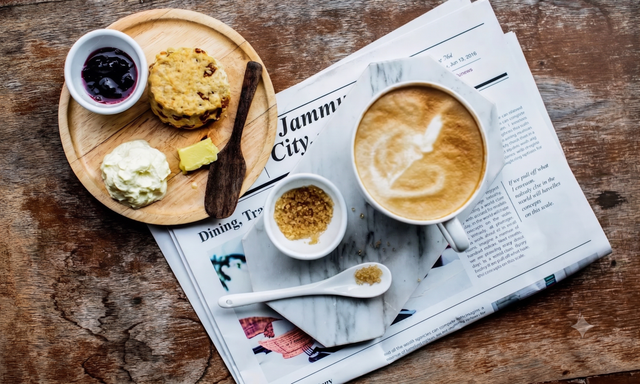
There is a sociology term that fits Jammu in 2026 better than it has any right to: the "third space." Coined to describe the places that are neither home nor work — the cafe, the park, the corner shop where a community actually meets — it captures exactly what is happening across the city right now. From Exotic Cafe in Channi Himmat to Cafe J in Gandhi Nagar, a quiet revolution in glass, wood and good lighting has given the city's young a place to simply be — and the city's social life has reorganised itself around the result.
If you grew up here even a decade ago, the shift is startling. The old geography of hanging out ran through homes, temple courtyards, the bazaar and the occasional restaurant reserved for occasions. Today a Jammu twenty-something has a menu of cafes to choose from, each with its own personality, and the choice itself is part of the pleasure. The cafe is no longer where you go to drink coffee. It is where you go to do everything that is not eating or sleeping.
What the menu is really selling
Look closely at a place like Exotic Cafe and you notice the menu is engineered for lingering, not just feeding. The offering runs across familiar youth-friendly territory — North Indian and Chinese plates, momos, sandwiches, a roll-cart's worth of kathi wraps from paneer tikka to mushroom, stuffed paranthas and kulchas — comfort food priced and portioned for groups who came to stay a while. This is shareable food, the kind you order in the middle of the table so that the eating becomes a backdrop to the talking. The coffee or cooler in your hand is, in a sense, rent for the chair.
That is the genius of the format, and the honest economics of it. A cafe sells you a beverage, but what you are actually buying is permission — to occupy a comfortable, air-conditioned, well-lit, photogenic space for two hours, with WiFi and a power socket and nobody hurrying you out. In a city where the summer makes the outdoors hostile and the family home offers little privacy, that permission is genuinely valuable. The cafe has commercialised leisure, and the young have decided the price is fair.
The living room the city didn’t have
To understand why cafes matter so much here, you have to understand what they replaced — which is, largely, nothing. For decades there was a shortage of neutral ground in Jammu: places where a student could study away from home without spending much, where a remote worker could set up a laptop for an afternoon, where two friends could meet without it being an event. The cafe quietly filled all three gaps at once.
Spend an afternoon at a busy spot in Gandhi Nagar or Channi Himmat and you can watch the third space at work. One table is a study group with open laptops and a war zone of notes. Another is a freelancer on a video call, headphones in, treating the cafe as a paid office at a fraction of co-working rates. A third is the oldest use of all — two people working out the terms of a friendship, or something more, over a drink that gives their hands something to do. The cafe holds all of it without comment. That neutrality is the product.
Cafes in the city also report, generally, a young and loyal crowd — the kind that returns for the atmosphere as much as the food, that has a "usual" table and a "usual" order. That regularity is what turns a business into an institution. A restaurant you visit for a celebration; a cafe you visit for a Tuesday. The second relationship is the deeper one, and it is the one Jammu's cafe culture has built.
The leisure economy, growing up
Zoom out and the cafe boom is really a story about a city's consumer culture maturing. Disposable income, a generation comfortable spending on experiences rather than only on necessities, the normalisation of remote and freelance work, and the universal human need for a "place" — all of it converges on the cafe. The result is a small but real leisure economy, one that employs baristas and cooks, fills commercial real estate, and gives young entrepreneurs a relatively accessible business to dream about opening themselves.
There is a mild critique to make, of course. Commercialised leisure means the price of belonging is now a minimum order; the cafe is democratic, but only to those who can spend. The free third spaces — the parks, the riverbanks, the public squares — still matter precisely because they ask nothing. A healthy city needs both: the cafe that sells you comfort and the commons that gives it away. The smart move for the JammuBeat reader is to use both without confusing one for the other.
Still, on balance, the boom is something to celebrate. A city's cafes are a fair index of its confidence, its sociability and its willingness to invest in pleasure rather than only in survival. By that measure Jammu is doing well. So claim your usual table, order something shareable for the middle, and settle in. The whole point of the third space is that nobody is going to ask you to leave.
House rule for cafe regulars: tip the staff, free the corner table during the dinner rush, and remember the drink is rent — pay it gladly.