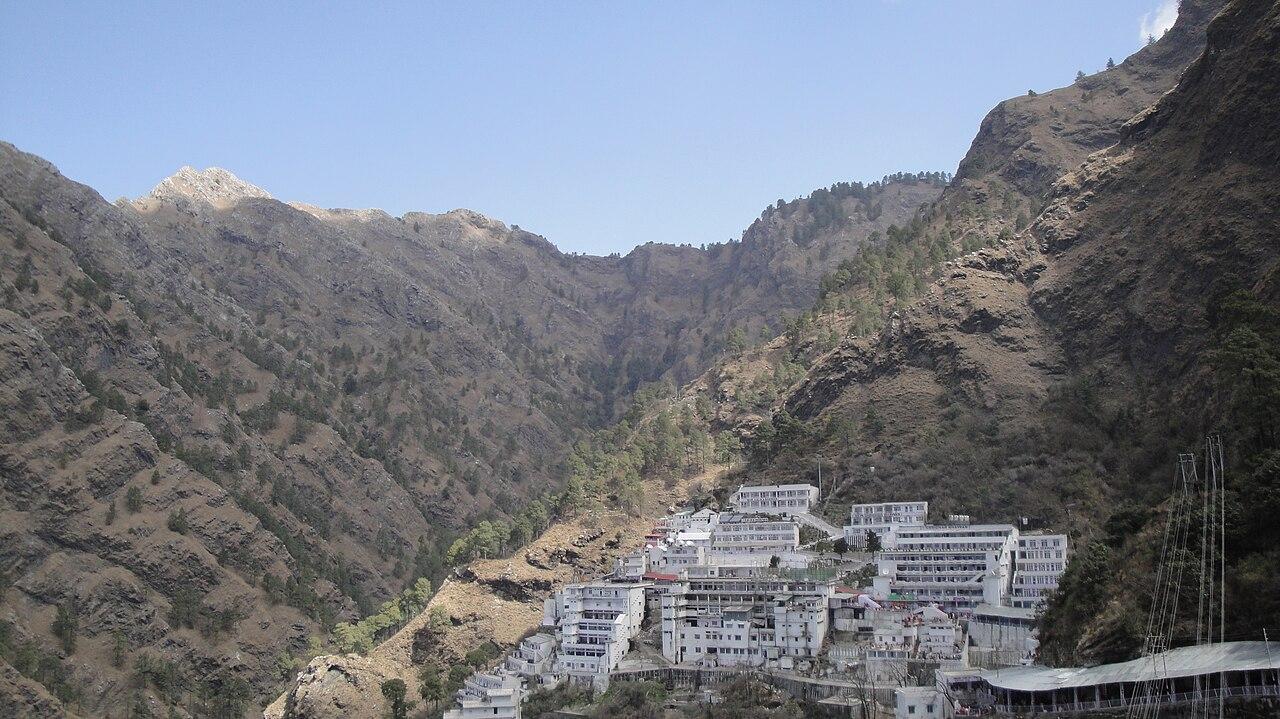
If Jammu has a summer heartbeat, much of it is audible in Katra. As the season peaks, the town at the base of the trek to Mata Vaishno Devi swells with pilgrims, and the ripple of that movement runs through the whole region's economy — hotels, transport, eateries and thousands of seasonal jobs.
The scale is hard to overstate. The shrine draws roughly 95 lakh pilgrims a year, second in India only to Tirumala, with the vast majority making the journey on foot from Katra. Summer, alongside the wider holiday calendar, is when those numbers run hottest.
More ways up the mountain
The yatra is no longer a single hard climb. Pilgrims can choose the traditional route via Banganga, the gentler Tarakote Marg, battery-operated cars, ponies and palkis, or a short helicopter hop toward Sanjichhat. A ropeway now also links the main Bhavan to the Bhairo temple, trimming what was once a steep onward trek to a brief ride — small upgrades that, at this volume of visitors, add up to a very different experience.
Behind the numbers is a town that runs on the yatra — and a city that feels its rhythm every summer.
What it means for young Jammu
Peak season is not only a pilgrimage story; it is a livelihoods one. The rush sustains hospitality, transport, portering and retail work all along the corridor, much of it seasonal and much of it filled by young people earning through the summer months. Hotels staff up, taxi unions run flat out, shops in Katra restock daily, and the eateries along the route rarely see an empty table — the whole town effectively works a different shift when the pilgrims are at their peak.
For students on summer break, it is a live case study in how faith, tourism and a local economy move as one, and a reminder that the busiest few months on the mountain quietly underwrite a good part of the region's year. Whether you make the climb yourself or simply watch the buses roll toward Katra, the summer yatra is one of the clearest expressions of what this part of Jammu actually runs on.