%2Frising-kashmir%2Fmedia%2Fmedia_files%2F2026%2F07%2F24%2Fgovt-will-continue-backing-startups-cm-omar-2026-07-24-01-14-56.jpeg&w=3840&q=75)
Seven J&K startups walked out of a Srinagar auditorium last week with a cheque for Rs 5 lakh each. Twenty more had just pitched their ideas to a room of fourteen investors. And for every student in Jammu who has ever sketched a business plan in the back of a notebook, the more useful news was quieter: two new competitions were launched that are built specifically to find them.
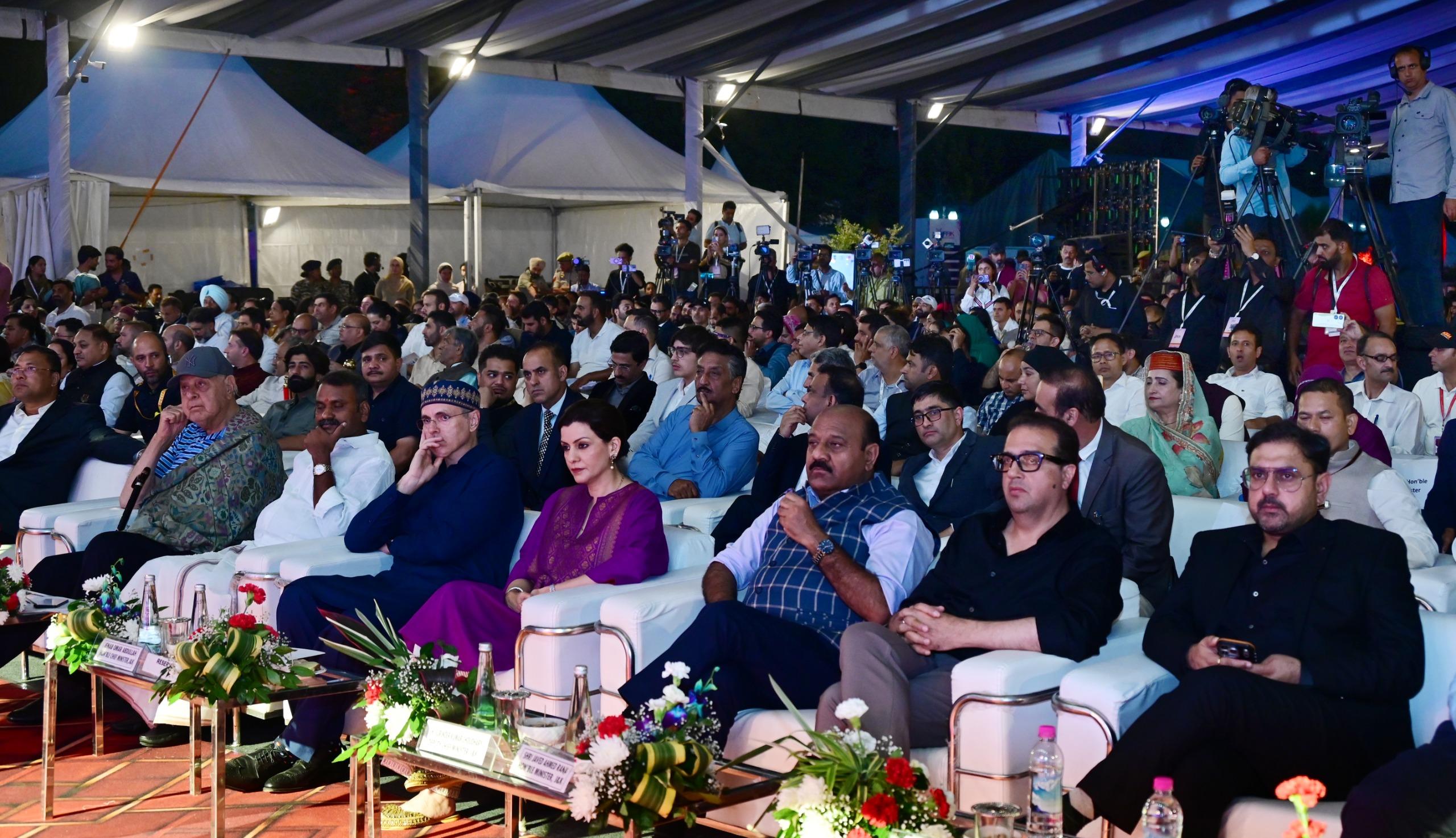
At the two-day ASCEND J&K 2026 startup summit, held at the SKICC in Srinagar on 23-24 July, Chief Minister Omar Abdullah launched the Startup Idea Challenge 2.0 for college and university students, alongside a Junior Level Idea Challenge 2026 aimed at school students under 18. Both are run by the J&K Entrepreneurship Development Institute (JKEDI) under the Industries and Commerce Department, and both are open to young people across the Union Territory — Jammu included.
Why two challenges, and who each one is for
The split is deliberate. The Junior Level Idea Challenge is a first rung for school students: a place to float an idea, get it taken seriously, and learn what turning it into something real actually involves — long before college applications or funding rounds enter the picture. At that age the point is not to build a company; it is to discover that "I have an idea" can be the start of something structured, and to get comfortable presenting it to adults who will ask hard questions.
The Startup Idea Challenge 2.0 is the step up, for college and university students who already have a concept and want mentorship, structured feedback, and a path towards seed support. The "2.0" tag signals a second, refined edition of an idea-hunt JKEDI has run before — the earlier round drew thousands of student entries across J&K and shortlisted a smaller pool for deeper support, which is the template this version builds on.
For a 19-year-old in a Jammu degree college, the appeal is straightforward: these are among the very few formal channels in J&K where a student idea can reach government mentors and investors without a family contact or an expensive private incubator fee standing in the way.
What the summit actually delivered
ASCEND 2026 was not only about launches. The same event saw the Chief Minister hand seed-fund cheques of Rs 5 lakh each to seven startups, and 20 startups pitch to 14 investors — a live demonstration of the pipeline these new challenges are meant to feed. The message from the stage was that the government intends to keep backing early founders, and that building a durable startup ecosystem needs a fundamental shift in approach rather than one-off grants.
That framing matters, because the gap in J&K has rarely been talent. It has been the connective tissue between a good idea and the first bit of money — the mentor who tells you your unit economics are wrong, the investor willing to take a small early bet, the deadline that forces you to actually write the plan down. A challenge with a government institute behind it supplies exactly that scaffolding: a structured process, credible judges, and, for the winners, a route to funding and incubation instead of a certificate that gathers dust.
What we don't know yet — and where to check
Here is the honest part. As of now, JKEDI has not published the registration process, eligibility fine print, deadlines or prize structure for either new challenge. Those details are expected to follow on the official StartupJK channels. So treat this as a heads-up to get ready, not a live application window — and be sceptical of any "apply here" link circulating on social media until it points to an official JKEDI or StartupJK page.
Watch the official portal. Registration and rules will appear on startupjk.com and JKEDI's channels — bookmark it and check weekly.
Sharpen the idea now. A one-line problem statement, who it helps, and why you are the person to build it. That is what a pitch needs before it needs a slide deck.
Line up your basics. Student ID, a working email, and — for the college challenge — a short write-up of your concept, ideally with a rough sense of who your first users would be.
Part of a bigger push
These challenges do not land in a vacuum. Jammu's student-entrepreneur scene has been visibly warming: JKEDI's own summer internships have been putting students inside real ventures, campus incubation cells are multiplying, and home-grown deep-tech has started to make national headlines — including a Jammu team building a jet-powered combat drone out of an IIT Jammu lab. The Idea Challenges are the entry-level version of that same ambition — a way in for people who are still students, who do not yet have a company or a co-founder, only a hunch worth testing.
If you have an idea and you are in school or college in Jammu, the practical move this week is small but real: set a reminder to check StartupJK, and start writing your idea down in plain sentences. When the window opens, the students who are ready will be the ones who move — and the seven cheques handed out in Srinagar are proof that, at the end of this pipeline, the money is real.
Sources: Rising Kashmir; Greater Kashmir; StartupJK (JKEDI).