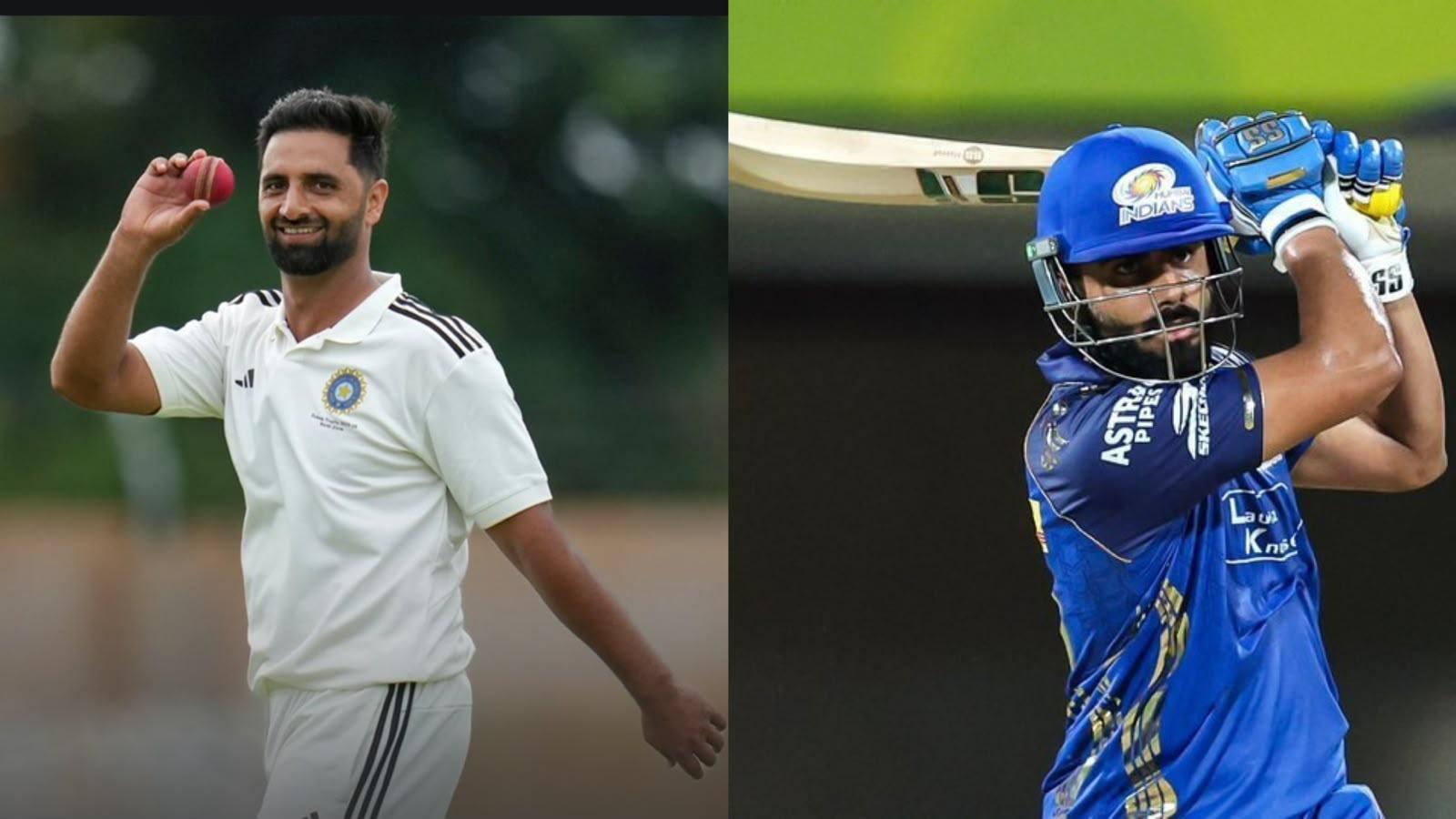
On 16 September the BCCI named a 15-man India squad for a three-match home ODI series against the West Indies. Two names in it were new. One belonged to a right-arm seamer from Jammu and Kashmir named Auqib Nabi.
He is not the first cricketer from this Union Territory to be picked for India, and it would be wrong to say otherwise. What is genuinely unusual is the shape of the climb — short, steep, and built almost entirely out of domestic red-ball wickets rather than a franchise season. For anyone playing club cricket in Jammu and wondering whether the Ranji route still leads anywhere, it is worth walking through year by year.
2024-25 — the season that made him a name
Nabi, born 4 November 1996 in Sheeri, Baramulla, took 44 wickets at an average of 13.93 in the Ranji Trophy, with a strike rate of 30.47 — a wicket roughly every five overs. Those are not "promising young bowler" numbers. Those are numbers that win matches on their own, and they put him on the selectors' radar for the first time.
2025-26 — 60 wickets, and a title
Then he went up a level. In Jammu and Kashmir's Ranji Trophy-winning campaign, Nabi took 60 wickets at 12.65, finished as the tournament's highest wicket-taker, and was named Player of the Tournament.
Read the average again: 12.65. Across a full first-class season, at a standard where good seamers average in the mid-twenties, he was conceding fewer than thirteen runs for every wicket he took. That season is the whole argument for his selection, and it is also the reason J&K are champions.
August 2026 — carrying the drinks in Sri Lanka
The first call came in the longest format. Nabi was included in India's Test squad for the tour of Sri Lanka as cover for the injured Jasprit Bumrah. He did not play. Squad-but-not-XI is an awkward place to be, but it is also where most international careers actually begin — close enough to the dressing room to learn what the standard is.
September 2026 — a county contract
Rather than wait for the next domestic season, he signed for Surrey for three County Championship Division One matches. English conditions in September reward exactly the kind of bowling that earned him 60 wickets at home: seam, control, and the patience to bowl at a length for long spells.
16 September 2026 — the ODI squad
Nabi and Punjab's Naman Dhir were the two maiden call-ups in the squad announced for the West Indies series. The three matches are scheduled for 27 September at the Greenfield International Stadium, Thiruvananthapuram; 30 September at the Barsapara Cricket Stadium, Guwahati; and 3 October at the Maharaja Yadavindra Singh International Cricket Stadium, Mullanpur.
Selection is not a cap. He may carry drinks again. But he is in the room.
What an average of 12.65 actually means
Averages are the easiest cricket statistic to quote and the easiest to skim past, so it is worth slowing down on this one.
A bowling average is runs conceded divided by wickets taken. Lower is better. Across a full Ranji Trophy season, a seamer averaging in the low twenties is having a good year and will be talked about. Mid-twenties is solid. Nabi's 12.65 is not in that conversation at all — it means that over an entire season, against Ranji batting line-ups on first-class pitches, he was buying a wicket for less than thirteen runs.
Pair it with the previous season's strike rate of 30.47 — a wicket roughly every thirty deliveries — and a picture emerges of a bowler who is not merely economical but actively taking the game away. Economy alone does not win you a Ranji Trophy. Wickets at that frequency do.
The other thing worth registering: he did it twice. One freakish season can be a flat wicket, a favourable draw, a hot fortnight. Forty-four wickets one year and sixty the next, at averages of 13.93 and 12.65, is a bowler, not a sample-size accident. That consistency is almost certainly what convinced a selection panel more than any single spell did.
The series he has walked into
The West Indies ODIs are a three-match home assignment in late September and early October — the kind of series where a squad carries more bowlers than it can play and a new seamer's first job is to be available. India's pace resources are deep, and there is no guarantee of an over.
But the timing is not accidental either. Selectors tend to look at uncapped domestic performers in exactly these windows, and a bowler who has just spent a few weeks bowling in English conditions for Surrey arrives in better rhythm than one coming off a break.
Why this should matter to you if you play in Jammu
Two honest observations, and a caveat.
The caveat first: Nabi is from Baramulla, in the Kashmir division, not from the Jammu belt. We are running this because the J&K state side is the same side for both divisions — the team he took those 60 wickets for is the one a Jammu club cricketer is trying to get into.
Which leads to the first observation: the selection pathway here is red-ball domestic cricket, not a shortcut. Nabi did not get picked off a viral video or a T20 cameo. He got picked for two consecutive first-class seasons of relentless wicket-taking. The route runs through district and state age-group cricket into the Ranji side, and it is long.
The second: J&K is now a team worth being in. A Ranji title changes what a call-up from this state means to a national selector. The players coming through the J&K system over the next three or four years will be assessed against the standard this side just set, and that is a far better problem to have than the one before it.
If you are chasing that route, the free Academies of Excellence at Khel Gaon are the closest thing to a formal entry point in this region — we wrote about who can join and how in Khel Gaon Nagrota: 9 Free Sports Academies Now Open to Young Jammu Athletes.
Sources: Deccan Herald; Daily Excelsior, 17 September 2026; The Kashmir Images, 16 September 2026; WION.