%2Fgreater-kashmir%2Fmedia%2Fmedia_files%2F2026%2F06%2F27%2Fgmc-jammu-2026-06-27-05-46-24.jpg&w=3840&q=75)
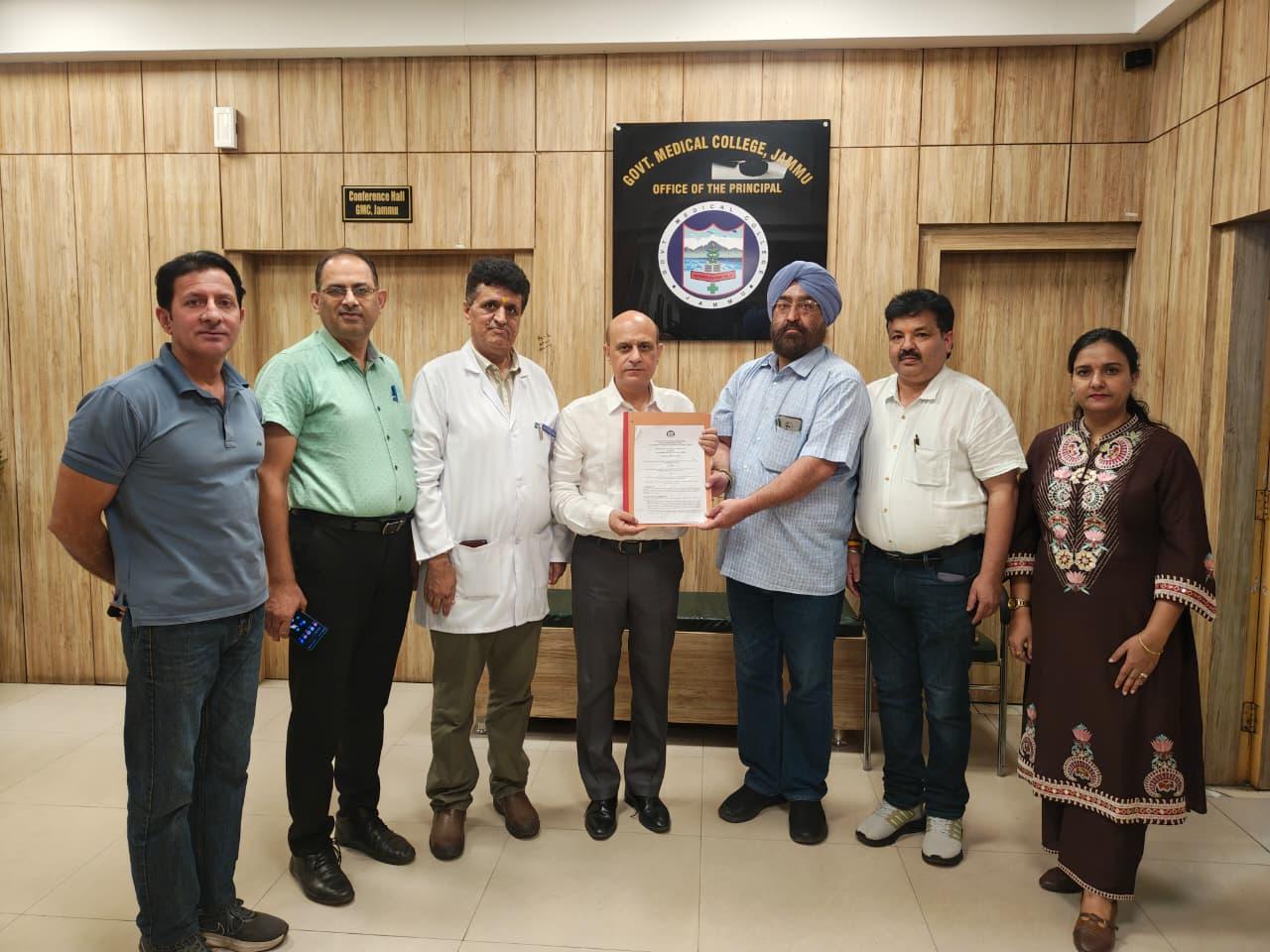
If you are one of the thousands of Jammu teenagers who have spent the last two years buried in NEET biology and physics, this is the kind of news that changes the maths of your future. Government Medical College (GMC) Jammu has been cleared to teach 50 more MBBS students every year, taking its annual intake from 200 to 250 seats from the very next admission cycle.
The green light came through a Letter of Permission (LoP) issued on July 12, 2026 by the Medical Assessment and Rating Board (MARB), the arm of the National Medical Commission (NMC) that inspects and rates medical colleges. GMC Jammu, which is affiliated to the University of Jammu, can now admit a batch of 250 first-year MBBS students for the 2026-27 session.
Why 50 seats is a big number
It is tempting to shrug at “50 seats.” Don’t. In a Union Territory where medical admission is one of the most brutal competitions a student will ever face, every additional government seat is enormously valuable — both because it is a merit seat won on a national exam, and because government MBBS fees are a fraction of what private and deemed universities charge.
Under the counselling rules, 15% of these MBBS seats go into the All-India Quota for centralised counselling, while the bulk remain in the state pool that J&K’s own aspirants compete for. More seats in the state pool means the cut-off rank a Jammu student needs to clear inches within reach for a few dozen more candidates each year — students who might otherwise have been pushed toward a costly private college in another state, or a fresh drop year.
The expansion does not sit alone. Just days earlier, on July 10, GMC Srinagar received an identical nod for 50 additional seats, also lifting its intake to 250. Taken together, the two flagship colleges add 100 new MBBS seats across Jammu and Kashmir in a single admission season — arguably the single biggest one-year jump in home-grown medical capacity the UT has seen.
The timing lines up with NEET
The approval could hardly be better timed. The NEET-UG 2026 results are due out around July 20, after which the long counselling grind begins. A candidate who is refreshing the NTA portal for a scorecard this month now knows there are more chairs in the room than there were last year — and that one of them is at a college in their own city, walking distance from home for many.
For families in Jammu, that proximity matters. Studying MBBS at GMC Jammu means staying rooted in the city’s support network, avoiding hefty hostel and relocation costs, and training in a hospital that serves the very community these future doctors will one day treat.
The fine print the NMC attached
Permission of this kind never comes unconditionally. The NMC granted the increase under Section 28(3) of the National Medical Commission Act, 2019, read with the Undergraduate Medical Education Regulations, 2023 and the Establishment of Medical Institutions, Assessment and Rating Regulations, 2023. In plain terms, GMC Jammu has to keep pace on the things that actually make a bigger class safe to teach:
Enough qualified faculty and teaching beds to match 250 students, not 200.
Working digital systems — biometric attendance (AEBAS), CCTV coverage and a Hospital Management Information System (HMIS).
Compliance with building safety, fire safety, pollution control, biomedical-waste management and radiation-safety rules for the college and its teaching hospital.
These are not box-ticking exercises. They are the difference between a college that expands on paper and one that can genuinely give a larger cohort the clinical exposure an MBBS demands. It is worth watching, over the coming year, whether the faculty and infrastructure additions keep pace with the seat count.
Part of a wider push
GMC Jammu is no longer the only game in town for medical training in the Jammu region — newer colleges have come up across the UT in recent years, and the University of Jammu itself recently cleared a raft of new programmes under its NEP overhaul. But the older, larger government colleges still carry the bulk of the load and the deepest clinical training, which is exactly why adding capacity here lands harder than a headline number suggests. A bigger first-year batch at an established college with a busy teaching hospital gives students more consultants to learn under and more real patients to learn from — the two things a fledgling doctor needs most.
A quick checklist for aspirants
Watch for the NEET-UG 2026 result (expected around July 20) and note your All-India Rank the moment it drops.
Track the J&K state counselling schedule separately from the national (MCC) rounds — the state pool is where most of these new seats sit.
Keep your domicile, category and academic documents scanned and ready before choice-filling opens; counselling rounds move fast.
What it signals for young Jammu
Beyond the individual aspirant, the move says something about where the region’s health system is heading. Officials framed the expansion as a commitment to “upgrading medical infrastructure, improving human resource capacity, and providing greater opportunities for local youth to pursue medical careers within the region.” More seats today feed into more resident doctors tomorrow, and eventually more consultants staffing the wards of GMC and its associated hospitals.
For a NEET aspirant reading this between mock tests, the takeaway is concrete: the odds just improved a little, the opportunity is local, and the next few weeks — results, choice-filling, counselling rounds — are when it counts. Keep your documents ready, track the J&K counselling schedule closely once results drop, and remember that 50 extra names will walk into GMC Jammu’s lecture halls this year who would not have a year ago.
Sources: Daily Excelsior, Greater Kashmir, The Tribune.