It was a night where the winter chill of Jammu met the warmth of the Brahmaputra. The air at Gulshan Ground didn’t just carry the scent of pine and dust; for three hours, it carried the soul of a man who has single-handedly redefined Indian folk music for the millennial generation.
On November 29, 2025, Angaraag Mahanta—better known to the world as Papon—didn’t just perform in Jammu; he held a séance with its musical spirit.
The Prelude: A City Starved for Melody
To understand the gravity of the night, one must understand the context. Jammu’s concert scene has often been a series of sporadic, hastily organized events featuring playback singers lip-syncing to backing tracks. The audience, hungry for authenticity, has largely been fed spectacle over substance.
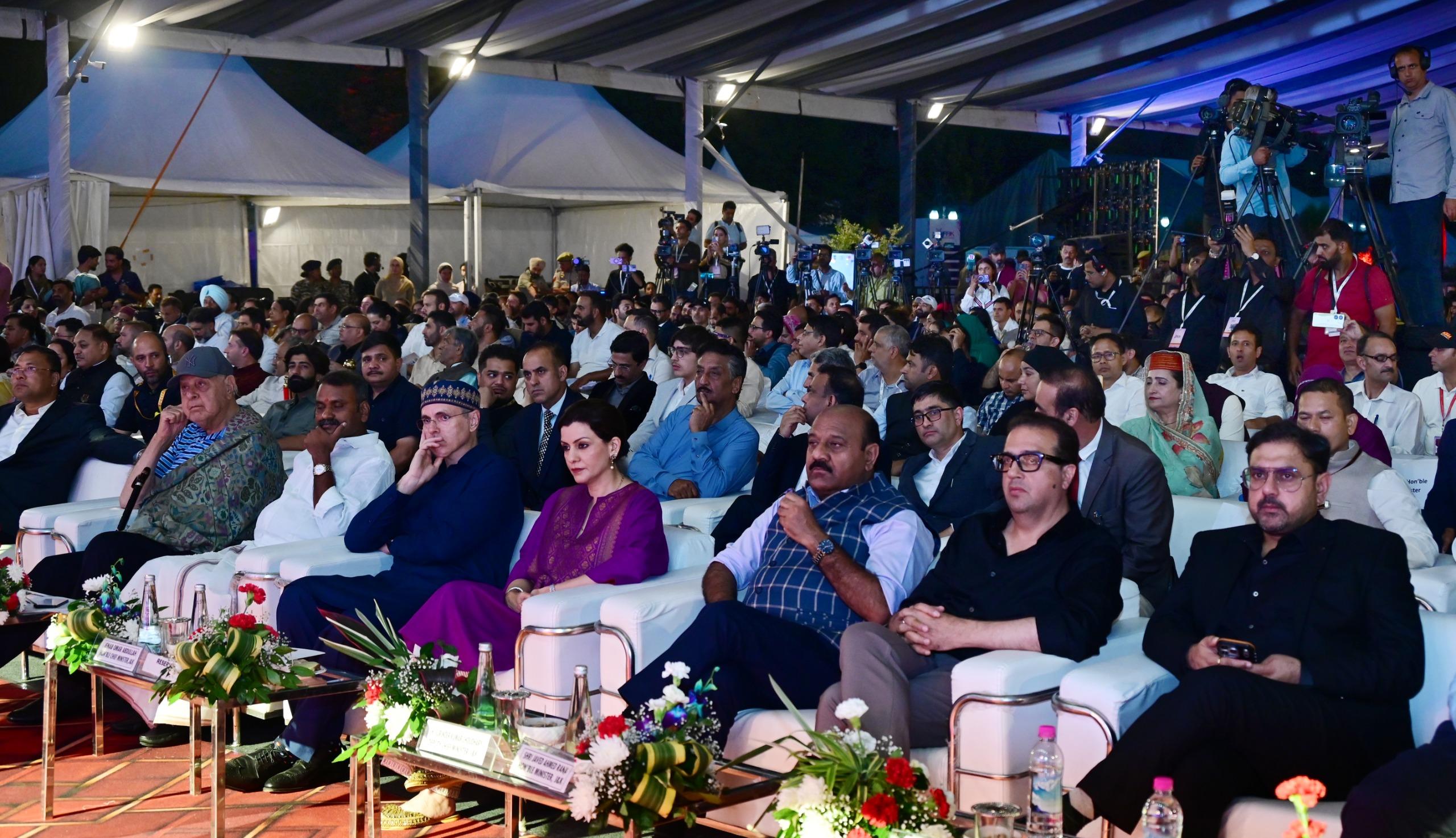
But as the lights dimmed at 7:30 PM, and the first chords of a harmonium pierced the silence, the crowd of 5,000 knew this was different. There were no pyrotechnics, no dancers. Just a mic stand, a band of virtuosos, and a man with a mane of curls and a voice that sounds like it’s been soaked in honey and whiskey.
The Performance: A Journey Across Rivers
Papon began not with a Bollywood hit, but with an Assamese folk song, Tokari. It was a bold move, singing in a language 2,000 kilometers foreign to the audience. Yet, as he closed his eyes and hit the high notes, language ceased to be a barrier. The rhythm was primal; the melody, universal.
"Music has no geography," he whispered into the mic, flashing that trademark shy smile. "The Tawi flows just like the Brahmaputra. We are all river people." The crowd erupted.
Then came the hits. When the opening riff of Jiyein Kyun played, a collective sigh swept through the ground. Thousands of mobile flashlights turned on, creating a galaxy on the grass. It wasn’t just a song; it was a shared anthem of heartbreak and resilience. Papon, sensing the energy, stepped away from the mic, letting the audience carry the chorus. For a minute, the singer became the listener, visibly moved by the echo of his own art returning to him.
The Fusion: Dogri Meets Assamese
The highlight of the evening, however, was an unscripted moment of pure genius. Midway through his set, Papon invited a local Dogri folk instrumentalist on stage. What followed was an impromptu jam session—a fusion of the Assamese Bihu beat with the Dogri Geet rhythm. It was messy, raw, and absolutely electric. It was a reminder that at its core, folk music is a conversation between cultures. The synergy on stage was palpable, a visual and auditory representation of national integration that no political speech could ever achieve.
The Atmosphere: Intimacy in a Crowd
What sets Papon apart is his ability to make a stadium feel like a living room. Between songs, he didn’t speak like a celebrity; he spoke like an old friend. He joked about his love for Kalari Kulcha, teased the front row for being too quiet, and shared anecdotes about his childhood in Assam. This intimacy is his superpower. In an era of curated Instagram personas, Papon is refreshingly analog. He forgets lyrics, he laughs at his own mistakes, and he tunes his guitar mid-song. He is perfectly imperfect, and Jammu loved him for it.
The Aftermath: A Cultural Awakening?
As the concert ended with a high-octane rendition of Banao, leaving the crowd dancing in a trance, one question lingered: Is this the beginning of a new cultural chapter for Jammu? For years, the city has been a transit point, a stopover. But events like this prove that Jammu has the appetite, the infrastructure, and the soul to host world-class art.
As the crowd dispersed, humming tunes in languages they didn’t speak but fully understood, it was clear that Papon hadn’t just entertained Jammu. He had elevated it.