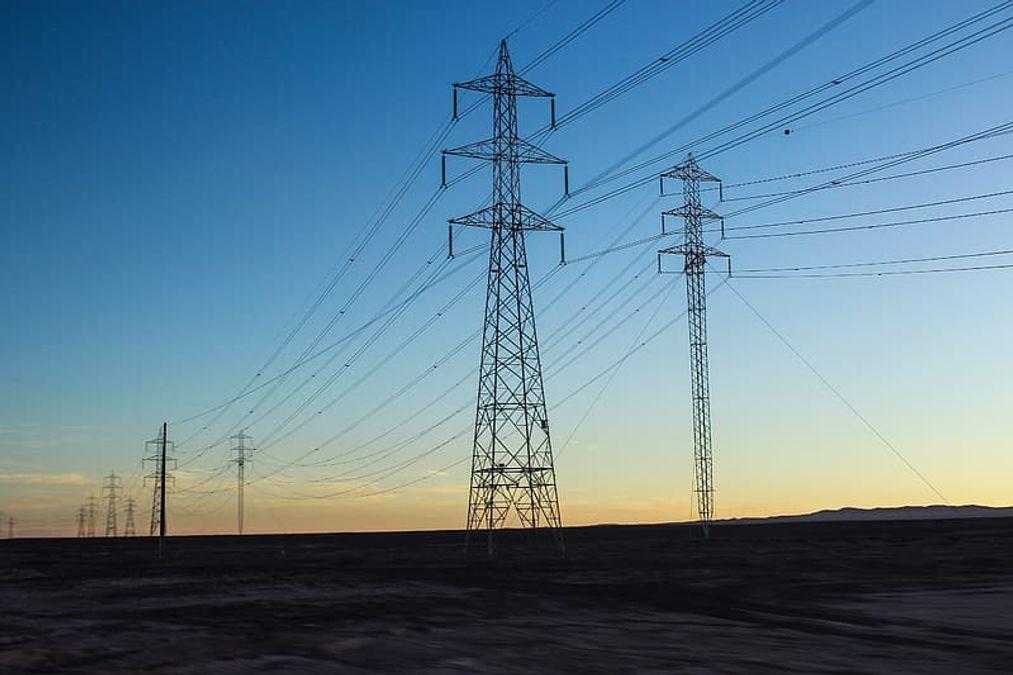
If your neighbourhood loses power for six hours a day and your cousin's, twenty minutes away, loses none, that is not bad luck. It is a published rule, and on 24 September the government spelled it out in writing.
In a written reply to a question from the Leader of Opposition in the Jammu and Kashmir Legislative Assembly, the government confirmed that the Power Development Department runs a Load Curtailment Programme tiered by how much electricity a feeder loses. The measure it uses is AT&C losses — Aggregate Technical and Commercial losses — and the tiers are blunt.
What the three tiers actually are
A feeder losing less than 15% — no scheduled curtailment at all.
A feeder losing 15% to 40% — three hours of curtailment a day.
A feeder losing more than 40% — six hours a day.
So the cut is not a punishment handed to a locality by name. It is attached to the wire that feeds it, and to a single number measured on that wire.
What is AT&C loss, in plain terms?
Think of it as the gap between the electricity a distribution company puts into a feeder and the money it gets back for it. Two things create that gap. The technical part is real physical loss — old conductors, undersized wires, overloaded transformers bleeding energy as heat. The commercial part is electricity that reaches people but is never paid for: unmetered connections, hooked lines, unbilled or uncollected supply.
That is why the tier system is designed the way it is. A feeder with high AT&C loss is, from the department's point of view, a feeder where a large share of what it sends is never recovered — so it sends less.
Where does Jammu sit on that scale?
This is the part the reply did not answer, and it matters. The government did not publish a feeder-by-feeder list, so there is no official way to look up which tier your own street is in.
What is on the record is the divisional average. Figures tabled in the Lok Sabha by the Ministry of Power, reported in August, put Jammu Power Distribution Corporation Limited (JPDCL) at 27.45% AT&C losses in FY25, down from 32.47% in FY24 and 37.64% in FY23, with a target of 27% for FY26. Kashmir Power Distribution Corporation Limited came down harder over the same stretch — 59.59% in FY23, 51.98% in FY24, then 33.54% in FY25.
Read that against the tiers and the everyday experience starts to make sense. A divisional average of 27.45% sits inside the 15-40% band — the three-hour band. But an average is made of feeders above and below it, and the ones above 40% are the ones carrying six hours.
For scale: the national average AT&C loss in FY25 was 15.04%, itself down from 21.91% in FY21. J&K has improved steeply and is still well above the country.
How is a feeder picked?
According to the reply, feeders and areas seeing frequent interruptions, low voltage or inadequate supply are identified and monitored by field officers on four things: feeder performance, loading conditions, consumer complaints and field reports. The department said the picture gets particular review during peak summer and winter demand, and in remote and hilly areas where terrain and weather make supply harder to hold.
The practical takeaway there is unglamorous but real: consumer complaints are one of the four inputs. A feeder nobody reports is a feeder nobody is looking at.
What is being done to the wires themselves
The reply also listed the physical work under way through the Revamped Distribution Sector Scheme (RDSS) — the central scheme funding distribution upgrades. Three items: replacing old conductors with aerial bunched (AB) cable, augmenting undersized conductors, and replacing overloaded and aged distribution transformers.
All three attack the technical half of the loss figure. None of them is instant, and none was given a completion date in the reply.
What this means if you are 22 in Jammu
Concretely: if you are revising for JKSSB or JKBOSE papers, running a small business off a laptop, or sharing a rented room where the inverter is the household's most argued-about appliance, the length of your daily cut is not arbitrary and it is not permanent. It is pegged to a number that has moved roughly ten points in two years in Jammu division.
Three things worth knowing. First, the schedule is meant to be scheduled — the department's own framing distinguishes planned curtailment from unscheduled cuts, so an unannounced outage is a different complaint from a rostered one. Second, complaints feed the monitoring list, so logging them is not pointless. Third, metering is the lever that moves your feeder between tiers, which is why smart-meter rollout and curtailment hours are the same story told from two ends.
What is still missing is the one thing a resident would most like: the list. Until the feeder-wise tiering is published, the rule is public and its application is not.
Sources: the government's written reply in the J&K Legislative Assembly, 24 September 2026, as reported by Kashmir Life and Northlines; AT&C loss figures from Ministry of Power data tabled in the Lok Sabha, reported by Greater Kashmir. Related JammuBeat reading: J&K Power Tariff 2026: Your Electricity Bill Changes on September 1.