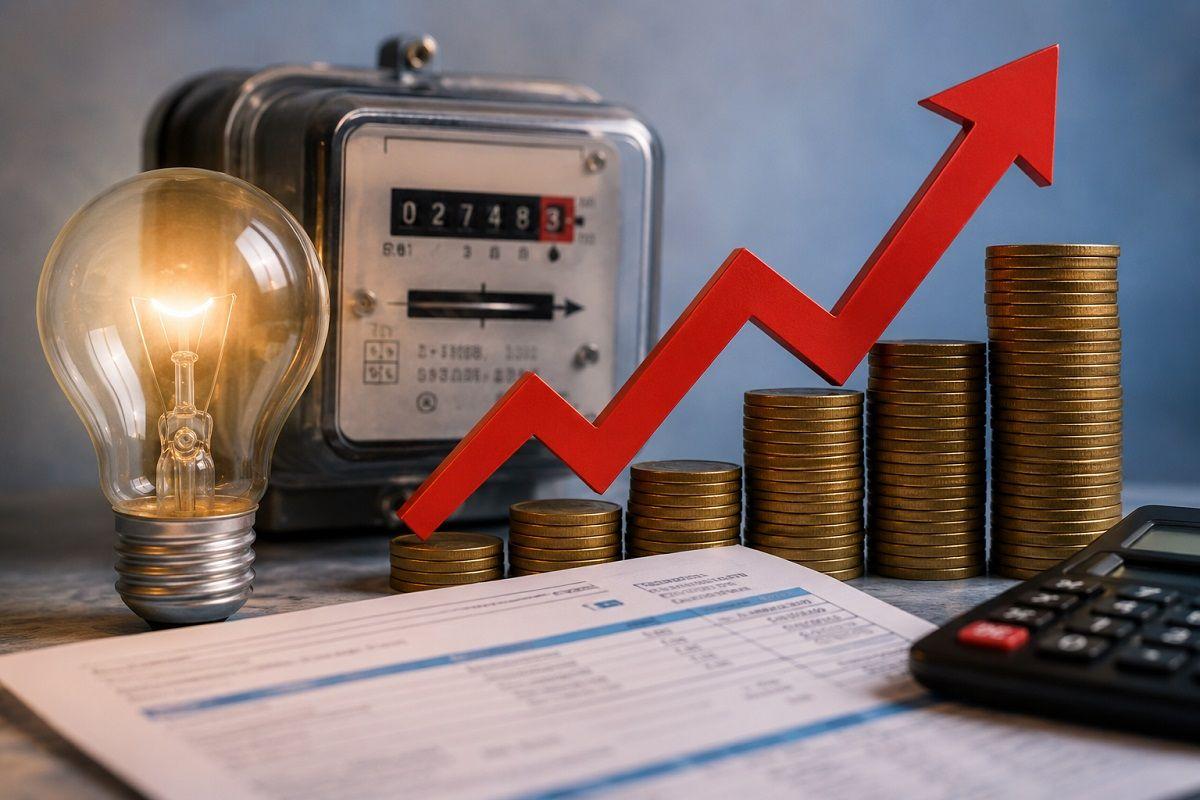
₹2.45. That is what one unit of electricity costs a metered domestic consumer in Jammu from 1 September, up from ₹2.30. Fifteen paise does not sound like much. Stacked across a month, a shared flat and a fixed charge that has gone up by a quarter, it is the difference you will notice.
The Joint Electricity Regulatory Commission for Jammu & Kashmir and Ladakh has approved an average 6.83% increase in the retail supply tariff, through Order No. 06 of 2026 dated 20 August. The new rates apply to consumption from 1 September 2026 to 31 March 2027.
If this feels familiar, it should. In August we covered JPDCL's proposal for a 5% basic-tariff increase, and noted that no new rate had actually been set. The regulator has now ruled — and the final number is higher than the distribution company asked for, with a billing structure the proposal did not contain.
What the new slabs actually say
For metered domestic consumers, the energy charge now runs:
Up to 200 units a month: ₹2.45 per unit, up from ₹2.30
201 to 400 units: ₹4.20 per unit, up from ₹4.00
Above 400 units: ₹4.60 per unit, up from ₹4.35
Consumers below the poverty line keep a subsidised rate of ₹1.40 per unit for up to 30 units a month. Metered agricultural connections up to 20 HP are set at ₹1.05 per kWh, and unmetered ones at ₹375 a month.
The part that catches everyone: the fixed charge
The per-unit rates went up by roughly 5 to 6.5%. The fixed charge went up by 25% — from ₹8 to ₹10 per kW of sanctioned load, per month.
This is the line on the bill people forget exists, because it has nothing to do with how much power you use. It is charged on your sanctioned load. A student who goes home to Udhampur for three weeks and switches everything off still pays it. So does a small studio or tuition centre that shuts for the summer.
If your connection is sanctioned at 4 kW, that line moves from ₹32 to ₹40 a month — ₹96 more across the seven months this order covers, before a single unit is consumed.
What it looks like on a real month
Take a 2 kW domestic connection using 150 units in a month — comfortably inside the first slab, so the arithmetic is clean:
Before: 150 × ₹2.30 = ₹345, plus a fixed charge of 2 × ₹8 = ₹16. Total ₹361.
From September: 150 × ₹2.45 = ₹367.50, plus 2 × ₹10 = ₹20. Total ₹387.50.
About ₹26 a month more, or roughly ₹185 over the order's seven-month life. That calculation is ours, and it covers energy and fixed charges only — your actual bill also carries electricity duty and any other statutory levies, and heavier users crossing into the second and third slabs will see a bigger jump.
Time-of-day billing arrives — and it cuts both ways
The genuinely new thing in this order is a Time-of-Day tariff, applied to all categories except agriculture. It does something the old flat structure never did: it charges you differently depending on when you use power.
Peak hours: a surcharge of 20% for industrial and commercial consumers, and 10% for others.
Solar hours: a rebate of 20%.
The mechanism applies to non-agricultural consumers with a sanctioned load above 10 kW — which means most households in Jammu will not be inside it, but a hostel, a coaching institute, a café, a co-working space or a small workshop very likely will be.
One honest gap: the exact clock hours that count as "peak" and "solar" have not appeared in the reporting of the order. If you run anything above 10 kW, that is the single detail worth confirming with your JPDCL division before September, because it decides whether the rebate is worth reorganising your day around.
Why the increase happened at all
The numbers behind the order are large. JERC approved an Aggregate Revenue Requirement of ₹5,095.82 crore for JPDCL and ₹5,179.90 crore for KPDCL — a combined ₹10,275.72 crore for the year.
At the old tariff, the two utilities would have collected about ₹7,352.87 crore, leaving a gap of roughly ₹2,922.85 crore. The tariff rise closes only part of that. The J&K government has committed ₹2,420.78 crore in subsidy support to cover the rest.
That last figure is the one worth holding on to. Without it, the increase needed to close the gap on tariff alone would have been very much steeper than 6.83%. What you are paying from September is the residue of a much bigger number, most of which the UT budget is absorbing.
The same order also clears the Annual Performance Review for 2025-26 and a three-year Business Plan and Multi-Year Tariff framework running to 2028-29 — so this is the first step of a settled path, not a one-off.
What to do before September 1
Check your sanctioned load. It is printed on your bill. If it is higher than you actually need — a common legacy of an older connection — you are now paying ₹10 per kW a month for headroom you never use.
Know which slab you land in. The step from ₹2.45 to ₹4.20 at 200 units is steep. If you are hovering around 190–210 units, small changes matter more than they look.
If you share a flat, agree the split now. The fixed charge is not usage-based, so a per-head split of the whole bill quietly overcharges whoever is away.
Above 10 kW? Ask about the ToD hours. A 20% solar-hours rebate is real money for anyone who can move load into the middle of the day.
Sources: JERC Order No. 06 of 2026 dated 20 August 2026, as reported by Greater Kashmir, Kashmir Observer and Kashmir Reader. Worked example calculated by JammuBeat from the published slab and fixed-charge rates.
%2Fgreater-kashmir%2Fmedia%2Fmedia_files%2F2026%2F06%2F27%2Fgmc-jammu-2026-06-27-05-46-24.jpg&w=3840&q=75)