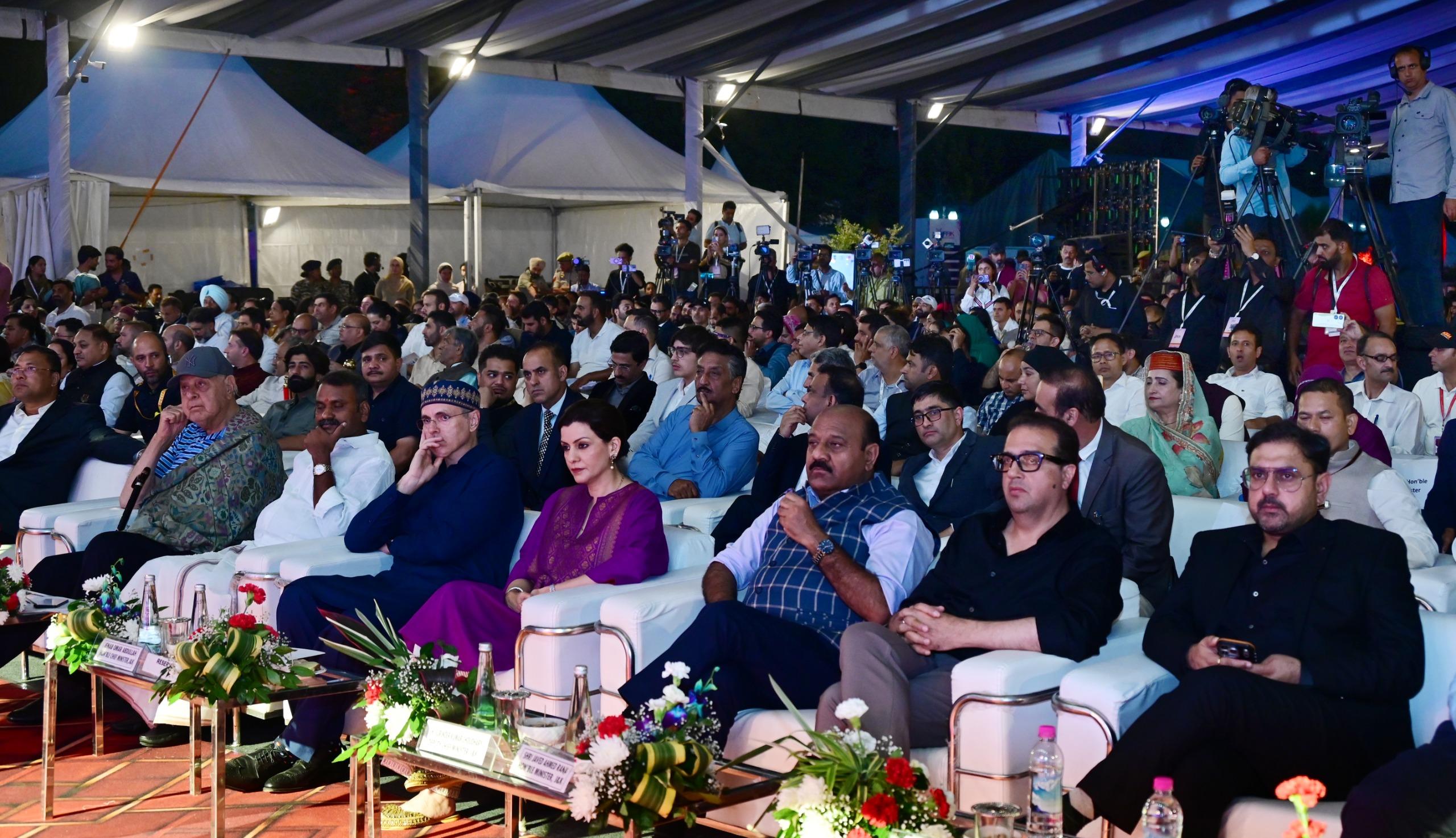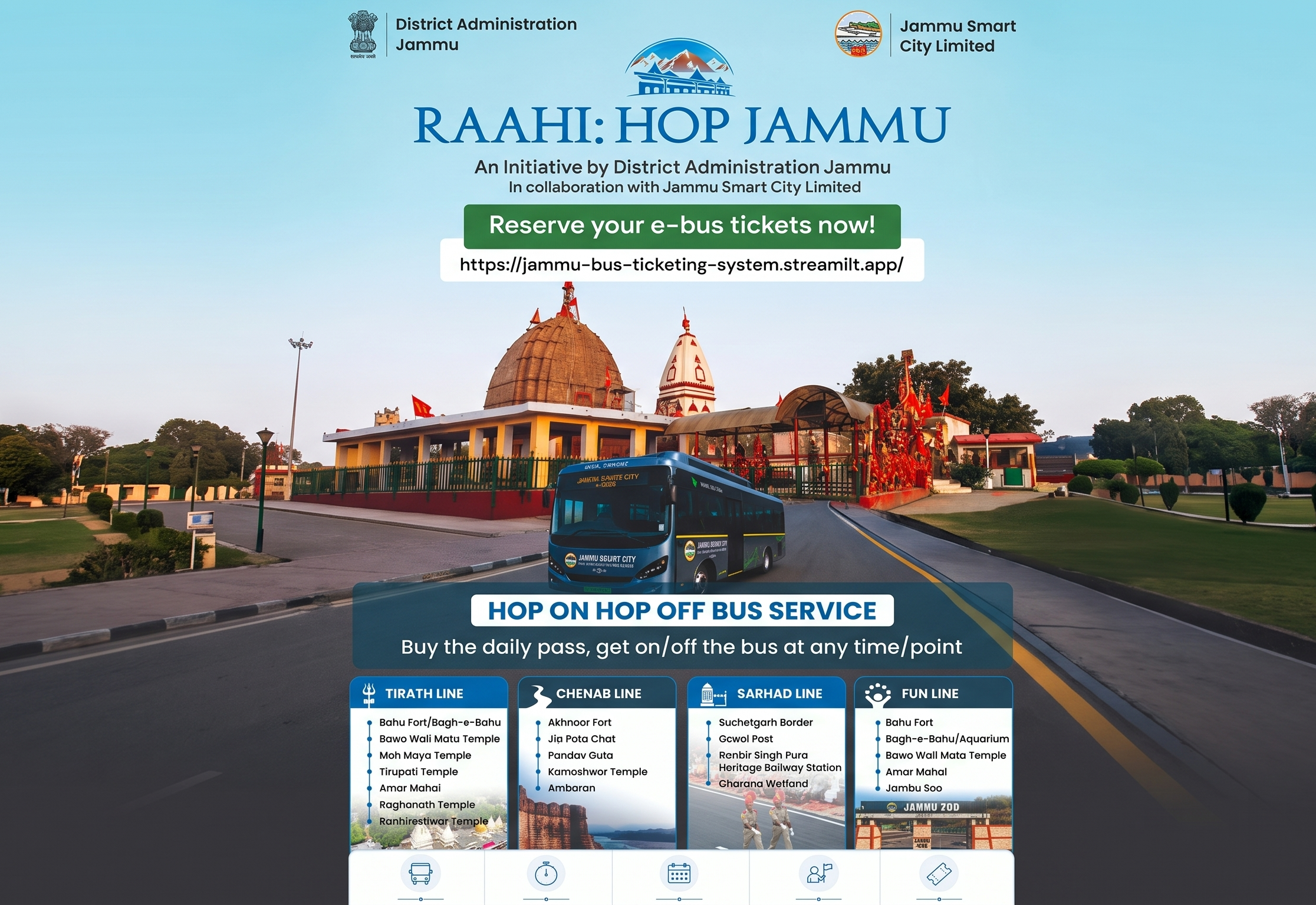
Jammu has quietly joined a club that until now belonged to cities like Delhi and Amritsar: it has its very own hop-on-hop-off sightseeing bus. On 1 July 2026, Lieutenant Governor Manoj Sinha launched ‘Raahi: Hop Jammu’ — a fleet of air-conditioned electric buses designed to let both locals and tourists explore the city’s heritage, spiritual and recreational spots on a single, easy, environmentally friendly ride.
The service, an initiative of the District Administration Jammu, was unveiled alongside the new Tawi Aarti and Light & Sound Show as the city geared up to receive Amarnath Yatra pilgrims. But look past the ceremonial timing and this is one of the more genuinely useful things to happen to everyday city life in a while — especially for young residents.
What exactly is a ‘hop-on-hop-off’ bus?
The concept is simple and, once you’ve used it, slightly addictive. Instead of booking a full-day cab or negotiating autos between sights, you buy a ticket for a route and the bus loops through a fixed set of landmarks all day. You hop off wherever you like, spend as long as you want, and hop on the next bus when you’re ready to move on. One ticket, one loop, your own pace.
Raahi brings that model to Jammu with a green twist: the buses are AC e-buses, so the ride is cool in the summer heat and produces no tailpipe emissions. For a city that has been steadily electrifying its public transport through the Smart City programme, a sightseeing service built entirely on electric buses is a fitting next step.
Four themed lines across the city
What makes Raahi more than just another bus is how it’s organised. The service runs on four distinct thematic routes, each with its own flavour:
Tirath Line — built around Jammu’s identity as the ‘City of Temples’, aimed at the spiritual and pilgrimage circuit.
Chenab Line — themed around the river and the landscapes that define the region.
Sarhad Line — evoking Jammu’s frontier character and border heritage.
Fun Line — the recreational route, pointed at leisure and hangout spots.
Between them, the four lines are meant to connect Jammu’s most significant cultural, heritage and recreational landmarks — the kind of places every Jammuite knows by name but rarely strings together in a single day out. (The district administration is expected to publish the full stop lists, timings and fares for each line; check the official channels before you plan a trip.)
Why this matters if you’re young and living in Jammu
It’s easy to file this under ‘tourism’ and move on. Don’t. For readers in their teens and twenties, an affordable, AC, hop-on-hop-off loop changes a few very practical things.
Cheap, low-effort days out. A shared sightseeing bus is almost always cheaper than a private cab, and it removes the biggest friction in a spontaneous day out — figuring out transport between spots. A Sunday spent temple-hopping, riverfront-walking or exploring old-city heritage suddenly needs a lot less planning and money.
Rediscovering your own city. Plenty of young Jammuites have never actually done the full circuit of their city’s landmarks — the forts, the palace complex, the riverfront, the viewpoints. A structured loop is the nudge that turns ‘we should go someday’ into an actual plan, and it makes for exactly the kind of content that does well on Instagram and Reels.
A greener default. For a generation that genuinely cares about climate and air quality, choosing an electric bus over a fuel-burning ride isn’t a sacrifice — it’s the obvious call. Raahi makes the low-carbon option also the convenient and comfortable one.
Jobs and the local economy. More footfall through Jammu’s heritage and recreational sites means more demand for guides, cafes, handicraft sellers, photographers and small tourism businesses — many of them run by, or employing, young people. A city that’s easier to explore is a city where a tourism economy can actually grow.
Part of a bigger shift
Raahi lands at a moment when Jammu is consciously trying to re-cast itself — from a place pilgrims and travellers pass through on the way to the Valley or the shrines, into a destination worth stopping in. The Tawi Aarti, the Light & Sound Show and now a dedicated sightseeing bus are all pieces of the same idea: give people reasons, and easy ways, to spend time in the city.
Describing the service at its launch, the Lieutenant Governor called it a way to offer locals and tourists a “seamless, convenient and environmentally sustainable way to explore the rich cultural, heritage and recreational landscape of Jammu.” For once, the official language matches the on-ground reality: this is a tool that makes the city more explorable for the people who live in it.
So the next time a free weekend rolls around and the group chat can’t decide what to do, there’s now a very Jammu answer — pick a line, grab a ticket, and hop on.
Sources: ThePrint · Daily Excelsior · Greater Kashmir · The Publish