Most young footballers in Jammu will never read a sports federation's constitution. They will feel it, though: in whether district trials are announced in time, whether a fixture list exists in March, whether a selection is explained, and whether anyone answers when a club asks where its registration went. That is why a date that looks like administrative housekeeping, November 25, deserves a few minutes of a young player's attention.
How the date was set
The JKFA's elections have been pending since 2022. In August, UNI reported that the All India Football Federation (AIFF) had set October 20 as the deadline for state and UT associations with overdue polls, the JKFA among them, under the new National Sports Governance Act; it said failure to comply could jeopardise affiliation with the AIFF, that no ad hoc body would be allowed to keep running a state association after the deadline, and that the AIFF wants its own constitution to be the model for state associations.
That deadline passed. On November 3, UNI reported that the JKFA is set to elect its new executive body on November 25, in a process notified by its Returning Officer following an October 27 order of the Fourth Additional District Judge, Srinagar, in a suit filed in 2023. The election, UNI said, will be held "strictly in accordance with the provisions of the previously existing Constitution of JKFA." We set out the court process and the November 2 stakeholders' meeting in our news report.
Put those two reports side by side and the shape of the moment is clear: the vote will run under the association's existing rules, while the national framework and the AIFF are pushing state bodies towards a new model. This piece is about that national framework, because it is what will outlast this particular vote.
What the law actually is
The National Sports Governance Act was notified in August 2025. The Union sports ministry then issued a notification late on December 31, 2025, and key provisions came into effect on January 1, 2026, covering the framework for national sports bodies and the National Sports Board. Not every section started on that date; the phased rollout is part of the design.
According to the PRS Legislative Research summary of the Bill as introduced, the core of the model is this:
- National bodies with state and district units. Each sport has a national federation, which has affiliate units at state and district level. The national body must have committees, a code of ethics and a grievance redressal mechanism.
- A capped, mixed executive committee. Up to 15 members, including at least two sportspersons of outstanding merit, two representatives of an athletes' committee, and four women.
- Limits on who and for how long. Members are to be between 25 and 70 (up to 75 where international rules allow), and the President, Secretary General and Treasurer cannot serve more than three consecutive terms.
- Election oversight. A national panel of electoral officers oversees national bodies' elections, and each national body must set up an electoral panel for its affiliates' elections.
- A regulator with consequences. A National Sports Board recognises national bodies and registers their affiliates; only recognised bodies receive central government funds, and recognition can be suspended or cancelled.
Two cautions belong next to that list. First, the composition rules in the PRS summary are written for the national bodies; how far each one is mirrored in a state association depends on the national federation's own constitution and the rules made under the Act, so do not assume every line applies word for word to the JKFA. Second, the PRS note describes the Bill as introduced; where the final Act or the 2026 rules differ, those govern.
Why this matters more than who wins
JammuBeat takes no side in the JKFA election, and this is not an argument for or against any candidate or group. It is an argument for paying attention to the process, because the process is where a young player's interests are actually written down.
Look at the national model's priorities: athletes on the committee, a grievance mechanism, an ethics code, election officers who are not the people being elected, and funding tied to recognition. Each of those answers a question a young player in Jammu already asks. Who do I complain to if a selection looks wrong? Is there a player on the body that decides my trials? Is the election run by someone independent? Will our district association still be recognised, and funded, next season?
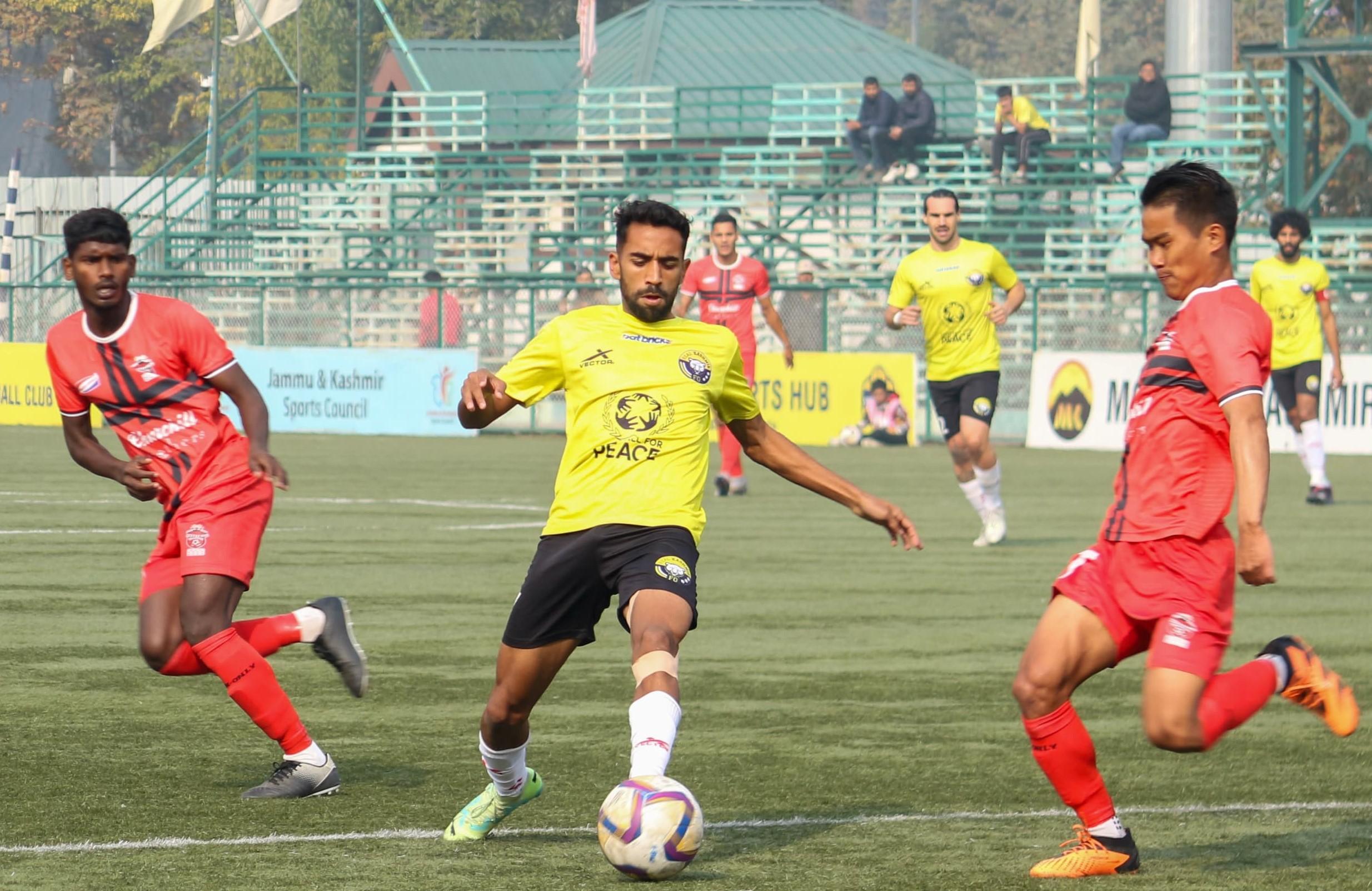
Football in J&K is having a visible year. The Indian Football League season opened in Srinagar last month. More matches and more scouts make a working association more valuable, not less. A pathway that runs through an association without a functioning, recognised executive is a pathway with a gap in it.
What to watch, and what to do
- The nomination schedule and the voter list. Neither had been published when the date was reported. When they are, check that your district association is on the list and who will vote for it.
- Who runs the election. UNI reports that a Returning Officer has notified the process. Their published timetable is the first sign of how it will run.
- Athlete representation. Ask, through your club or district association, whether the new constitution provides for an athletes' committee or player representatives, as the national model does.
- The grievance route. Once a new body is in place, find out where a player or club raises a complaint about selection or registration, and in writing.
- Recognition and funding. Watch whether the new executive adopts a constitution in line with the AIFF model and the national framework after the vote; that is what keeps tournaments and trials funded.
What has not been said
The reports we could read give no nomination timetable, candidate list or voter list, and do not quote the JKFA's office-bearers or the Sports Council. We have not been able to confirm how the new constitution will apply the national rules on athlete representation, age or tenure to the state association. We will update this when the schedule is public.
A vote on a Wednesday in late November will not change what happens on the pitch that weekend. It will decide, for a few years, how fairly the next trial, the next selection and the next complaint are handled. That is worth knowing before the date, not after it.
Sources: UNI, August 17, 2026; UNI, November 3, 2026; PRS Legislative Research, National Sports Governance Bill, 2025; Outlook, January 1, 2026. Image: file photo from the 2023-24 I-League season in Srinagar, Sabyasachi Gupta / Wikimedia Commons, CC0.