North India is getting its first Industrial Biotech Park — and it is not landing in a metro. It is coming up at Ghatti in Kathua, inside the roughly 100-kilometre belt a Jammu student can reach in under two hours. On 1 August 2026, CSIR-IIIM Jammu signed a memorandum of understanding with the Jammu & Kashmir Science, Technology and Innovation Council (JKST&IC) to operationalise and run the park, turning a long-planned facility into a working address for scientists, startups and farmers.
For a region whose science graduates have long had to leave for Chandigarh, Delhi or Bengaluru to find a lab bench or an incubator, that address matters. The park is designed as a single campus where research, product development, startup incubation and industrial-scale production can sit side by side — the kind of end-to-end pipeline that turns a college project into a company.
What is actually being built
At its core, the park is a shared platform. CSIR-IIIM describes it as common ground for scientists, researchers, startups, entrepreneurs, established industry and farmers to work together on biotechnology-led innovation. In practice that means space and equipment for the expensive middle stretch of the journey — the part between a good idea and a market-ready product that most young founders cannot afford on their own.
The thematic focus plays directly to J&K's strengths: medicinal plants, aromatic crops, floriculture and other bio-based enterprises. These are not abstract choices. They are the crops and products CSIR-IIIM has spent years building agro-technologies around, and the park is meant to give them a place to be processed, distilled, packaged and commercialised at scale rather than shipped out as raw material.
Why a science student in Jammu should care
The short answer is proximity. A biotechnology, botany, chemistry or agriculture graduate in Jammu now has a serious research-and-enterprise hub within the belt, not a flight away. That opens up internships, project fellowships, dissertation tie-ups and — for the more ambitious — incubation support to test a product idea.
It also reframes what a science degree can lead to. The park's explicit pitch is agri-entrepreneurship and startup culture: the aim is not only to train people for jobs but to help them build ventures that hire others. For students who have watched the region's startup conversation grow louder over the past year, this is the physical infrastructure that conversation has been missing.
The money, and who is behind it
The Industrial Biotechnology Parks Society and JKST&IC will provide financial support of ₹15 crore over three years to CSIR-IIIM to execute the project, with backing from the J&K Science & Technology Department and the Centre's Department of Biotechnology. CSIR-IIIM Jammu, led by director Dr Zabeer Ahmed, will act as the project management unit — meaning the institute that will run the park is also the region's flagship natural-products research body.
Union Minister Dr Jitendra Singh, who has championed the facility, said the government "will continue to provide enabling policies, infrastructure and institutional support." The framing throughout has been less about a ribbon-cutting and more about a pipeline: policy, land, labs and money aligned so that a bio-based product conceived in J&K can also be made in J&K.
Built on a decade of quiet groundwork
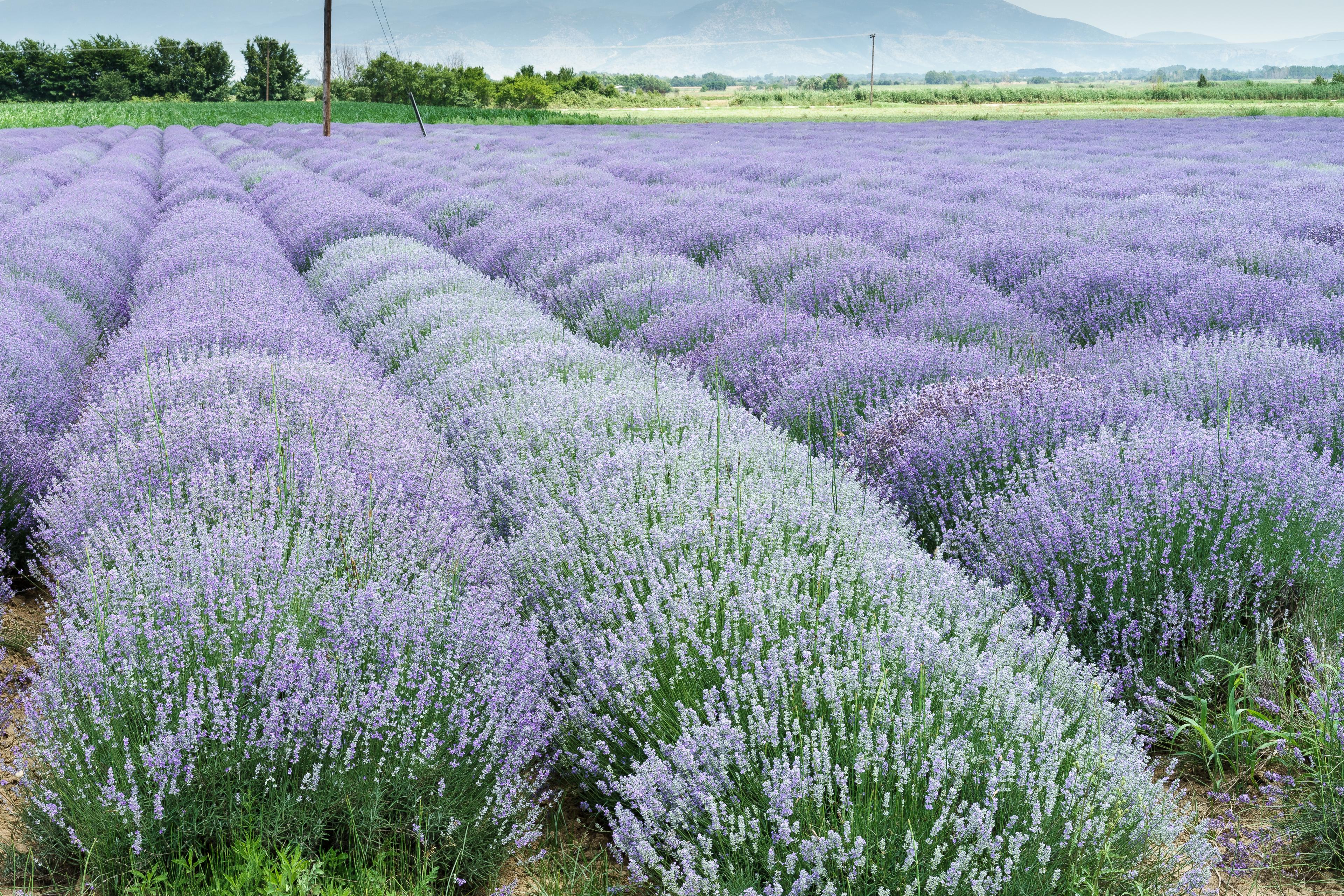
None of this appears from nowhere. CSIR-IIIM — the Jammu institute that began in 1941 and grew into one of India's lead labs for natural-products drug discovery — has spent years turning Himalayan medicinal and aromatic plants into farmer income. Its lavender programme, the much-cited "Purple Revolution," has helped more than 5,000 farmers across J&K shift from low-value traditional crops to high-value ones such as lavender, rosemary, clary sage, damask rose, mint and saffron, backed by improved cultivation and distillation technology.
The Kathua park is the industrial floor that work has been pointing toward: a place to convert that cultivation into finished, branded, bio-based products. JammuBeat has followed this thread before — from CSIR-IIIM nudging students toward biotech startups on World Youth Skills Day to the institute landing J&K's first Health Technology Assessment Centre. The park is the largest piece yet.
What to watch next
The MoU is the starting gun, not the finish line. The details young applicants will want — when incubation slots open, what internship and fellowship routes exist, how a student or a farmer collective actually applies for space — will follow as the park is operationalised over the coming months. For now the takeaway is simple: the infrastructure that lets a J&K science idea grow into a business without leaving the region is finally being built, and it is being built close enough to Jammu to be within reach.
Sources: Greater Kashmir, Daily Excelsior, The Tribune.

