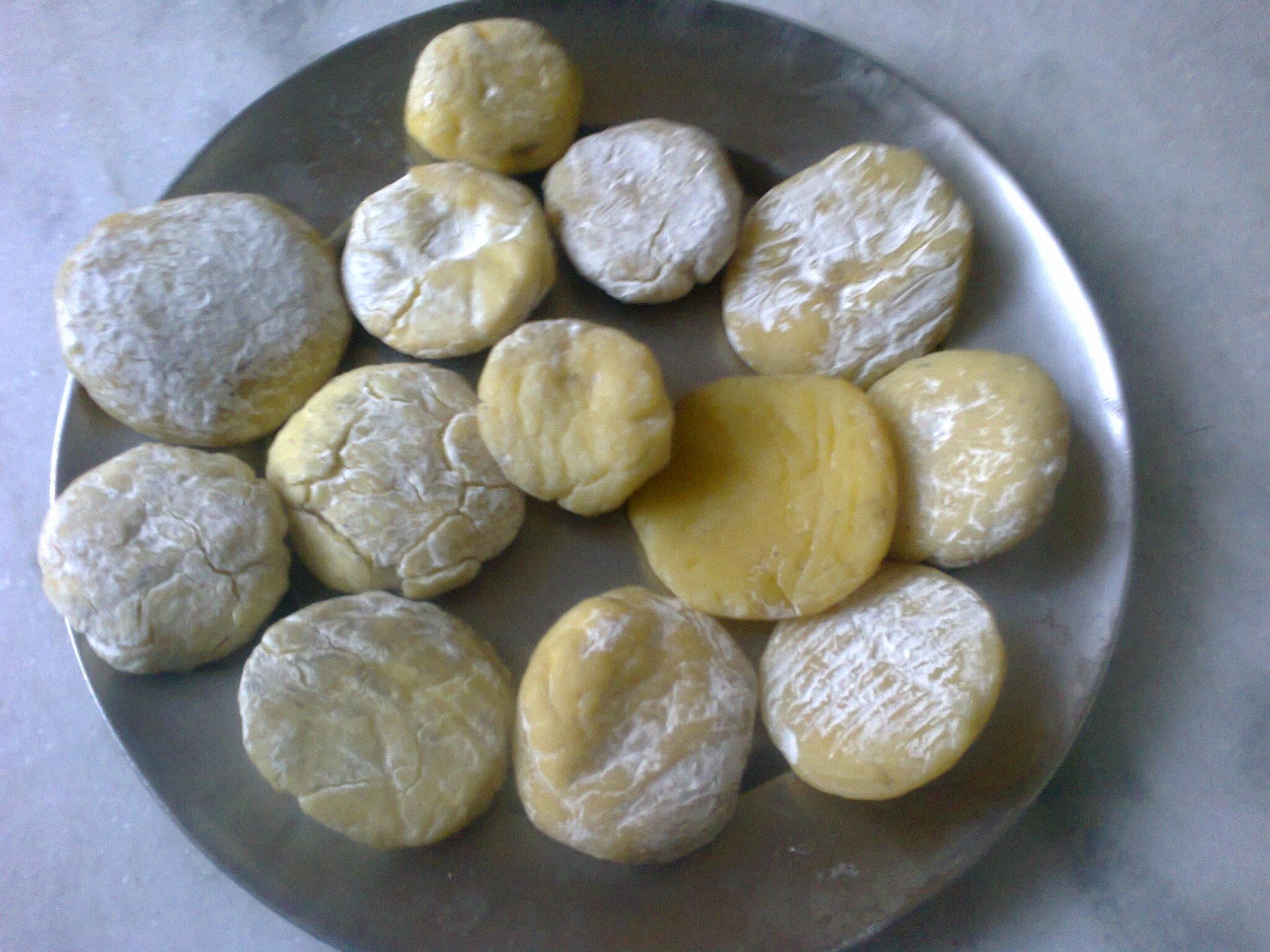
Kalari has always had one problem, and it is not taste. It is time. Hand-kneaded from buffalo milk in the villages around Udhampur, Ramnagar, Chenani and Panchari, then sun-dried or wood-smoked, the cheese has traditionally had a shelf life measured in days. Which is why, for a product with a GI tag and a genuine claim to being the region's signature food, it has mostly travelled no further than the nearest griddle.
A unit inaugurated at Kotli Balan in Udhampur on 12 August is an attempt to change that arithmetic. Vrinda Cooperative Private Limited is a mechanised, hygienic kalari processing facility run entirely by women members, and it is targeting a shelf life of at least 21 days.
Deputy Commissioner Udhampur Minga Sherpa inaugurated it. It was conceptualised by Dr Shagun Singh, an IAS probationer of the 2025 batch, and put together from an unusually layered set of funding sources: seed funding from the Centre for Cooperatives and Livelihoods at LBSNAA Mussoorie, plus the Integrated Dairy Development Scheme, Mission YUVA and the National Rural Livelihoods Mission.
Why the shelf life is the whole story
Twenty-one days is not a food-science curiosity. It is the difference between a product you can only sell within a district and one you can put in a box and ship.
A perishable local speciality stays a local speciality. A branded one with three weeks of shelf life can go to a retailer in Jammu, a distributor in Delhi, or a courier. That is the leap the cooperative is attempting — and why it describes itself as doing both processing and market branding under one structure, positioning kalari for the One District One Product initiative rather than just making more of it.
What a 22-year-old here can take from it
Kalari already has proof that the private route works. The Kalari Factory, started in Udhampur in 2020 by engineer-turned-entrepreneur Shubham Sharma with two friends, opened a Jammu outlet in 2021 and built a business on exactly this insight.
What Vrinda adds is a different ownership model — a cooperative rather than a startup, with the producers themselves as members, assembled largely out of existing government schemes rather than investor money. For anyone in the Jammu belt thinking about food as a business, that is a more replicable template than a funding round: take a product the region already makes, fix the one constraint holding it back, and use the schemes that already exist to pay for it.
Kalari got a mention in Mann Ki Baat in April. The harder work is what happens at Kotli Balan — whether a cheese that has spent a century being eaten within a few kilometres of where it was made can survive the trip. If you want the wider context on where it sits in the regional kitchen, our Dogri winter food map is a good place to start.
