Jammu and Kashmir has notified the Private Universities Rules, the set of regulations that decide how a private university can be set up and run in the Union Territory. Chief Minister Omar Abdullah announced the notification in a post on X on Saturday, 7 November, calling it a significant step towards bringing reputed national and international institutions to J&K.
The rules follow the J&K Private Universities Bill, which the Legislative Assembly passed during this year's budget session. A bill sets the principle; the rules set the procedure. Here is what the government has said they contain, and what students should watch for.
What the rules provide
- A 30-day preliminary scrutiny. The government describes a simplified approval mechanism that includes a provision for preliminary scrutiny of an application within 30 days.
- 25% reservation for J&K domiciles. A minimum of 25 per cent in student admissions, and in teaching and non-teaching positions.
- A regulatory mechanism. The Chief Minister's office describes a dedicated mechanism to monitor admissions, fee structures and academic standards.
- Penalties. For irregularities in admissions, excess fee collection, invalid degrees, shortfalls in faculty strength and qualifications, and inadequate infrastructure.
Which subjects could be on offer?
The Chief Minister said the framework would open the way for institutions across science, technology, engineering and mathematics (STEM), medicine, law, business studies and liberal arts, widening choices for students who now often leave J&K for such courses.
What the government says it is for
In the government's account, the reservation is meant to make sure that "the benefits of institutional expansion translate into meaningful educational and employment opportunities for local youth", while the oversight is meant to protect students' interests and academic quality. The Chief Minister also credited Health and Medical Education Minister Sakina Itoo, who held the Education portfolio when the bill passed, and congratulated Education Minister Shamim Fidrous on the notification.
What has not been stated yet
- The reports of the announcement do not give the amount of any fee ceiling or penalty.
- No date is given for when applications can be made or when a first campus could open.
- The text of the rules has not been quoted beyond the Chief Minister's summary, so details such as how the 25% is applied to each course should be read in the official gazette notification once available.
- We have not found a response from other political parties or student bodies in the coverage we checked.
Why a Jammu student should care
For Class 12 students planning 2027 admissions, nothing changes this year: no private university has been approved under these rules yet. What changes is the pipeline. If institutions apply, the rules decide how fast they are scrutinised, who gets a protected share of seats and posts, and what the regulator can do if fees or degrees turn out to be a problem. When a university announces itself, check its approval status, its fee schedule and its degree recognition before paying a deposit.
Sources: Northlines, "J&K notifies private universities rules" (7 November 2026), which reports the Office of the Chief Minister's post on X.
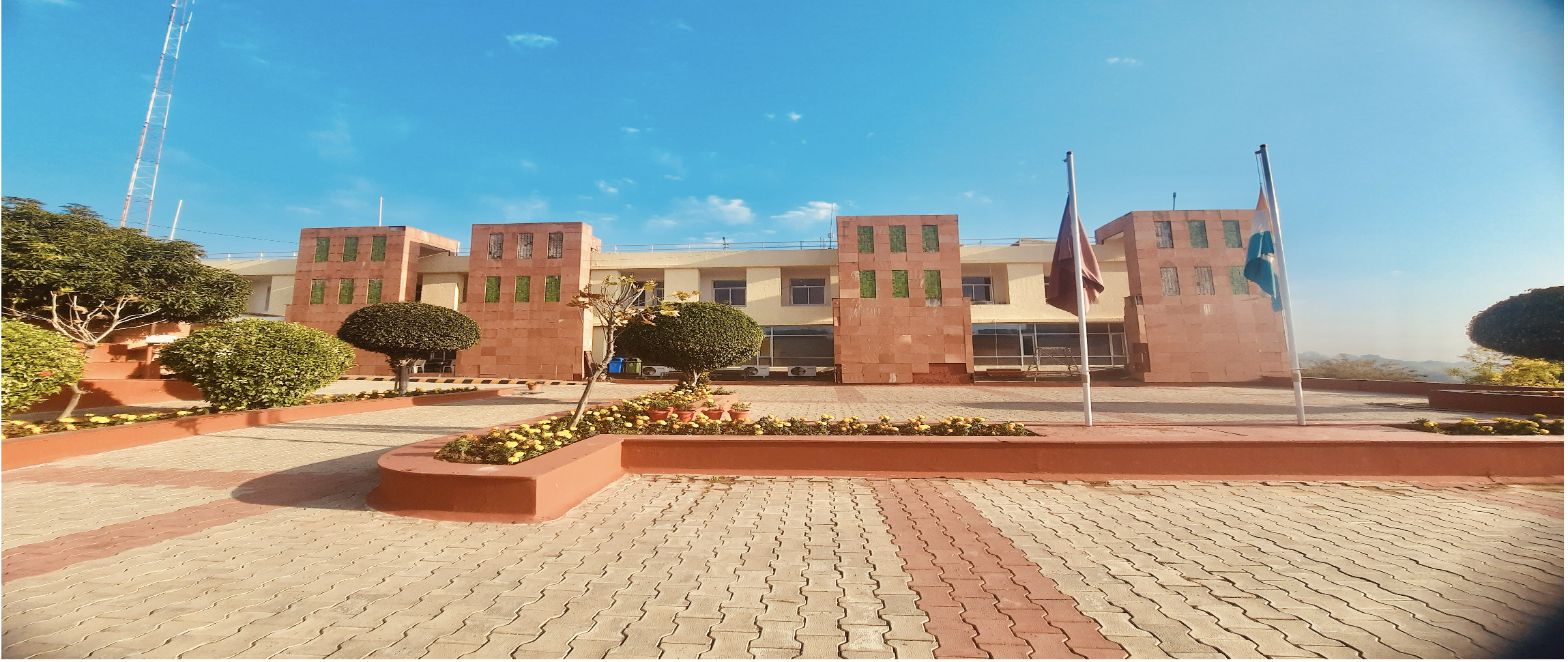
Photo: file photo of the Central University of Jammu in Samba, a public university shown for illustration; no private university has been approved under the new rules yet. Sachinbauriyan / Wikimedia Commons (CC BY-SA 4.0).