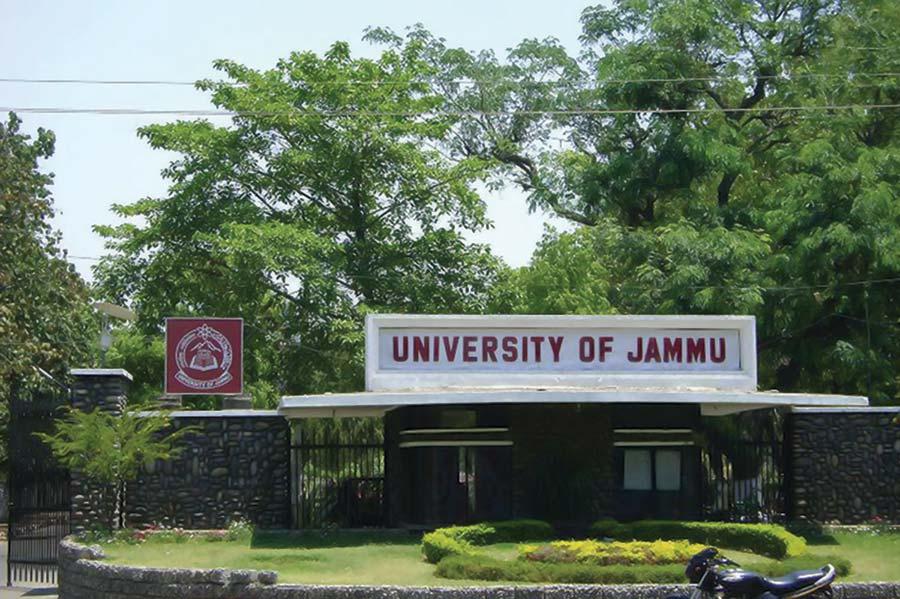
One hundred and forty-seven kanals and eleven marlas — roughly 18 acres — sit immediately next to the University of Jammu's main campus at Rakh Bahu. The Army has held them for more than 53 years. On 5 August, the university announced that the Ministry of Defence has cleared their transfer back to the Jammu and Kashmir administration, and onward to JU.
For a campus that has spent decades rationing space between departments, hostels and laboratories, this is the largest single change to its physical footprint in a generation. It is also not going to happen tomorrow, and the reason why is worth understanding before anyone starts drawing floor plans.
What exactly has been cleared?
The Ministry of Defence has conveyed Presidential sanction, with the concurrence of its finance wing, for the release of 147 kanals and 11 marlas at Rakh Bahu — land adjoining JU's main campus that has been under Army occupation since the early 1970s. The sanction was communicated to the Chief of Army Staff and to the Director General Defence Estates.
The university's own announcement, published on its news page on 5 August under the heading “JU Expansion Unlocked”, describes it as closing a chapter that has weighed on the institution's growth for over five decades.
Why is the Army getting land too?
Because this is an exchange, not a handover. In return, the Jammu and Kashmir administration transfers 2,124 kanals and 17 marlas to the Army at Nagrota Military Station. That splits into 2,062 kanals 17 marlas falling in Nagrota tehsil, under Udhampur's jurisdiction, and 62 kanals in Jammu tehsil.
The arrangement is not new. It traces back to a Civil Military Liaison Conference held on 29 September 2015 — which gives a fair sense of how slowly land swaps of this kind move.
Kanals, marlas, and how much land this actually is
Land in Jammu is still measured in kanals and marlas rather than acres, which makes the figures hard to picture. Twenty marlas make one kanal, and eight kanals make roughly one acre.
On that arithmetic, 147 kanals 11 marlas is about 18 acres — a substantial block by the standards of an urban campus. The 2,124 kanals 17 marlas going the other way is about 265 acres, or roughly fourteen times the area the university receives. That is not as lopsided as it sounds: the Nagrota land is station and training ground, while the Rakh Bahu parcel is city-adjacent land next to an existing campus, where every metre is at a premium.
So when does the campus actually change?
This is the part worth reading twice. Possession is conditional and sequenced. The Defence Estates Office in Jammu hands over the 147 kanals only after the UT administration first issues the transfer order for the 2,124 kanals 17 marlas in favour of the Ministry of Defence. The J&K government also bears the cost of reconstructing any Army assets affected by the move.
In plain terms: the paperwork clearing the larger transfer at Nagrota has to be completed first. Until it is, the land next to the campus stays exactly where it is. No date has been announced for either step, and a student starting a three-year degree this session should not assume they will ever study on it.
What might the space be used for?
The university has said it intends to use the land for academic and research infrastructure, innovation facilities and student amenities. It has not published a masterplan, a budget, or a phasing schedule, and nothing beyond that broad statement of intent is on the record. Anyone telling you there are confirmed hostel blocks or a new research park coming is filling in a blank that has not been filled in.
Vice-Chancellor Prof Umesh Rai, quoted in coverage of the sanction, framed it as a planning question rather than a construction announcement: “The availability of the land will help us plan future development in a more systematic manner.”
That is an accurate description of where things stand. Land is the constraint that has to be lifted before any of the usual asks — more hostel beds, bigger laboratories, dedicated research blocks, sports and recreation space — can even be costed properly.
Why this matters if you study here
The university's own framing is the honest summary of the student-facing problem: the absence of this land has weighed on its growth for more than five decades. Every competing demand on a fixed campus footprint — teaching blocks, hostels, laboratories, parking, open space — has had to be settled inside the same boundary for fifty years. Departments grew. The boundary did not.
What changes for a current student in the short term is, realistically, nothing. What changes over a longer horizon depends entirely on two things this announcement does not settle: when the Nagrota transfer order is actually issued, and what the university then decides to build. Both are worth asking about at the student-body level, because the window in which a masterplan is shaped is the window in which student priorities can still influence it.
What to watch next
The UT administration's transfer order for the 2,124 kanals 17 marlas at Nagrota — the trigger for everything downstream.
The Defence Estates Office, Jammu formally handing over possession of the Rakh Bahu land.
Any masterplan, phasing schedule or budget the university publishes for the site.
Whether student amenities and hostel capacity make it into that plan in a named, costed form — or stay a line in a press statement.
None of these has a public date yet.