The building blocks of an AI industry do not usually arrive with a ribbon. They arrive as a lab, a budget line, and a list of departments willing to hand over their hardest problems. This week Jammu got all three at once.
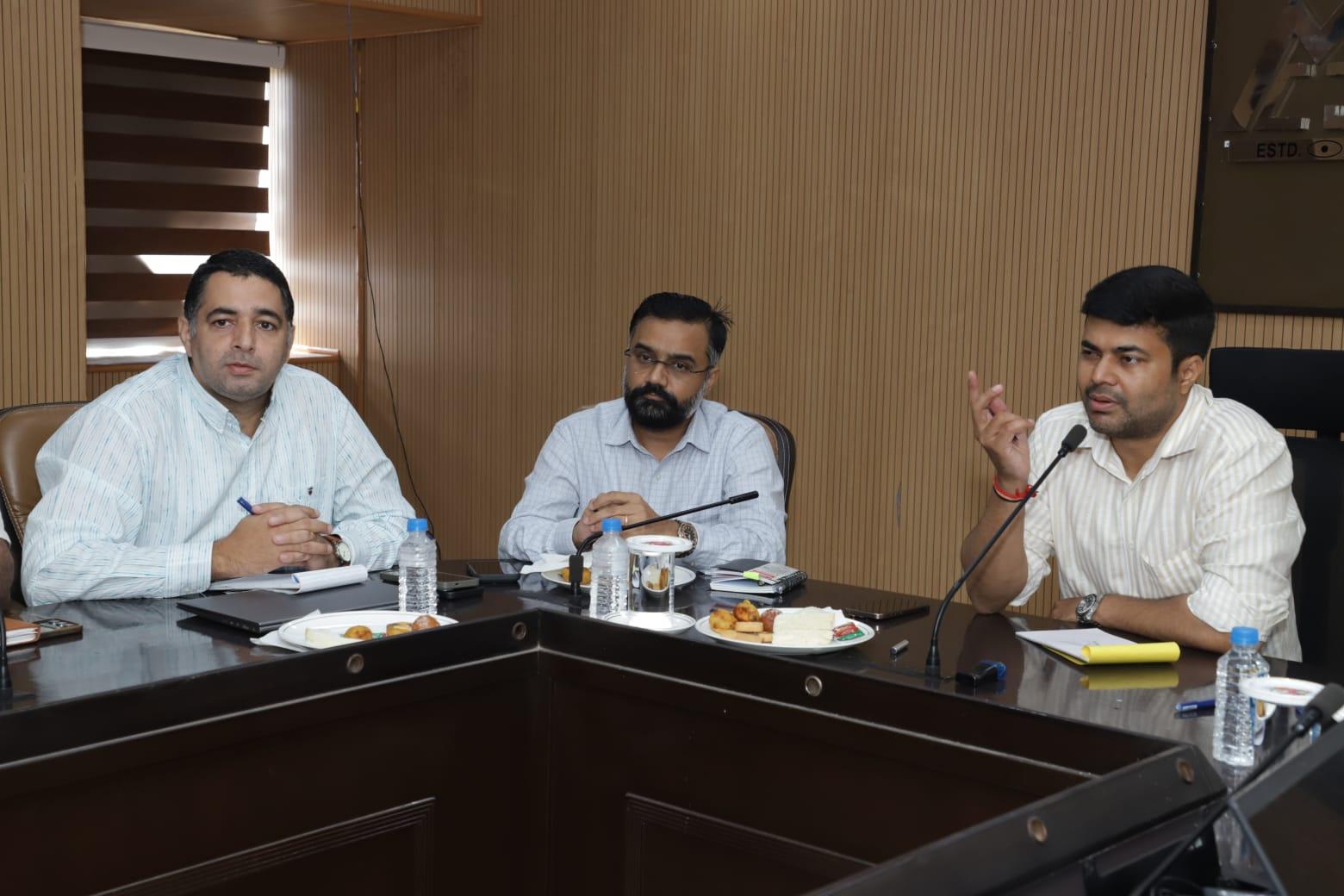
Chief Minister Omar Abdullah launched the Jammu & Kashmir Artificial Intelligence Centre of Excellence (AI CoE) at IIT Jammu, and dedicated Project Phoenix, an AI-enabled digital commerce platform, at the same campus. The centre has been set up with the support of the Union Ministry of Electronics and Information Technology (MeitY) and the Information Technology Department of the J&K government — which is the detail that matters most, because it means this is not a campus club with a nice name. It is a funded node in India's national AI push, and it sits about 20 km from where a lot of you are reading this.
What the centre is actually supposed to do
The AI CoE is described as a hub for AI research, solution development, benchmarking, technology evaluation and deployment support. Unpacked, those five words describe a fairly specific job: not just building models, but testing whether they work, comparing them against alternatives, and helping a government department or a company actually put one into service.
The centre is meant to work with government departments, academia, startups and industry partners across governance, education, healthcare, agriculture, infrastructure and disaster management. The Chief Minister's own examples were concrete rather than abstract — using AI to improve teaching in remote areas where specialist teachers are scarce, to help diagnose disease where a specialist doctor is not available, to catch orchard diseases early, and to produce location-specific weather forecasting that could reduce damage from a flash flood or a hailstorm.
That list is worth reading twice, because it is a list of problems that are recognisably ours. Remote schools, thin specialist coverage in district hospitals, orchards, and weather that turns dangerous fast in the hills are not generic AI use-cases lifted from a Bengaluru pitch deck. They are the reason a regional centre exists at all rather than a line item in someone else's lab.
Project Phoenix: a shopfront, not a scheme
The second launch is the one with the shorter path to somebody's bank account. Project Phoenix is a digital commerce platform built to connect artisans, self-help groups, cooperatives, startups, brands and MSMEs from Jammu, Kashmir and Ladakh to national and global markets. Its stated features are simplified onboarding, product discovery and market access.
Read that as: the hard part of selling a Basohli painting, a batch of Bhaderwah rajma, a small-run clothing label or a phulkari line has rarely been making the thing. It has been getting found, getting listed, and getting paid without a middleman taking most of the margin. A platform does not automatically fix that — plenty of government marketplaces have launched to silence — but the intent here is explicitly market access rather than subsidy.
The Chief Minister framed Project Phoenix as complementing Mission YUVA, the UT's flagship self-employment programme, by strengthening market access, mentorship and incubation support for startups and local enterprises. If you have been through the Mission YUVA process — or thought about it and stalled — this is the piece that was conspicuously missing. Mission YUVA can help you start something. It has been much weaker at helping you sell it.
Why this lands differently if you're 22 in Jammu
There are three practical reasons to pay attention rather than scroll past.
- Research roles are the entry door. Centres like this run on project staff — research associates, junior research fellows, project assistants. IIT Jammu already advertises these regularly, and a new centre with a fresh mandate across six sectors will need people. If you have a B.Tech or an M.Tech and have been assuming the only route to AI work is a flight to Hyderabad, watch the institute's recruitment page.
- Your final-year project may now have a customer. A centre chartered to work with government departments is a centre that needs domain problems and people who understand them. Students at Jammu University, Cluster University, GCET, SMVDU and MIET are closer to the agriculture, health and disaster-management problems on that list than most outside teams will ever be.
- If you already make something, Phoenix is a channel to test. The onboarding is meant to be simplified. That is a claim worth checking rather than trusting, but it costs little to check.
The honest caveat
No funding figure, staffing number or timeline has been made public for the AI CoE, and Project Phoenix has not yet published how onboarding works in practice or what it costs a seller. Those are exactly the details that separate a centre that changes a local economy from one that produces an annual report. We will follow both and tell you when the specifics land.
What can be said now is that the direction of travel is real. IIT Jammu has been steadily becoming the region's centre of gravity for this kind of work — an IT and innovation park, a defence-tech tie-up, prototype internships, an agentic-AI micro-credential. An AI Centre of Excellence with central backing is the largest of those steps so far, and the first one that comes with a mandate to work outside the campus gates.
For a generation that has spent years being told the opportunity is elsewhere, a functioning AI research centre in Jagti is a small, concrete argument to the contrary.