The story so far
In August we told J&K filmmakers under 40 that they had until 26 August to enter the territory's first international film festival. Later that month the line-up landed — 135 films, 41 countries, nine cash awards and a jury led by Santosh Sivan. On 7 September the festival opened, and we wrote about what a first festival of this size actually offers a young storyteller here.
It has now finished. The International Film Festival of Jammu and Kashmir closed at SKICC, Srinagar on 10 September 2026, after four days across Srinagar, Jammu and Gulmarg. Around 1,100 films were submitted from more than 80 countries; 135 were screened from roughly 40 countries, of which 64 were Indian.
What's new: the awards
The competitive results are now out, and one of them is the reason this update exists.
Best Film in the J&K Select category went to 'Tasrufdaar (Djinns of Kashmir)', written, directed and produced by Kapil Mattoo. It was one of five films in that section — a competitive shelf reserved for locally produced work, covering childhood and family, displacement, identity, heritage and resilience.
The main competition awards went as follows:
Best Film: 'Whisper My Name' (Iran), directed by Rasoul Sadr Ameli
Best Actor (Male): Amin Hayayee, for 'Whisper My Name'
Best Actor (Female): Taniya Maniktala, for 'Arifa'
Best Director: Husnora Rozmatova, for 'The Song Sustoxin'
Best Debut Film: 'The Song Sustoxin'
Best Cinematography: Baba Tasaduq Hussain, for 'Naqsh-e-Daur', a documentary on Kashmir's Naqashi art
Best Sound Design: Victor Brasie, for 'Dead Dog' (Lebanon), directed by Sarah Francis
Best Editing: 'Tetes Brulees' (Belgium), directed by Maja Ajmia Zellama
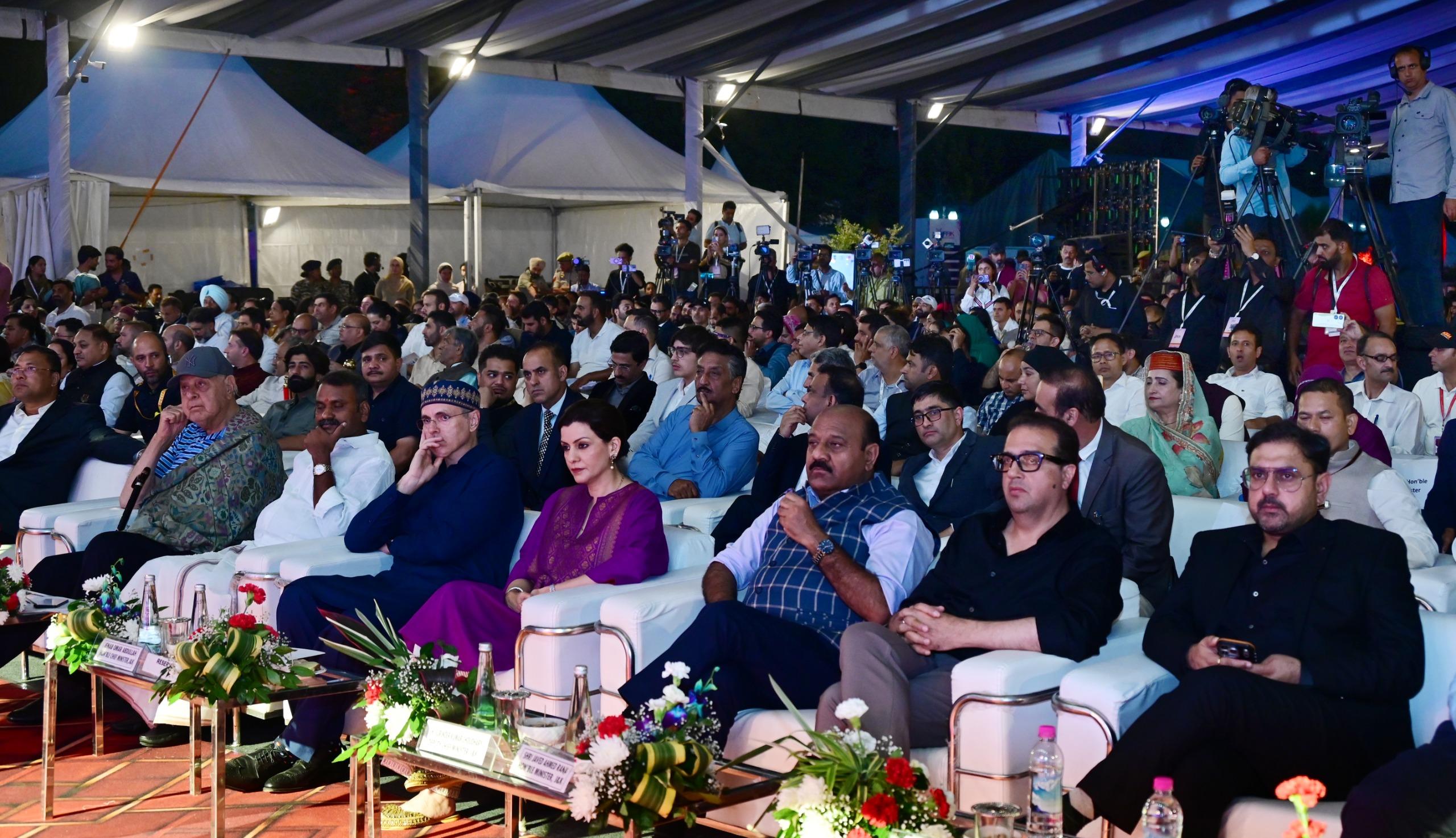
The closing ceremony was attended by Chief Minister Omar Abdullah and Union Minister Dr L. Murugan, with performances by Usha Uthup and Gulzar Ahmad Ganai.
Read the list again and one thing stands out: it is genuinely international. Iran takes Best Film and Best Actor. Lebanon takes sound design, Belgium editing, and the Best Director and Best Debut awards both go to 'The Song Sustoxin'. For a first edition, a jury that spread eight awards across that many countries is a signal that the programming was not a domestic showcase with a few foreign entries bolted on.
The cinematography award is the one to sit with locally. 'Naqsh-e-Daur' is a documentary about Naqashi, the papier-mâché painting tradition — a craft film, shot here, winning a technical award in an international field. Documentary and craft subjects are the cheapest serious films to make, and they travel.
One note on the record: the festival's prize structure was announced in advance at ₹96 lakh across nine cash awards, but the reports of the closing ceremony did not break down what each individual award carried. We are not going to attach a figure to a specific prize that has not been published.
Why 'Tasrufdaar' is the one to look at
Mattoo's film is a short. It follows an encounter between two childhood friends separated by the events of the 1990s, and it works through folklore and the supernatural rather than through direct retelling — memory, displacement, loss, and what the region has not finished processing. Mattoo has described the impulse behind it plainly: "We need closure."
It had already travelled before it won here, screening at the UK Asian Film Festival among other international platforms, and it came back to J&K to take the regional category.
That is the useful part for anyone in Jammu with a camera and no budget. The J&K Select section was five films deep, not five hundred. A short — not a feature, not a co-production, not something with a studio behind it — won a competitive category at an international festival in its own territory, on a shelf specifically carved out for local work. The distance between making something here and being programmed here is now measurably shorter than it was a year ago.
What this doesn't settle
Worth being honest: no Jammu-based or Dogri-language film placed in the announced awards. The J&K Select winner is a Kashmir story by a Kashmiri filmmaker, and the cinematography award went to a documentary on a Kashmiri craft. The festival ran a Jammu leg — twelve Dogri films screened at Wave Mall, which we covered separately — but the competitive results this year came from the other side of the Pir Panjal.
That is not a complaint about the jury. It is a straightforward reading of where the submission pipeline currently is, and it is the gap a Jammu filmmaker under 40 now has a concrete reason to close before the next edition opens.
What comes next
No date has been announced for a second edition, and no entry window is open. The two things worth tracking are whether IFFJK becomes annual, and whether the J&K Select section grows beyond five films — because the size of that shelf is, in practice, the size of the opportunity.
In the meantime, the J&K Film Policy's ₹50 lakh door for a local filmmaker is the funding route that already exists, and we have written a separate explainer on how it works.