Jammu's most famous food is not, contrary to what every airport listicle tells you, complicated. The Dogri winter table is built on a handful of rustic, sattvic-leaning dishes that prize sourness, smoke and slow cooking over flash and spice. In a month when the fog does not lift until noon and the cold seeps into your bones, this is exactly the food you want — heavy, tangy, and made to be eaten in big, unhurried plates.
Consider this your trail map through a cuisine that locals quietly adore and outsiders constantly underrate.
One thing worth getting straight up front: Dogri food is not Kashmiri food. The two get lazily lumped together by visitors, but where the Kashmiri spread leans on rich red meats and a wazwan grandeur, the Dogri kitchen prizes a simpler, largely vegetarian, home-style sensibility — food described by those who study it as balancing sattvic and rajasic qualities, gentle and grounding rather than heavy and showy. It is the cooking of households and harvests, not banquets, and that humility is exactly its strength.
Auria: a 200-year-old secret
Start with auria, a dish many young Jammuites have eaten a hundred times without ever ordering it in a restaurant — because it lives almost entirely in home kitchens. It is a curd-based curry, deliberately sour, built around boiled potatoes and tempered with mustard oil and fenugreek seeds. The tang is the whole personality. Food writers have started calling it a fading culinary treasure, which is a polite way of saying: ask your grandmother to make it before the recipe slips a generation.
Khatta meat: sourness as a worldview
If auria is the vegetarian soul of the cuisine, khatta meat is its carnivorous statement. Mutton is cooked down with pomegranate and a hit of lime until the gravy turns glossy and aggressively sour — khatta literally means sour, and the dish wears the name proudly. It is winter-wedding food, festival food, and the thing every Dogra household argues about (everyone's mother makes it best). Pair it with plain rice and you have the regional answer to a cold afternoon.
Kalari kulcha: Jammu's great street bite
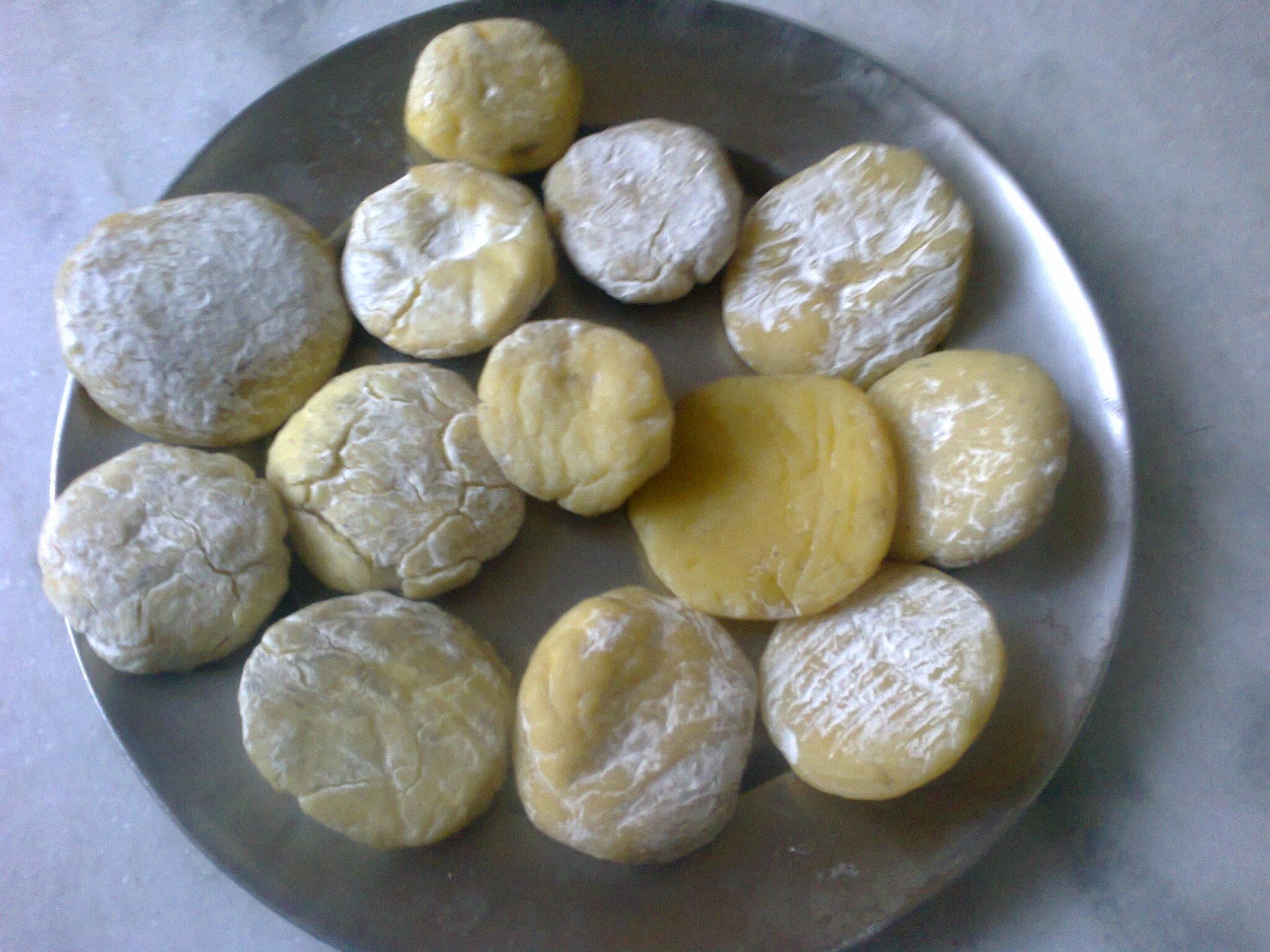
For something you can actually grab on a Residency Road evening, there is kalari — Jammu's own dense, milky cheese, often called kaladi. Fried until it blisters and goes gloriously chewy, slapped into a kulcha with roasted kachalu and a sharp tamarind chutney, it is the city's most addictive street food. It is salty, stretchy, and entirely indifferent to your diet plans. January, frankly, is no time for diet plans.
Kalari is also having a quiet moment beyond the kulcha. You will find it pan-fried as a snack, tucked into burgers by ambitious young cafe owners, and increasingly shipped out of the region as a regional speciality. Purists will tell you nothing beats it the old way — blistered in its own fat, salted, and eaten standing on a cold street — and they are right.
The rajma you will dream about
No Dogri meal is complete without rajma-chawal, and the local version has quietly become a regional badge of honour, often finished with a tart pomegranate edge and served over long-grain rice. The beans from the hill belts around Bhaderwah have a near-mythical reputation for melting into the gravy. It is the most ordinary dish on this list and, on the coldest day of the year, possibly the most perfect.
The technique that ties it together
What unites these dishes is a quiet obsession with two things: sourness, from curd, pomegranate and lime, and smoke, from the dhungar technique, where a piece of glowing coal is used to perfume the food with a faint, chalky char. It is subtle cooking that does not show off, which is perhaps why it has stayed a homely secret rather than a national headline.
That sourness is not an accident, either. In a region where winters are long and fresh greens scarce, the reliance on curd, dried pomegranate seeds and lime was a practical way to brighten heavy, starchy cold-weather food and keep the palate awake. What reads today as a distinctive regional flavour was, originally, a clever bit of seasonal survival cooking — flavour born of necessity, which is usually the most honest kind.
How to actually eat your way through it
The honest truth is that the best Dogri winter food is served at home, at weddings, and at the kind of small, unbranded eateries that do not advertise. Chase the kalari kulcha on the street, hunt down khatta meat at a langar or a winter function, and beg an invitation for auria. This January, while everyone else queues for the same cafe pasta, do the more interesting thing — eat the food this city was actually built on, sour and smoky and warm, exactly as the cold demands.