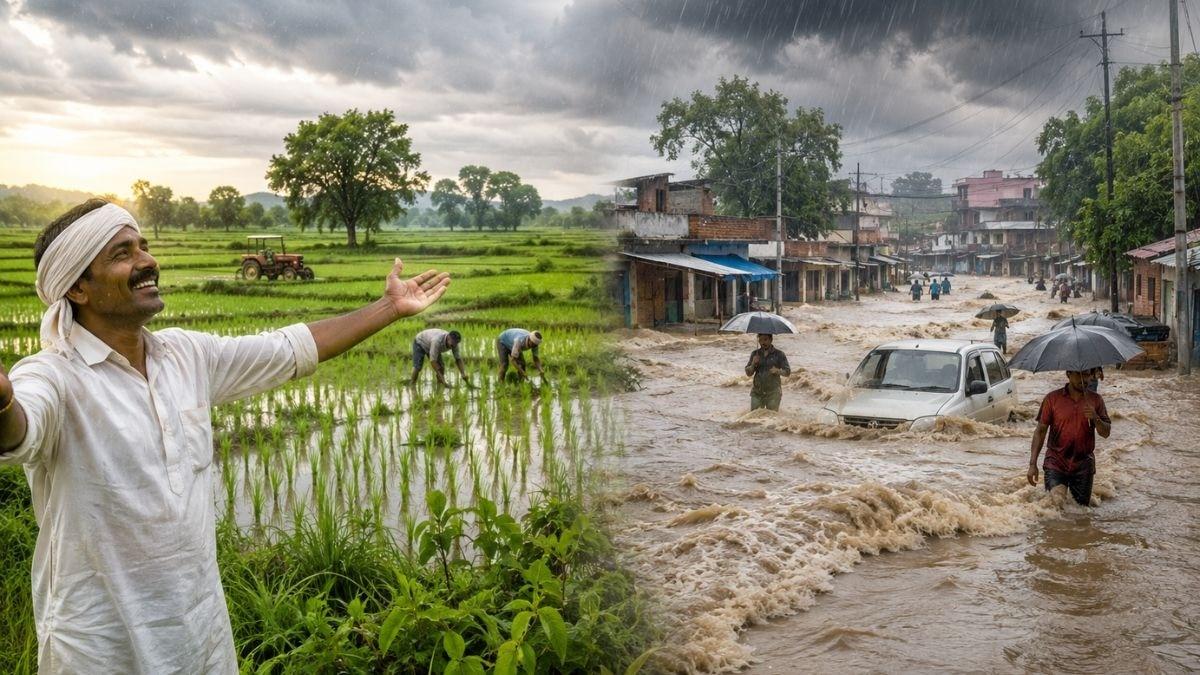
If your week involves an exam centre, a commute, or just getting across town, keep a raincoat handy. The India Meteorological Department is forecasting an unsettled spell over Jammu & Kashmir, with thunderstorms, lightning and gusty winds and isolated-to-fairly-widespread rain, building to heavy showers around 30 June and 1 July as the southwest monsoon edges into the region.
What the forecast says
Per the IMD's latest bulletins, J&K has already been getting intermittent rain, with thunderstorm activity flagged for late June. The sharper window is 30 June–1 July, when fairly widespread rain and isolated heavy spells are likely, before conditions turn favourable for the monsoon to advance further into the region during the following week (roughly 2–8 July). In short: this is not a one-afternoon shower but a multi-day wet patch.
Why it's worth a heads-up
This stretch is awkwardly timed. JKPSC Mains aspirants are travelling to exam centres across Jammu through July 1, the Amarnath Yatra is moving pilgrims through the city, and college admission errands are in full swing. Heavy rain in Jammu reliably means waterlogged underpasses, slow traffic on the main arteries, and a swollen, fast-moving Tawi.
A quick survival list
- Leave early. Build in buffer time for anything fixed — an exam, an interview, a train. Rain-day traffic in Jammu does not forgive a tight schedule.
- Stay away from the Tawi and other nullahs. River and stream levels rise quickly during heavy spells; the riverbank is not the spot for monsoon photos right now.
- Respect the lightning warning. Thunderstorms mean getting indoors, off open ground and away from lone trees — not waiting it out under a shed in the open.
- Protect your gear. Bag your phone, documents and admit card in plastic before you step out.
- Check before you ride. Two-wheeler riders should watch for submerged potholes on dug-up stretches and slow right down on wet, freshly laid roads.
One more practical note for plans made days ahead: monsoon forecasts are probabilities, not promises. The exact timing of the heaviest spells can slide forward or back by a day, and an “isolated heavy” warning means some pockets of the city get drenched while others stay dry. Treat the June 30–July 1 window as the period to be cautious, not as a guaranteed washout, and re-check the morning of.
The flip side: a good monsoon burst breaks Jammu's brutal June heat and tops up the water table, so it is not all bad news. Just plan around it — and confirm the live forecast on the IMD site before any big outdoor plan, since these windows shift by the day.
Sources: India Meteorological Department (IMD); Business Today — IMD heavy-rain alert (26 June 2026).
