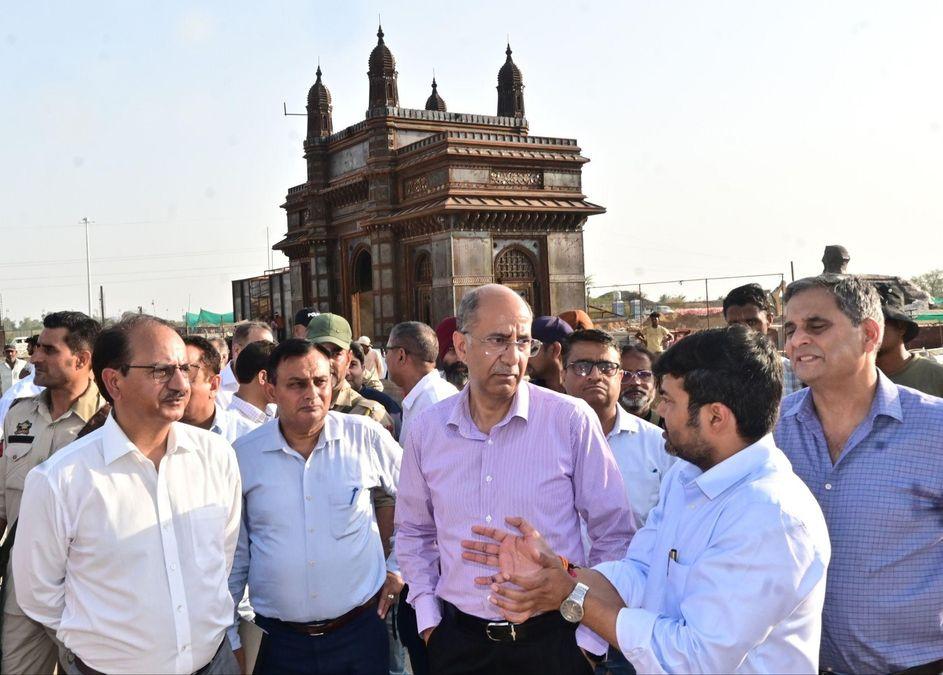
If you have ever walked past a pile of construction debris in Jammu and thought “what a waste”, the city's planners quietly agree with you — and they have spent ₹11 crore turning exactly that kind of scrap into a brand-new place to hang out.
The Waste to Wonder Park, one of the headline projects of the Jammu Smart City mission, is in its final stretch. As of late May the park was roughly 80 per cent complete, and officials have set the end of June 2026 as the target to open the gates — a deadline pushed forward so the park is ready before the Amarnath Yatra rush brings lakhs of visitors through the city.
What's actually inside
The big draw is a set of 14 replica monuments, each built almost entirely from scrap metal and recycled material rather than fresh concrete and stone. The line-up mixes seven international landmarks, five national icons and two monuments representing Uttar Pradesh — the kind of miniature world-tour that has already pulled big crowds to similar “Waste to Wonder” parks in Delhi and other Indian cities.
The idea is deliberately two-for-one. It is a selfie-friendly evening destination, and it doubles as a working lesson in recycling. Old vehicle parts, scrap rods and discarded metal that would otherwise rust in a yard get a second life as the Eiffel Tower or the Taj Mahal, and the plan is for signage that explains how much waste each structure swallowed up. For a generation that grew up on climate headlines, it is a far more convincing pitch than another lecture about segregating your bins.
Why it matters for young Jammu
For readers in their teens and twenties, the practical headline is simple: the city is getting another proper public space that is neither a mall nor a temple queue. Jammu's evening map has widened fast over the last two years — riverside promenades, cafe strips, late-night food lanes — and a landscaped park full of photogenic monuments slots neatly into that list. Expect it to become an instant first-date, college-group and family-outing spot.
There is a sharper point underneath the photo-ops. Building an entire attraction out of junk is a low-key argument about how a fast-growing city should treat its garbage — and that argument lands very differently when you can walk through the result instead of reading a policy note about it. If it works the way Delhi's version did, the park becomes both a tourist magnet and a permanent, walk-in advertisement for the city's own waste-management drive.
Part of a bigger green push
The park is not arriving alone. The same Smart City review that fast-tracked it is also pushing a ₹16-crore electric-bus depot under the PM e-Bus Sewa and FAME-II schemes — infrastructure for a fleet of 100 electric buses headed for Jammu's roads — and it follows the ₹156-crore Tawi Riverfront promenade that opened earlier this year. Taken together, it is the most concentrated burst of public-space and clean-transport spending the city has seen in a while.
Advisor to the Lieutenant Governor, Nasir Aslam Wani, who reviewed the works in May, framed the goal as turning Jammu into a “cleaner, greener and more organised urban centre”, and asked agencies to finish the marquee pieces before the Yatra season peaks.
What to expect when it opens
If you have seen photos of Delhi's original Waste to Wonder Park — the one with a scrap-built Eiffel Tower, Statue of Liberty and Pyramids of Giza that became a runaway hit — you already have a rough mental picture of where Jammu's version is headed. These parks tend to work best after dark, when the replicas are lit up, which makes them a natural fit for the city's existing evening-out culture rather than a midday-heat destination. The Jammu Smart City mission, under which the park is being built, has been steadily ticking off a long list of public-realm projects across the city, and a junk-into-landmarks park is easily the most camera-friendly of the lot.
The honest caveats
A few things to keep in mind before you plan a trip. The end-June target is exactly that — a target — and large civic projects in the city have a habit of slipping past their first deadline. No ticket price, official opening date or visiting hours have been announced yet, so treat any “opening this week” chatter as unconfirmed until the Smart City company says so officially.
For now, the takeaway is that one of Jammu's more genuinely original public projects — a park literally assembled from the city's own waste — is days-to-weeks away from being somewhere you can actually visit. We'll update this piece the moment a firm opening date lands. Watch this space.
Sources: Rising Kashmir — “In Jammu, Smart City works gather pace ahead of Amarnath Yatra” (19 May 2026); Tata Motors — Jammu Smart City electric buses press release.
