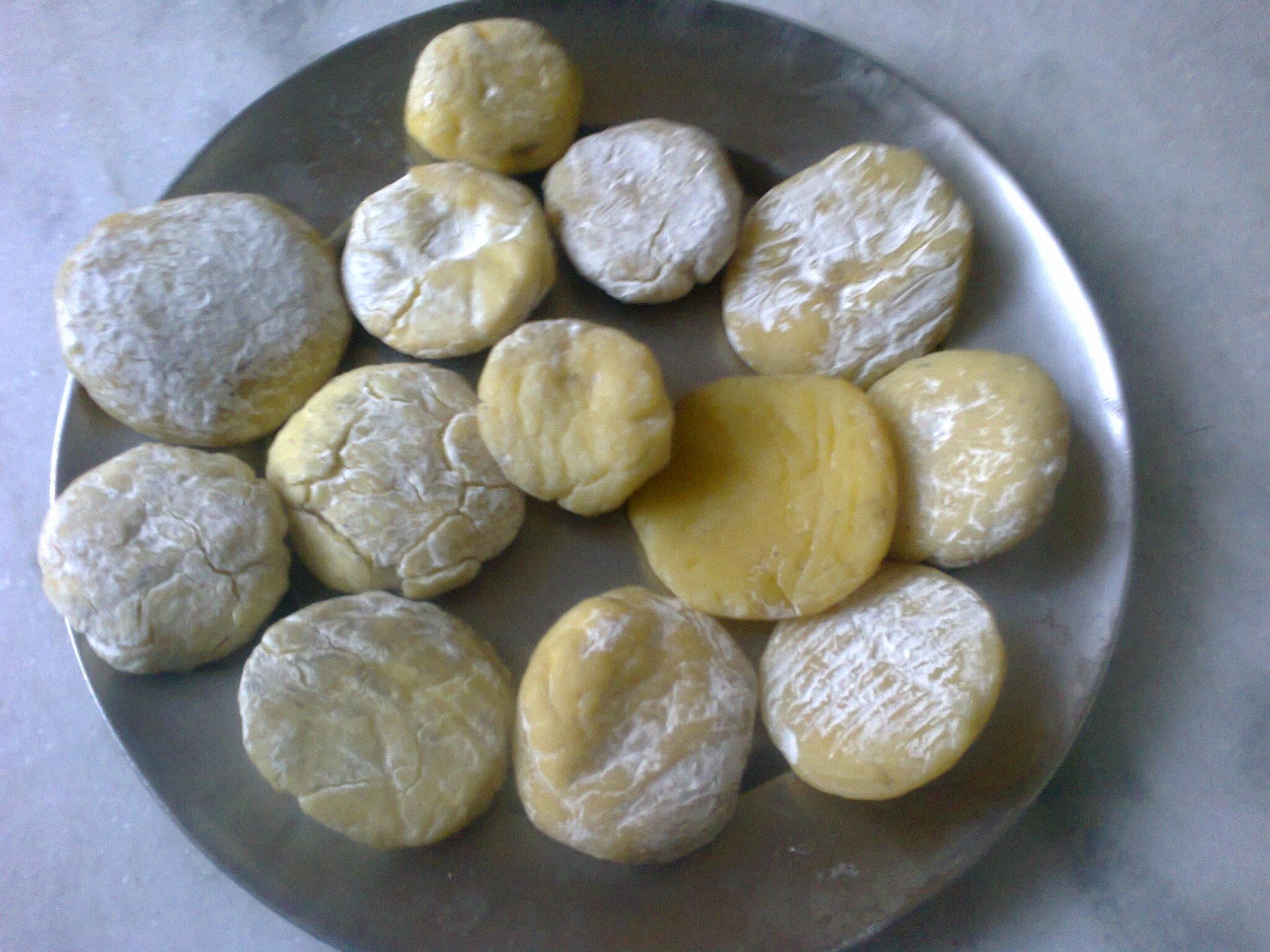
Twenty-one days. That is the number that could change what Kaladi is — from a thing you eat fried at a roadside stall near Udhampur to a product somebody can actually box up and sell.
Kaladi, the dense traditional cheese of Udhampur district often called the mozzarella of Jammu, has been through a technological intervention at CSIR-CFTRI in Mysuru, working with CSIR-IIIM Jammu. The result: its refrigerated shelf life has been extended to 21 days, with improved microbial safety and — the part that matters to anyone who has eaten it — no loss of quality, texture or nutritional value.
Why a shelf life is the whole story
Before this, Kaladi kept only a few days, and considerably less unrefrigerated. That single fact explains the cheese's economics. You cannot supply a restaurant chain in another state, or put a product on a shelf in Delhi, if it spoils in transit. Kaladi stayed local not because nobody wanted it, but because it could not travel.
Three weeks is a different proposition. Three weeks gets you a cold chain, a packaging run, a wholesale buyer, and distance to market.
The cheese, and the tag
Kaladi is made from cow or buffalo milk and is known for its flavour, its meltability and a characteristic stretchiness — hence the mozzarella comparison. It is long associated with the region's Gujjar-Bakarwal pastoral communities, and Ramnagar in Udhampur district is one of its best-known centres. It received Geographical Indication protection in October 2023, tying the name legally to its place of origin.
The work was directed in January 2026 under the One District One Product initiative by Dr Jitendra Singh, the Union Minister of State for Science and Technology and the MP for Udhampur. The stated objectives went beyond shelf life: nutrient profiling, recipe diversification into new functional forms, and documenting traditional preparation methods across J&K before they are lost.
What comes next
On the record, the next step is turning Kaladi into what the minister described as "a commercially scalable product, that can be served in different recipes by professional food chains," with an eye on national and international markets as a premium indigenous cheese.
What is not on the record: no producer counts, volumes, income figures or retail prices have been published, and no named company or market plan exists yet. This is a laboratory result and a stated intention, not a business that has launched.
The bit that's actually for you
If you are in the Jammu belt and thinking about food as a business, this is a rare, concrete opening: a GI-tagged product with a solved shelf-life problem, a central lab's validated process behind it, and no established brand occupying the space.
In the meantime, the cheese is still best eaten the old way — shallow-fried until the edges crisp, in a bun or with roti. For where it sits in the wider regional kitchen, start with our Dogri food map.