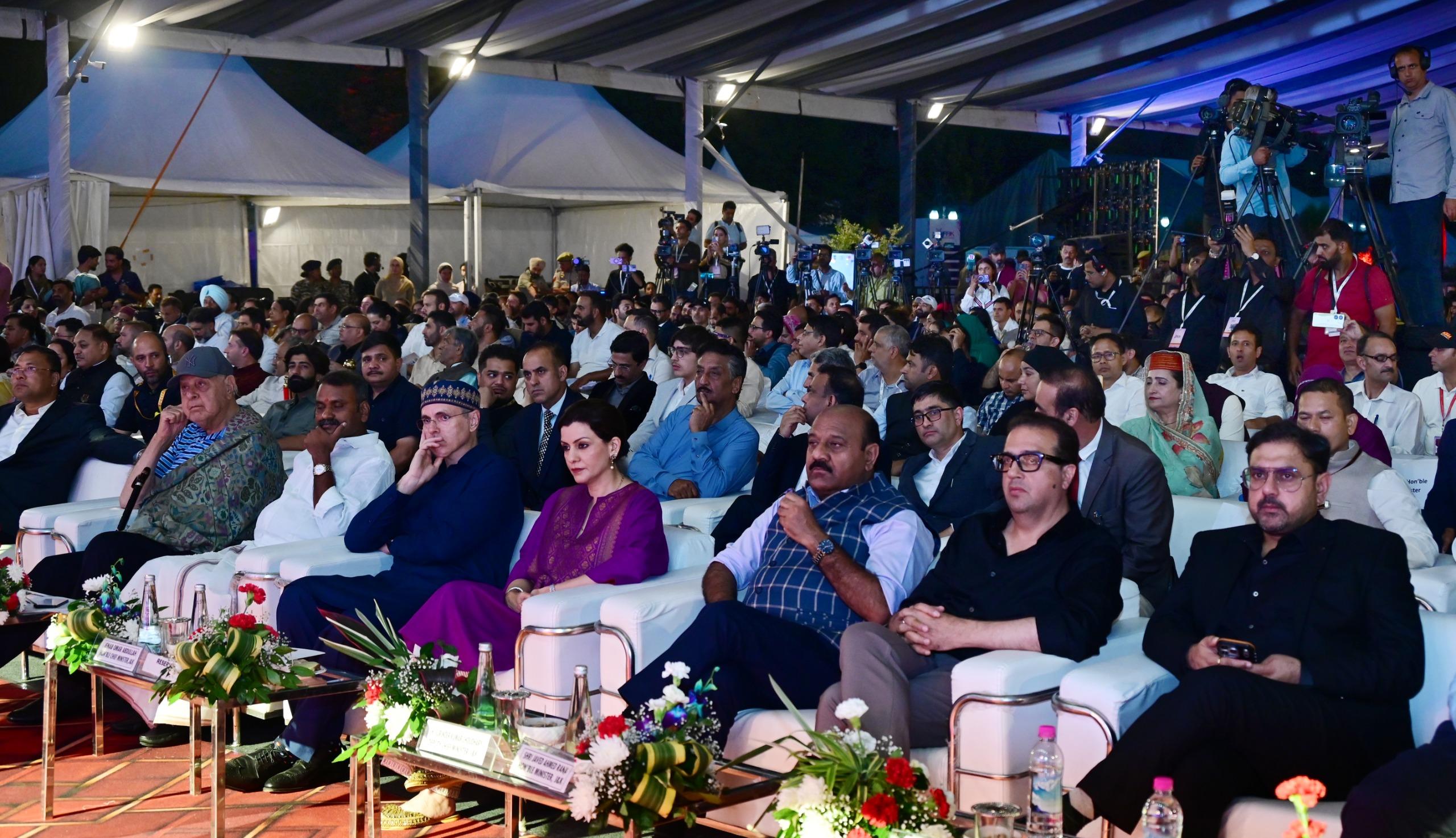
For three days this June, a hall in Jammu was rearranged into something that looked a lot like a parliament, a press gallery and a United Nations committee room all at once. The occasion was the KC International Youth Conclave (KCIYC) 2026, which has now concluded — and while it is, on paper, a school event, the ambition packed into it tells you something real about the direction the city's students are facing: firmly outward.
The format is the now-familiar one of a Model United Nations writ large. Student delegates are assigned to committees that mirror the machinery of national and global governance — bodies modelled on the UN's work against drugs and crime, on human rights, on the status of women, alongside simulations of the Lok Sabha, an all-party political meet, a crisis committee and an International Press corps that covers the whole thing as if it were the real news. Delegates research a brief, represent a position that may not be their own, draft resolutions and argue them in front of peers. It is debate, diplomacy and improvisation rolled into one demanding weekend.
Why a simulation builds real skills
It is tempting to dismiss this as students playing dress-up at being diplomats. That undersells what is actually happening. To survive a committee session, a fifteen-year-old has to read deeply on an unfamiliar subject, construct an argument, anticipate counter-arguments, negotiate alliances across the room, and speak with composure when challenged. Those are not toy skills. They are, more or less, the core competencies of any career that involves persuading other people — which is to say, almost all of them.
The conclave drew delegations from leading schools across the region, and the competitive edge — best-delegate awards, best-delegation trophies, honourable mentions — gives the whole exercise stakes. A student who wins a gavel in the Lok Sabha committee or earns a mention for a sharp intervention walks away with more than a certificate. They walk away having discovered, often for the first time, that they can hold a room.
The outward-looking generation
What makes events like this matter for Jammu specifically is the worldview they cultivate. A conclave that asks students to argue as the representative of a foreign country, to wrestle with a human-rights crisis on another continent, or to mediate a manufactured diplomatic emergency is quietly training them to think beyond the city limits. It builds the muscle of imagining other perspectives — the single most useful habit a young person from any region can develop.
There is a reason cities invest in this kind of youth diplomacy. The students who learn to engage confidently with the wider world are the ones who later bring opportunity, networks and ideas back home. For a city sometimes typecast as peripheral, every conclave that produces a confident, articulate, globally curious teenager is a small act of long-term strategy. The delegates filing out of that hall this June were not just collecting a co-curricular line for their applications. They were practising, in miniature, the kind of engagement Jammu will need more of — the willingness to pull up a chair at a much bigger table and assume they belong there.
The conclave is over for the year, the placards packed away, the resolutions filed. But the more durable outcome left the building with the students: a slightly larger sense of the world, and of their own place in it.
Worth remembering: the skill being rehearsed in a Model UN — arguing a view that isn’t yours, then finding common ground — is the one most adults never learn.