If someone in Reasi needs to see a cardiologist, the day usually goes like this: an early bus or shared cab down to Jammu, a wait at a GMC out-patient counter, a consultation that lasts minutes, and the ride home. Roughly 60 kilometres each way, a day of wages gone, for an appointment.
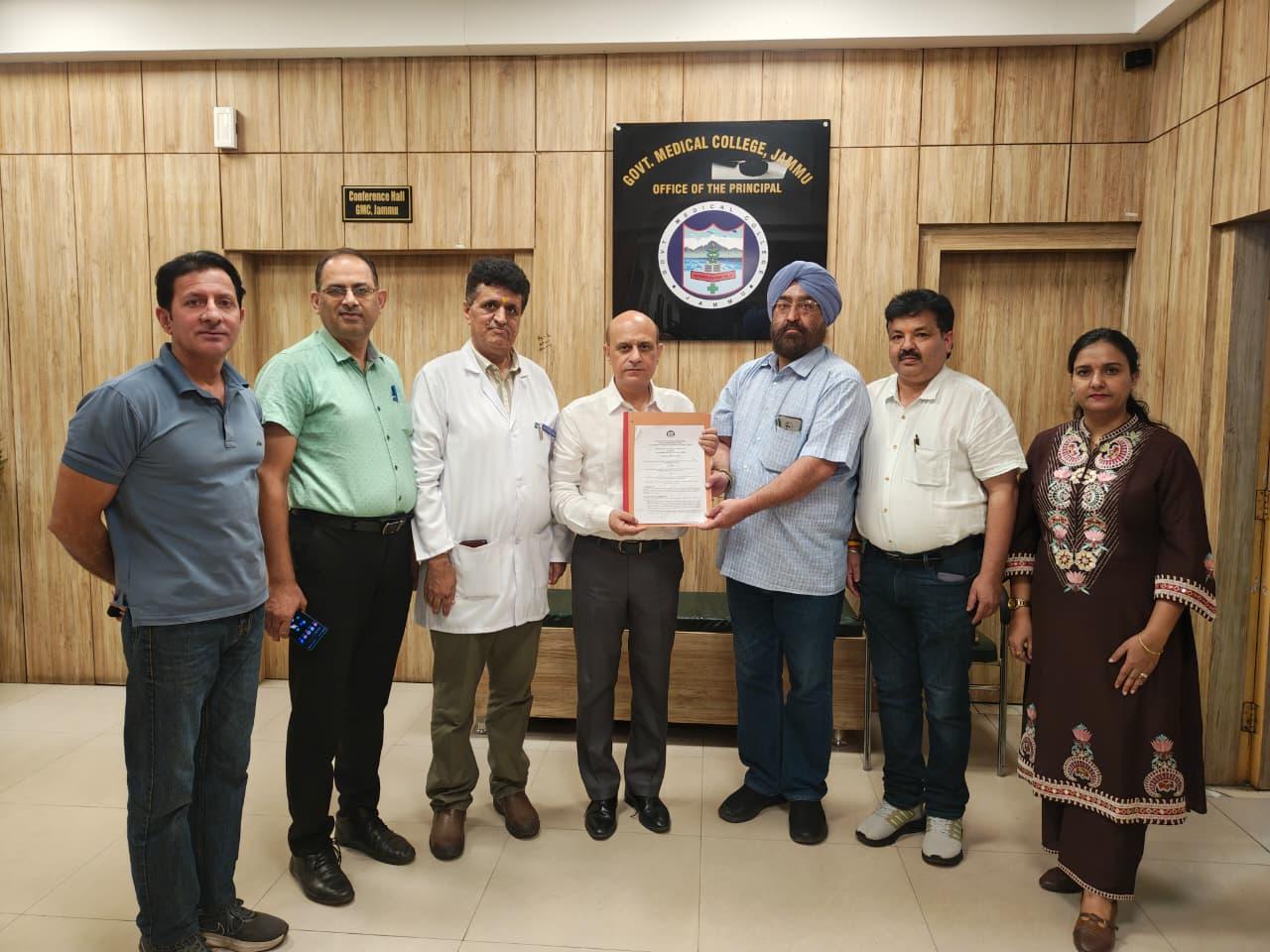
On 10 September 2026, Government Medical College Jammu and District Hospital Reasi signed a memorandum of understanding intended to move some of that traffic in the other direction — sending the specialists up to Reasi instead. The agreement was signed by Dr Ashutosh Gupta, Principal and Dean of GMC Jammu, and Dr Karamvir Singh, Medical Superintendent of District Hospital Reasi.
What actually arrives in Reasi?
The headline commitment is monthly super-speciality outreach clinics in eight disciplines: cardiology, neurology, nephrology, urology, endocrinology, oncology, gastroenterology and neurosurgery. The MoU states these run subject to availability of resources — a qualifier worth reading plainly, because it is the clause that will determine whether a monthly clinic is actually monthly.
Alongside the visiting clinics sit several things that do not depend on a specialist being physically present. Super-specialist tele-consultation runs through the e-Sanjeevani platform, the national telemedicine service. GMC Jammu will supply blood and blood components. There is provision for day-care chemotherapy and oncology services, for strengthening the hospital's HDU, ICU and Tele-ICU capacity, and for regular cataract surgeries under the National Programme for Control of Blindness.
Capacity building covers palliative and geriatric care, addiction treatment, radiology, blood bank management, dialysis and laboratory services, with training for doctors, technicians and paramedical staff.
Why this is a story about students too
The part of the agreement that matters most to a JammuBeat reader is the academic half, and it is easy to miss under the clinical detail.
District Hospital Reasi becomes an "Associated Hospital" under GMC Jammu's academic supervision. That status brings undergraduate and postgraduate clinical postings, internship training, and a rotational district residency programme at Reasi. The MoU also provides for support to Diplomate of National Board (DNB) residency programmes, and for joint Continuing Medical Education programmes, clinical workshops and academic sessions across both institutions.
For an MBBS student at GMC Jammu, a district residency rotation is not a formality. District hospitals see a different case mix from a tertiary teaching hospital — more first presentations, fewer referrals already worked up, and a resource base that forces different decisions. It is the setting most young doctors will actually work in early on, and until now it has largely sat outside the training route.
This is not a one-off arrangement
The Reasi MoU is one instance of a wider policy. In July 2026, the Health and Medical Education Department directed every government medical college in Jammu and Kashmir to adopt one district hospital, with the aim of putting specialist services into district hospitals that currently have none.
The Jammu division pairings reported at the time were:
GMC Jammu → District Hospital Reasi
GMC Kathua → District Hospital Samba
GMC Rajouri → District Hospital Poonch
GMC Udhampur → District Hospital Ramban
GMC Doda → District Hospital Kishtwar
GMC Srinagar, GMC Baramulla, GMC Anantnag and GMC Handwara were to take district hospitals on the Kashmir side. Under that framework, super-specialist doctors from the colleges conduct regular outreach camps, and the colleges assist with infrastructure upgrades including ICU and CCU development.
Reading the Reasi agreement against that policy is what tells you what it is: not a local initiative that happened in one district, but the first of the Jammu-division pairings to be formalised on paper. The others are expected to follow the same template.
What the agreement does not say
Three things are worth being straight about, because none of them appear in the MoU as reported.
There is no stated duration for the agreement. There is no published schedule — "monthly" is the commitment, but which day of the month, and which speciality on which visit, has not been announced. And there is no stated number for how many student postings Reasi will take, or when the first rotation begins.
Those are the details that decide whether a patient in Reasi can plan around a clinic, and whether a student can plan around a posting. They are the right things to ask about in a month's time.
What to do with this now
If you or your family are in Reasi, Katra or the surrounding belt and have been travelling to Jammu for specialist follow-ups, it is worth asking at District Hospital Reasi whether the speciality you need is on the outreach roster before booking another trip down — and asking about e-Sanjeevani tele-consultation, which does not wait for a visiting clinic at all.
If you are a medical student at GMC Jammu, the district residency rotation is now a formal part of the institution's academic structure. Ask the Dean's office how the rotation will be allocated. Being early to that question has historically been how students end up in the postings they wanted.