On most Sunday mornings, while the rest of Jammu sleeps off its week, a small group gathers on the banks of the Tawi with gloves, sacks and a stubbornness that has outlasted years of indifference. They are students, teachers, professionals and retirees, loosely gathered under the banner of Friends of River Tawi, and what they are attempting is both modest and enormous: to keep alive a river that the city has spent decades treating as a drain.
The numbers behind their effort are sobering. For years, Jammu has been pushing tens of millions of litres of untreated sewage into the Tawi every single day, alongside a steady tide of construction debris, plastic and household waste that piles along the banks. The river that gives the city its skyline and its identity has, in the unglamorous language of water-quality reports, a badly degraded stretch running right through the heart of Jammu. February, when the winter flow runs low and the litter sits exposed on dry banks, is when the damage is hardest to ignore.
From outrage to routine
What makes the Tawi volunteers worth writing about is not a single dramatic campaign but the opposite: their refusal to stop. The weekly clean-ups, spearheaded by climate groups in the city, have become a fixture precisely because the volunteers decided that showing up every Sunday mattered more than waiting for a grand official solution that never quite arrives. Bag by bag, bank by bank, they have turned environmental anger into something more durable, a habit.
You cannot guilt a city into loving its river. But you can show up every Sunday until people start to feel embarrassed walking past you with a plastic bag.
That persistence has a quiet strategy behind it. Visible clean-ups shame casual dumping. Regular presence builds a constituency of people who start to care. And a movement that meets every week, in public, is far harder for the authorities to ignore than a one-off petition. The volunteers know they cannot treat sewage with garbage bags. What they can do is keep the river in the city's conscience, and that, over years, is how indifference erodes.
Why the Tawi matters more than most rivers
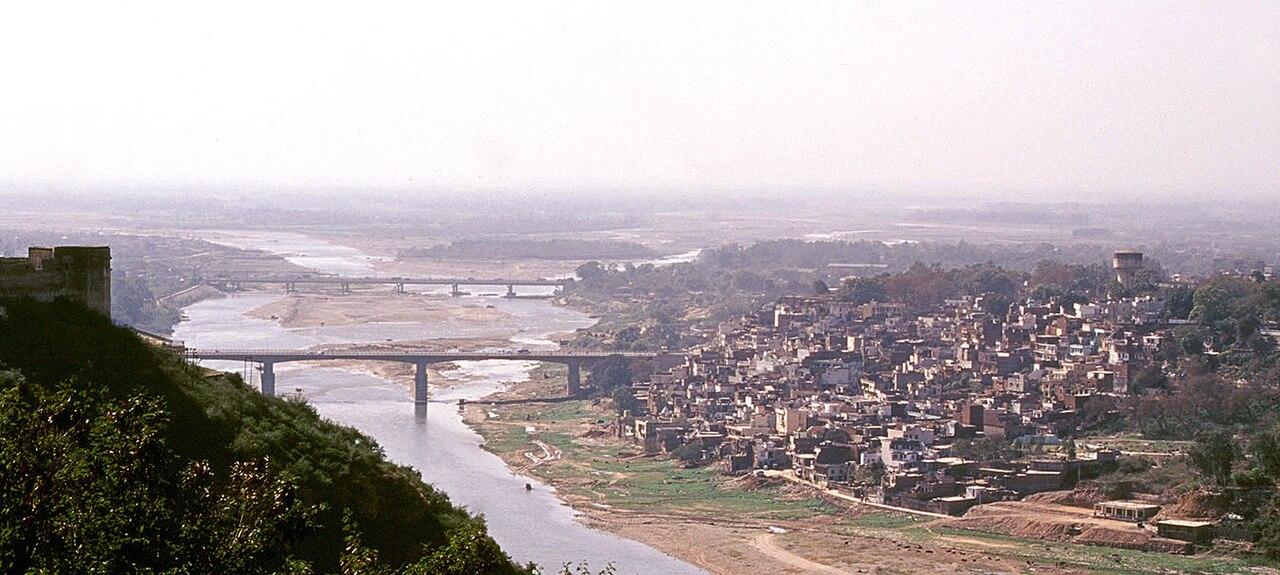
It is worth remembering what is actually at stake. The Tawi is not an incidental stream; it is the river the city is built around, the one that gives Jammu its skyline, its riverbank crematoriums and ghats, its very name in countless songs and shop signs. It feeds groundwater, supports livelihoods along its banks, and carries a cultural weight that no drain ever could. To let it become an open sewer is to hollow out something central to what Jammu is. That is the argument the volunteers make, gently and repeatedly, every time someone asks why they bother with a river so far gone. A city that cannot keep its own river alive has misplaced its priorities, and they refuse to accept that as inevitable, however far the decline has already gone or however slow the recovery may prove.
The wetland at the edge
The Tawi's story does not end at the city limits, and neither does the worry. Downstream and nearby lie notified wetlands, including the Gharana wetland near the border, which every winter hosts flocks of migratory birds that travel thousands of kilometres to reach Jammu's plains. Conservationists have long cautioned that aggressive riverfront engineering, which alters how and when water flows, risks disturbing these fragile habitats and the birds that depend on them. A river is not just a channel of water; it is a system, and what you do to one stretch ripples to the next.
How a young Jammuite can help
The encouraging part of the Tawi story is how low the barrier to entry is. You do not need expertise to join a Sunday clean-up; you need gloves and a free morning. Beyond that, the volunteers will tell you the real change is smaller and harder: not throwing your own waste into the river or its drains, refusing single-use plastic at the family level, and treating the riverbank as a place that belongs to you rather than a no-man's-land. College environmental clubs across Jammu have begun adopting stretches of bank, which spreads the load and builds the next generation of people who will not look away.
None of this fixes the Tawi on its own. The river needs sewage treatment at scale, enforcement against dumping, and a riverfront plan that treats ecology as seriously as aesthetics. But large change rarely arrives without small, stubborn pressure underneath it, and that is exactly what those Sunday mornings supply. The volunteers are not naive about the size of the problem. They have simply decided that a river worth saving is worth showing up for, week after week, until the rest of the city catches on.
%2Fgreater-kashmir%2Fmedia%2Fmedia_files%2Fwp-content%2Fuploads%2F2025%2F08%2FAssembly-J-K-e1755833571261.jpg&w=3840&q=75)