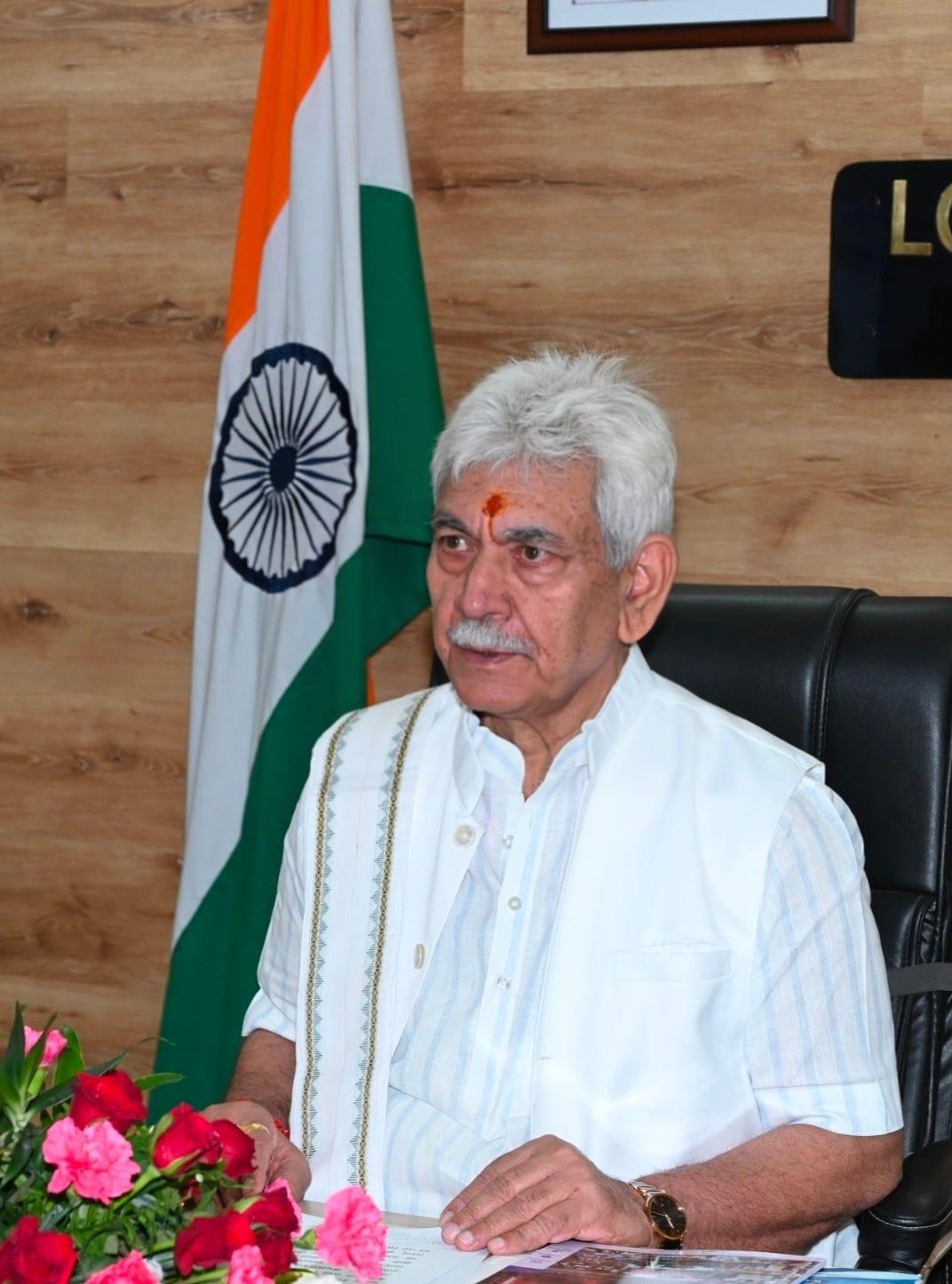
If you study in Jammu city — or you are eyeing a college seat here next session — the list of things you can actually learn just got longer. On 31 July, Cluster University of Jammu switched on a batch of new academic programmes at once: a course where you build your own degree, a semiconductor skilling track run with IIT Madras, integrated five-year science degrees, and a clutch of specialist diplomas. Strip away the inauguration ceremony and what is left is genuinely useful news for a 20-year-old in Jammu — because most of this widens what a local, public-university student can study without leaving the city.
So what actually changed?
Several programmes went live together. The headline additions are a ‘Design Your Degree’ option, a Semiconductor Skilling Programme built with IIT Madras, and new integrated (five-year) courses in Physics, Chemistry, Botany, Zoology, Mathematics and Geography. Alongside them the university added a postgraduate programme in Environmental Sciences with a minor in Renewable Energy, a one-year PG Diploma in Dogri Translation, and a one-year PG Diploma in Sanatan Dharma and Indian Knowledge Systems under a newly created Department of Vedic Studies. Two campuses were also renamed — the vice-chancellor’s secretariat as ‘Suryaputri Tawi Bhawan’ and the old IIM campus as ‘Chandrabhaga Campus’.
What is ‘Design Your Degree’, in plain terms?
The idea is that instead of picking one fixed combination and living with it for three years, you assemble subjects around your own interests and goals — mixing across disciplines rather than staying boxed into a single stream. Launching it, Lieutenant Governor Manoj Sinha framed the shift bluntly: “The future belongs to those who recognise possibilities, not boundaries,” adding that the 21st century “will welcome youth capable of integrating knowledge from multiple fields.” For students who have always felt that the arts-versus-science wall was drawn too early, that is the interesting part — a degree that lets a coder take design, or a biologist take economics.
Semiconductors in Jammu — really?
Yes, and this is the line worth underlining. The Semiconductor Skilling Programme is being run in collaboration with IIT Madras, and it is aimed at giving students hands-on grounding in chip technology and manufacturing — the exact skill set India is scrambling to build as it chases a domestic semiconductor industry. Chip-making has been one of the country’s loudest deep-tech priorities, and the jobs that follow tend to sit with people who trained early. Having even an entry-level track anchored in Jammu city means a student here can get a first foothold in that field without first moving to Bengaluru or Hyderabad. The other quiet advantage is timing: chip skilling is still new enough in this part of the country that early trainees are not competing against a decade of established candidates. Getting in now, close to home, is a different proposition from trying to break in later.
Who is this actually for?
This matters because of which university is doing it. Cluster University of Jammu is a public, city-based university stitched together from long-standing government colleges — the kind of affordable institution a huge share of Jammu’s students actually attend, rather than an expensive private campus out of reach for most families. When a university like this adds a deep-tech skilling route or a flexible-degree option, it lands with students who most need the opportunity and are least able to chase it elsewhere. If you are in Class 12 weighing your options, or already enrolled at one of Cluster’s colleges, these are choices now sitting on your doorstep.
The quieter additions worth knowing
Two more deserve a mention. The PG Diploma in Dogri Translation is a small but smart bet — Dogri is a scheduled language, and translation, subtitling and localisation work is real, paid work for someone who knows the language well. And the integrated five-year science degrees compress what used to be a bachelor’s-then-master’s journey into a single continuous course, which can save a year and a re-application headache for students who already know they want to go deep in a science subject. The new Environmental Sciences programme, with its renewable-energy minor, points at another field that is only going to hire more, not less. Taken together, the additions read less like a random grab-bag and more like a wager on where work is heading — flexible, cross-disciplinary, and tilted toward technology and sustainability.
The bottom line
The honest caveat: an inauguration is a start line, not a finish line. The details that decide whether any of this works for you — intake numbers, eligibility, fees, and exactly when each programme opens for admission — will come from the university’s own notifications, not the launch coverage. So treat this as your cue to start watching Cluster University’s official notifications closely rather than as a form you can fill today. What is already clear is the direction: a Jammu-city public university is betting on flexibility and deep-tech skilling for the students who live here. For anyone building a life and a career in this city, that is a bet worth paying attention to. (For related reading on the city’s admission season, see JammuBeat’s earlier coverage of Cluster University’s 2026 admissions.)
Sources: Rising Kashmir, Daily Excelsior, The Statesman.
